
ERA: The LLM-Powered Scientist Surpassing Human Experts in AI-Driven Discovery
An AI system to help scientists write expert-level empirical software
The paper introduces Empirical Research Assistance (ERA), a novel AI system that combines Large Language Models (LLMs) with Tree Search (TS) to autonomously create expert-level scientific software. ERA iteratively improves code to maximize a defined quality metric, achieving SOTA results across diverse fields including genomics, epidemiology, and geospatial analysis.
TL;DR
Researchers from Google DeepMind and Google Research have unveiled Empirical Research Assistance (ERA), an AI system that treats scientific code development as a search problem. By combining LLMs with Tree Search, ERA autonomously designs software that outperforms official human benchmarks in genomics, epidemiology, and more.
Academic Positioning: This isn't just another code assistant; it's a "meta-optimizer" for science. It transitions the effort from coding a solution to designing a metric that validates discovery.
The Bottleneck: Manual Software Engineering in Science
Modern science is increasingly "empirical"—relied upon software to maximize a quality score (e.g., predictive accuracy, signal-to-noise ratio). However, human scientists usually iterate over a handful of ideas. They are limited by time, cognitive load, and the manual labor of coding.
ERA changes the paradigm by asking: What if an AI could tirelessly try thousands of research variations, informed by all existing literature, and keep only the ones that actually work?
Methodology: Semantic Mutations via Tree Search
The core innovation of ERA is the marriage of Semantic Mutation (LLMs) and Decision Theory (Tree Search).
1. PUCT Tree Search
Unlike standard LLM generation which is "one-shot," ERA uses a PUCT (Predictor + Upper Confidence bound applied to Trees) algorithm. It maintains a tree of code candidates:
- Exploitation: It branches from versions that already show high scores.
- Exploration: It tries radically new "research ideas" to avoid local optima.
2. Research Idea Injection
ERA doesn't work in a vacuum. It reads paper PDFs, summaries from specialized textbooks, and outputs from "AI Co-scientists" (like Gemini Deep Research). It then translates these abstract scientific concepts into executable Python code.
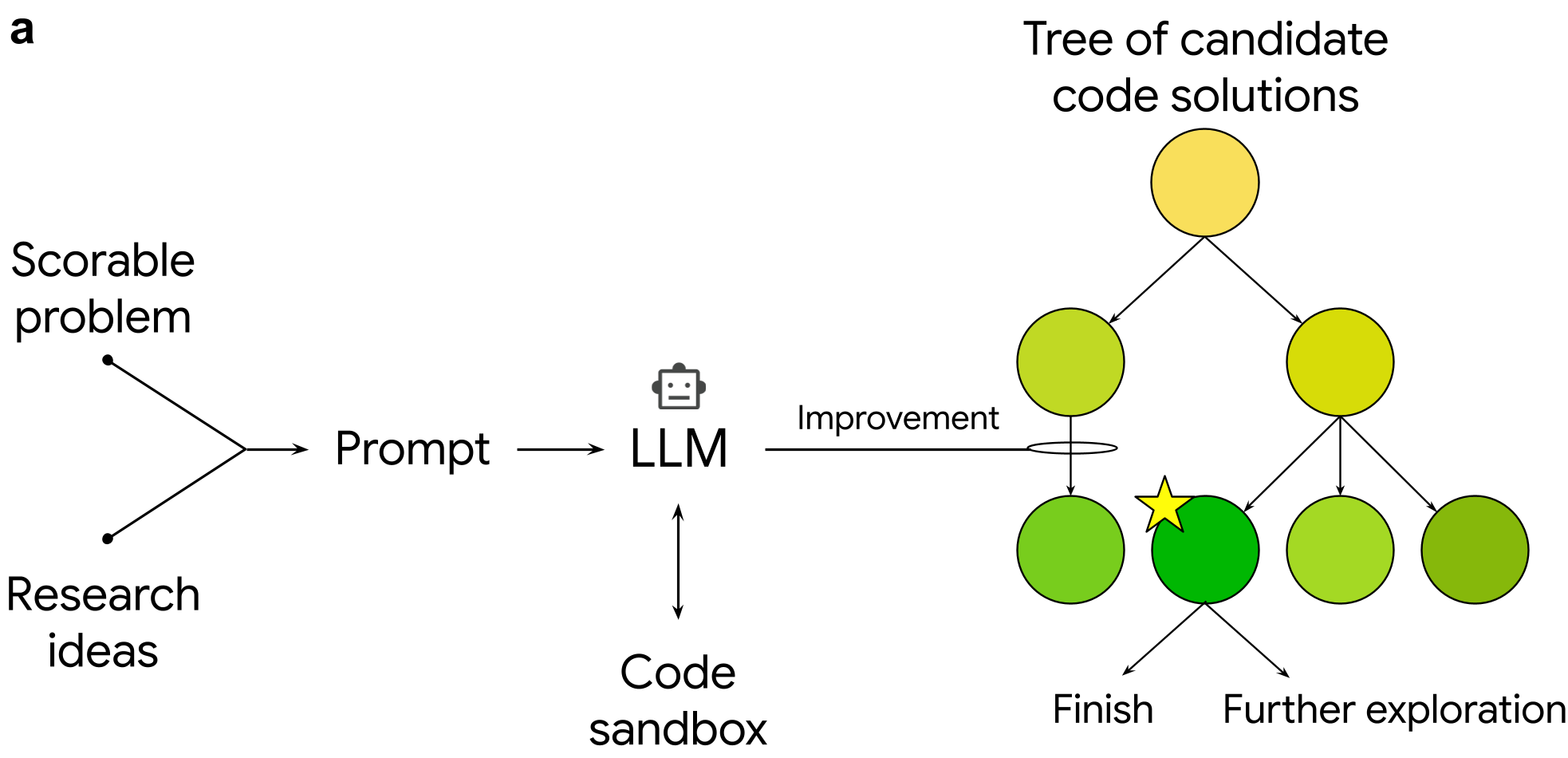 Figure 1: The ERA loop—Research ideas → LLM Mutation → Sandbox Execution → Score-guided Tree Search.
Empirical Breakthroughs: Beating the SOTA
Single-Cell Genomics (scRNA-seq)
In genomics, "batch integration" (removing lab-specific noise while keeping biological signal) is a holy grail. ERA took existing methods like BBKNN and ComBat and recombined them in ways humans hadn't.
- Result: 40 novel methods that topped the OpenProblems leaderboard, yielding a 14% improvement over the best published methods.
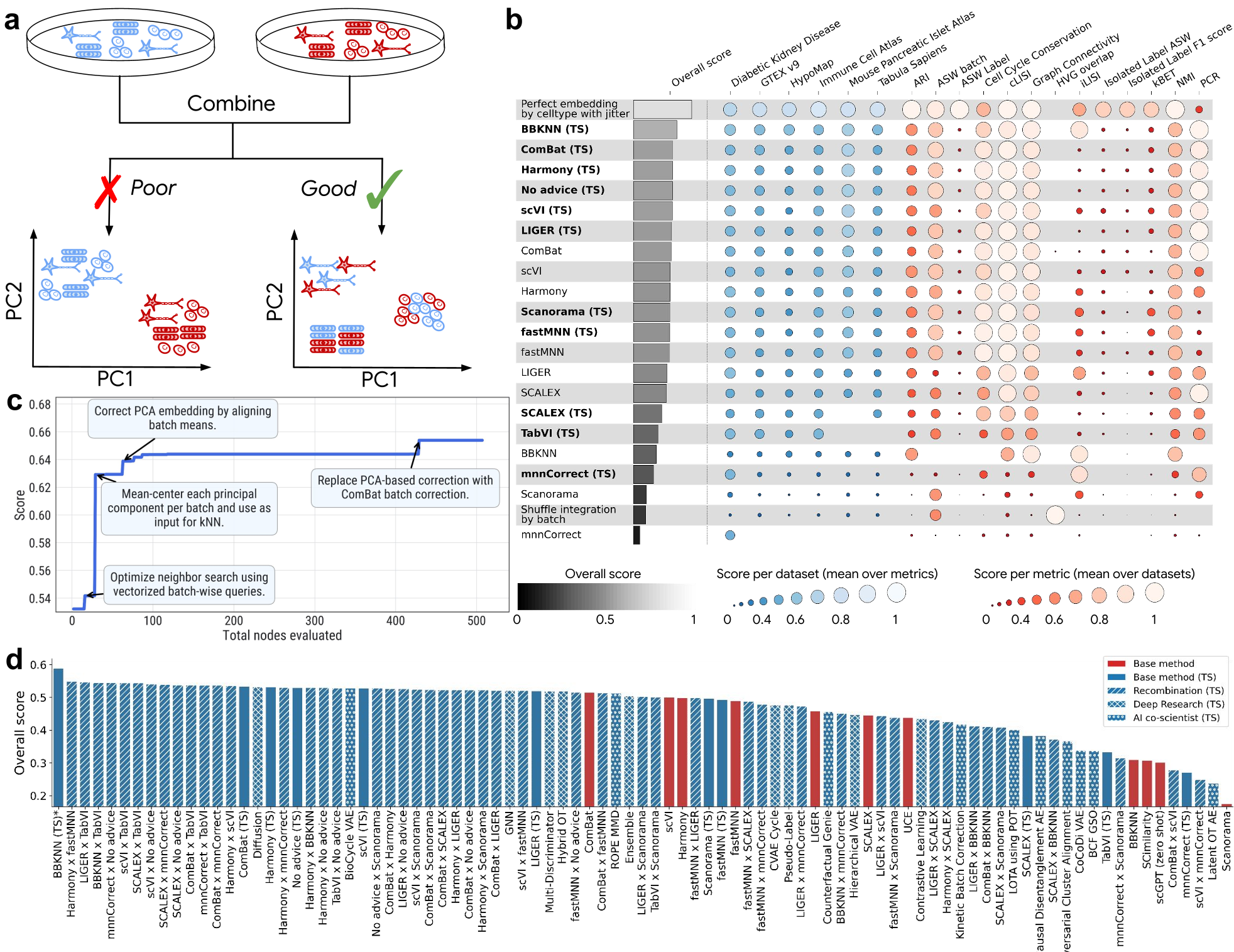 Figure 2: ERA-generated implementations (TS) consistently outperform human-authored baselines across multiple datasets.
Epidemiology: Outforecasting the CDC
ERA was tasked with predicting COVID-19 hospitalizations. It didn't just replicate one model; it successfully hybridized epidemiological models with machine learning statistical models.
- Result: 14 distinct strategies that outperformed the official CDC Forecast Hub Ensemble, achieving a significantly lower Weighted Interval Score (WIS).
Deep Insight: "Synthetic Hybridization"
The paper reveals that ERA’s true power comes from Recombination. For example, it discovered that pairing an epidemiological renewal equation (theory-driven) with a climatology-based baseline (data-driven) provided a robust seasonal foundation that neither parent model possessed individually. This mirrors the "AlphaZero" moment but for scientific hypothesis testing.
Breakthrough Dynamics
As seen in the solution trees, ERA identifies "breakthrough" nodes where a specific code change (like adding a log-transform or a specific holiday feature) leads to an abrupt jump in performance.
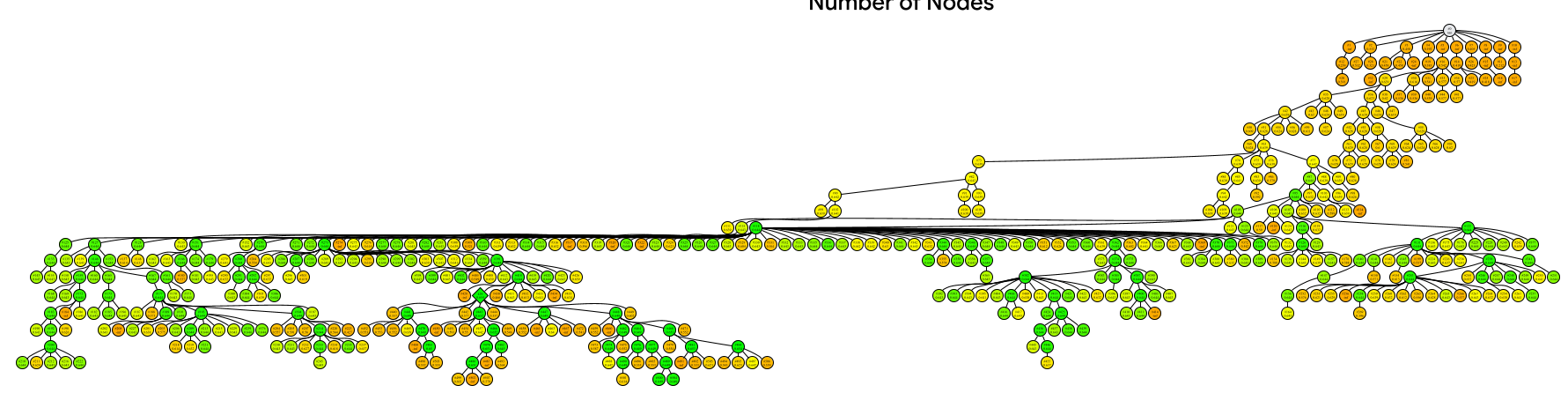 Figure 3: A "Breakthrough Plot" showing how the system identifies key code mutations that cause score spikes.
Critical Analysis & Conclusion
ERA represents a significant step towards the "Agentic Scientist." However, it is fundamentally limited to scorable tasks. Where a ground truth or validation metric is absent, the tree search lacks a compass.
Future Outlook:
- Metric Engineering: The future scientist’s job will be to design the "Reward Function" of discovery, rather than the "Implementation."
- Safety: The authors rightly highlight the risks; an autonomous system capable of optimizing biological software could be misused if applied to sensitive pathogens.
In conclusion, ERA proves that by combining the vast knowledge of LLMs with the systematic rigor of Tree Search, we can navigate the "needle-in-a-haystack" space of scientific discovery far more effectively than humans alone.