
Exploring the Frontier of AI-Driven Science: How ERA Outperforms Human Experts
An AI system to help scientists write expert-level empirical software
The paper introduces Empirical Research Assistance (ERA), an AI system that combines Large Language Models (LLMs) with Tree Search (TS) to autonomously develop expert-level scientific software. ERA iteratively refines code to maximize domain-specific quality metrics, achieving SOTA results in fields such as bioinformatics, epidemiology, and geospatial analysis.
The creation of scientific software has long been the primary bottleneck in computational discovery. While Large Language Models (LLMs) have shown promise in code completion, they often lack the "persistence" and "domain insight" required to beat expert scientists at their own game.
Enter Empirical Research Assistance (ERA), a new system from Google Research and DeepMind that doesn't just write code—it conducts a systematic search for the optimal solution to complex scientific problems.
TL;DR
ERA is a systemic AI researcher that couples an LLM with a sophisticated Tree Search (TS) algorithm. By treating software development as a "scorable task," ERA navigates the space of possible algorithms to find "needle-in-the-haystack" solutions. It has already beaten the CDC's COVID-19 ensemble and set new records in single-cell genomics.
The Core Challenge: Why Coding Isn't Enough
Science is empirical. It requires a relentless cycle of trial and error. Traditional AI coding assistants are "one-shot" or limited by a linear prompt-response loop. They lack the ability to:
- Backtrack: When a specific method (e.g., a specific normalization) limits further gains, human experts go back to the drawing board.
- Absorb Literature: High-level science requires integrating specific insights from highly cited papers or specialized textbooks.
ERA addresses these by framing software development as a Tree Search problem.
Methodology: The "Brain" of ERA
ERA is built on a PUCT (Predictor + Upper Confidence bound applied to Trees) search algorithm. This allows the system to balance exploitation (improving the current best script) and exploration (trying a radically different mathematical approach).
1. The Search Mechanism
Every node in ERA's tree is a functional Python script. The system selects a node based on its score and a "visit count," then asks the LLM to mutate it. If a branch plateaus, the system switches to a more promising branch.
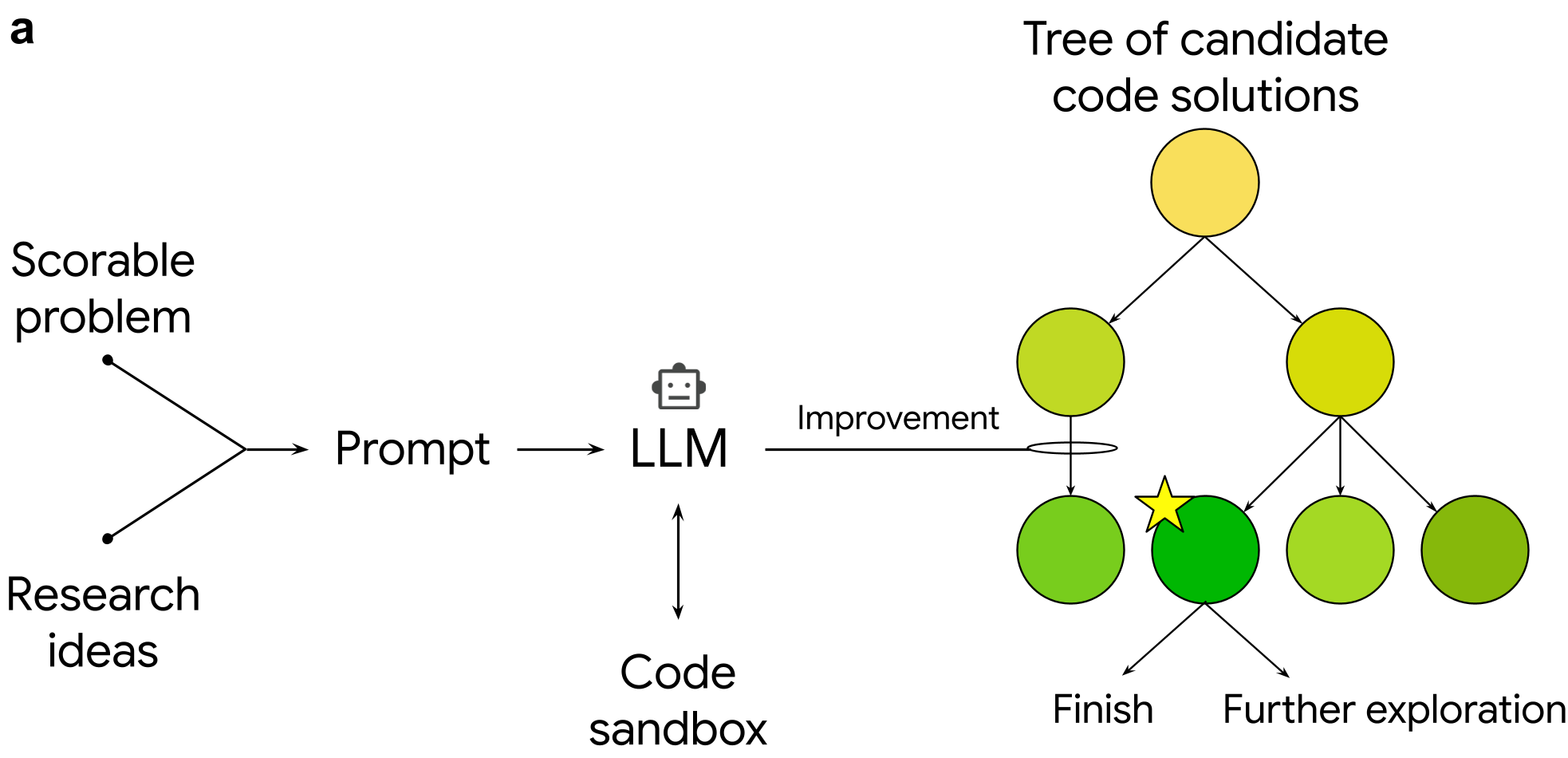 Figure 1: ERA Workflow showing the integration of scorable tasks, research ideas, and the Tree Search loop.
2. Research Idea Recombination
The true "secret sauce" of ERA is how it handles Research Ideas. Scientists don't work in a vacuum; they read papers. ERA mimics this by:
- Extracting summaries from SOTA papers using frontier models (like Gemini).
- Injecting these summaries into the prompt to guide the Tree Search.
- Recombination: ERA is explicitly prompted to take the "best of both worlds" from two successful scripts to create a hybrid model.
Experimental Breakthroughs
The paper validates ERA across remarkably diverse scientific fields.
Single-Cell RNA Sequencing (Genomics)
In transcriptomics, "Batch Integration" is the art of merging data from different labs while preserving biological signals. ERA generated 40 methods that surpassed the entire OpenProblems leaderboard. Insight: ERA's top method (an optimized version of BBKNN) combined traditional linear correction (ComBat) with a novel neighborhood graph construction—a combination human researchers hadn't perfected.
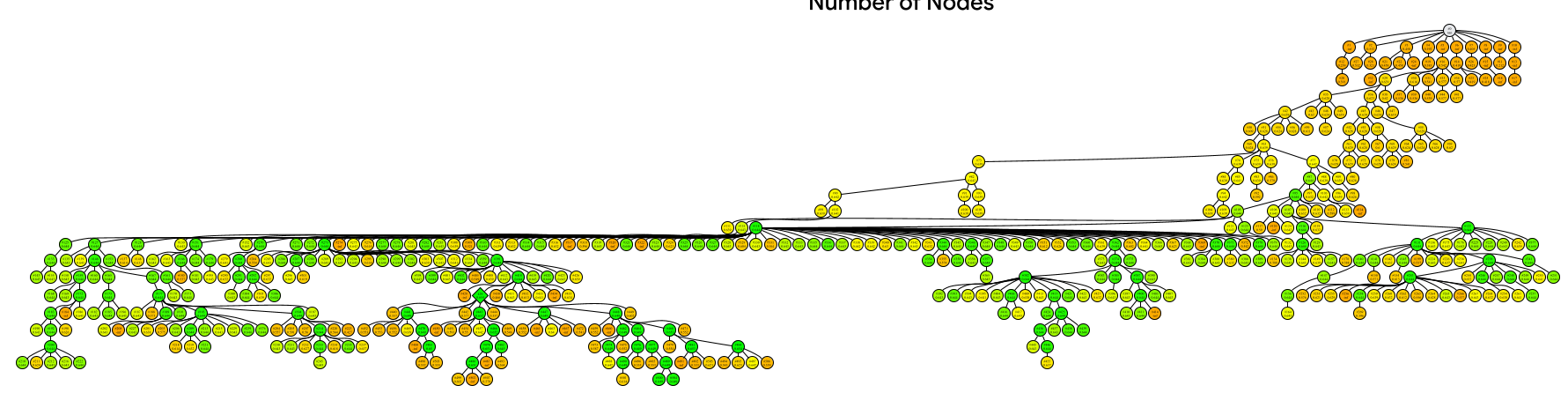 Figure 2: The Breakthrough Plot for BBKNN. Notice the "jumps" in scores as the AI discovers specific code improvements.
COVID-19 Forecasting (Public Health)
ERA’s retrospectives for the 2024-2025 season showed it could achieve a lower Weighted Interval Score (WIS) than the official CDC ensemble. It achieved this by synergizing "climatology" (historical averages) with "autoregressive" (recent trend) models.
Why It Works: A Critical Analysis
ERA represents the transition from Generative AI to Agentic Discovery.
- Beyond Hyperparameters: Unlike standard AutoML, which just tweaks numbers, ERA rewrites the logic. It can implement a Boosted Decision Tree library from scratch if told it's faster than the standard package.
- Iterative Intelligence: The results in Table 1 of the paper show that ERA outperforms "Best-of-N" (simply generating 1,000 samples and picking the best). The "Tree" structure allows for a cumulative improvement that random sampling cannot match.
Limitations & Future Outlook
While ERA is superhuman at empirical tasks (where there is a clear score), the authors admit it is not yet performing "genuine discovery" involving new physical theories from first principles (though it is moving that way in symbolic math).
The implications are profound. In any field where a machine can provide a "score" (a metric of accuracy, speed, or efficiency), AI systems like ERA are set to accelerate progress from months of human labor to hours of automated search.
Final Takeaway
ERA proves that the most powerful tool in the modern scientist's arsenal isn't an LLM that knows everything, but a Search System that explores everything.