
ERA: Scaling Scientific Discovery via LLM-Driven Tree Search
An AI system to help scientists write expert-level empirical software
The paper introduces Empirical Research Assistance (ERA), an AI system that combines Large Language Models (LLMs) with Tree Search (TS) to autonomously develop expert-level scientific software. ERA achieved SOTA results in diverse fields, including discovering 40 novel single-cell RNA-seq analysis methods and outperforming the CDC ensemble in COVID-19 hospitalization forecasting.
TL;DR
Researchers from Google DeepMind and Harvard have unveiled Empirical Research Assistance (ERA), a system that automates the creation of high-performance scientific software. By framing software development as a "scorable task" and navigating it via Tree Search (TS), ERA doesn't just write code—it "evolves" it, discovering methodologies that outperform human experts in genomics, epidemiology, and time-series forecasting.
The Bottleneck: Human-in-the-Loop Discovery
The bottleneck of modern science isn't just data—it's the software required to process it. Historically, creating empirical software (models designed to maximize a specific metric) has been a tedious process of manual trial and error. Design choices are often governed by convenience rather than exhaustive search.
Current AI code assistants (like Github Copilot) are largely "one-shot" generators. While they can help write a function, they lack the long-range persistence to explore thousands of variations or "backtrack" when an approach plateaus. This is where ERA changes the game.
Methodology: The "Semantic Mutation" Loop
ERA treats the space of possible programs as a manifold to be searched. Unlike Genetic Programming (GP)—which relies on random bit-flips or subtree swaps—ERA uses an LLM (Gemini 2.5 Flash/Pro) as an intelligent, semantic-aware mutation operator.
1. The PUCT Tree Search
ERA uses a modified version of the PUCT (Predictor + Upper Confidence Bound applied to Trees) algorithm.
- Exploitation: The system expands nodes (code versions) that have previously yielded high scores.
- Exploration: It branches out to less-visited nodes to avoid local optima.
2. Infusing Domain Expertise
The system's most potent feature is its ability to ingest "Research Ideas." The authors provided ERA with summaries of highly-cited papers (e.g., scRNA-seq integration techniques). The LLM processes these ideas to guide its code generation, effectively standing on the shoulders of giants.
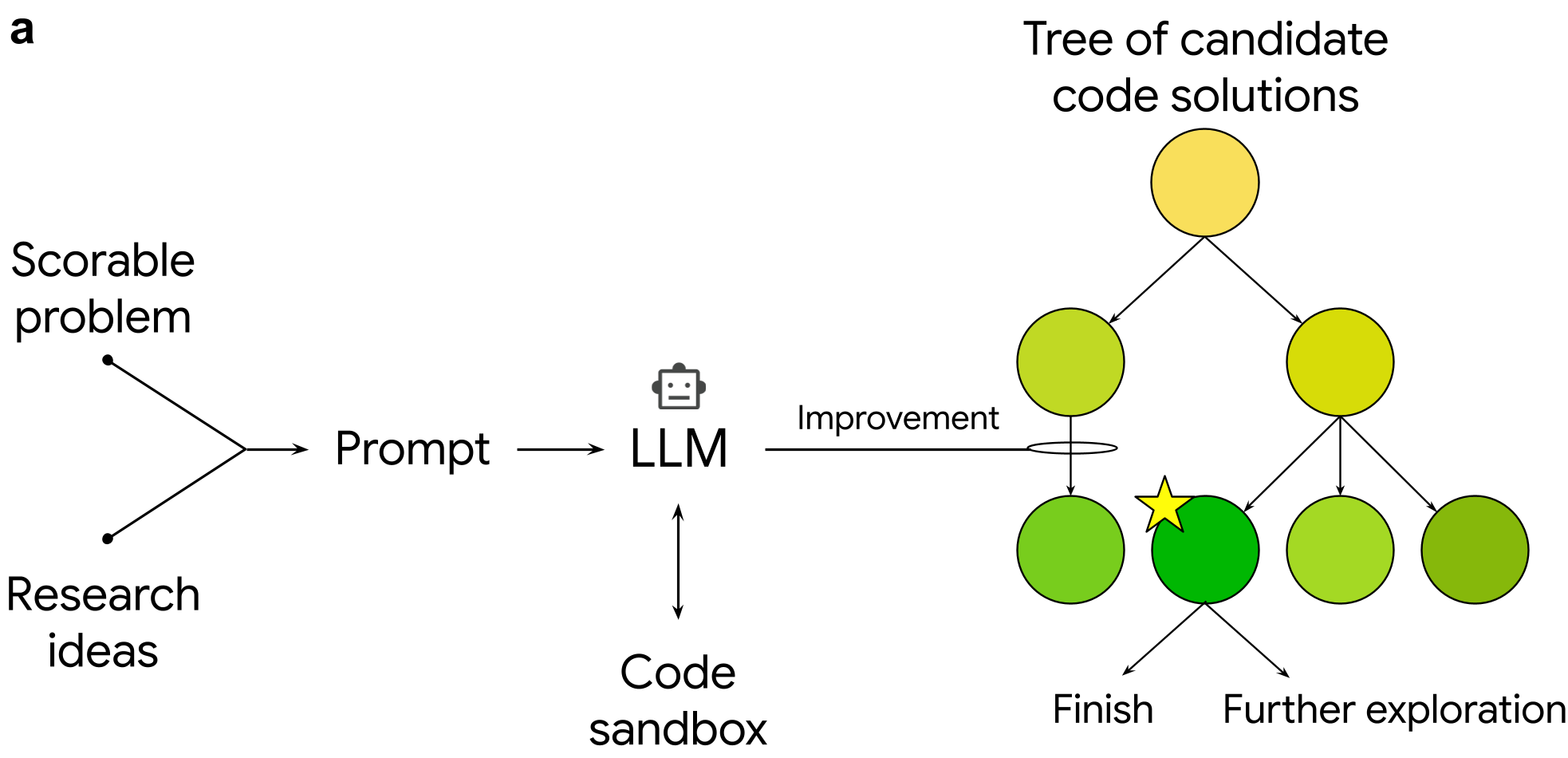 Figure 1: Schematic showing how ERA combines scorable tasks, research ideas, and Tree Search to optimize code in a sandbox environment.
Breakthrough Results across Disciplines
Genomics: Single-Cell RNA Sequencing
The challenge: Removing "batch effects" (noise from different labs) while preserving biological signals. ERA discovered a hybrid method combining ComBat and BBKNN, which achieved a 14% improvement over the previous SOTA. It didn't just replicate the paper; it found that applying ComBat-corrected PCA embeddings before the BBKNN graph construction was the secret sauce humans had missed.
Public Health: CDC COVID-19 Forecasting
In a retrospective study of U.S. hospitalizations, ERA-generated models outperformed the CDC's robust Ensemble model (the previous gold standard). The search discovered that hybridizing "climatology" (historical averages) with "epidemiological" autoregressive models provided the best-calibrated uncertainty.
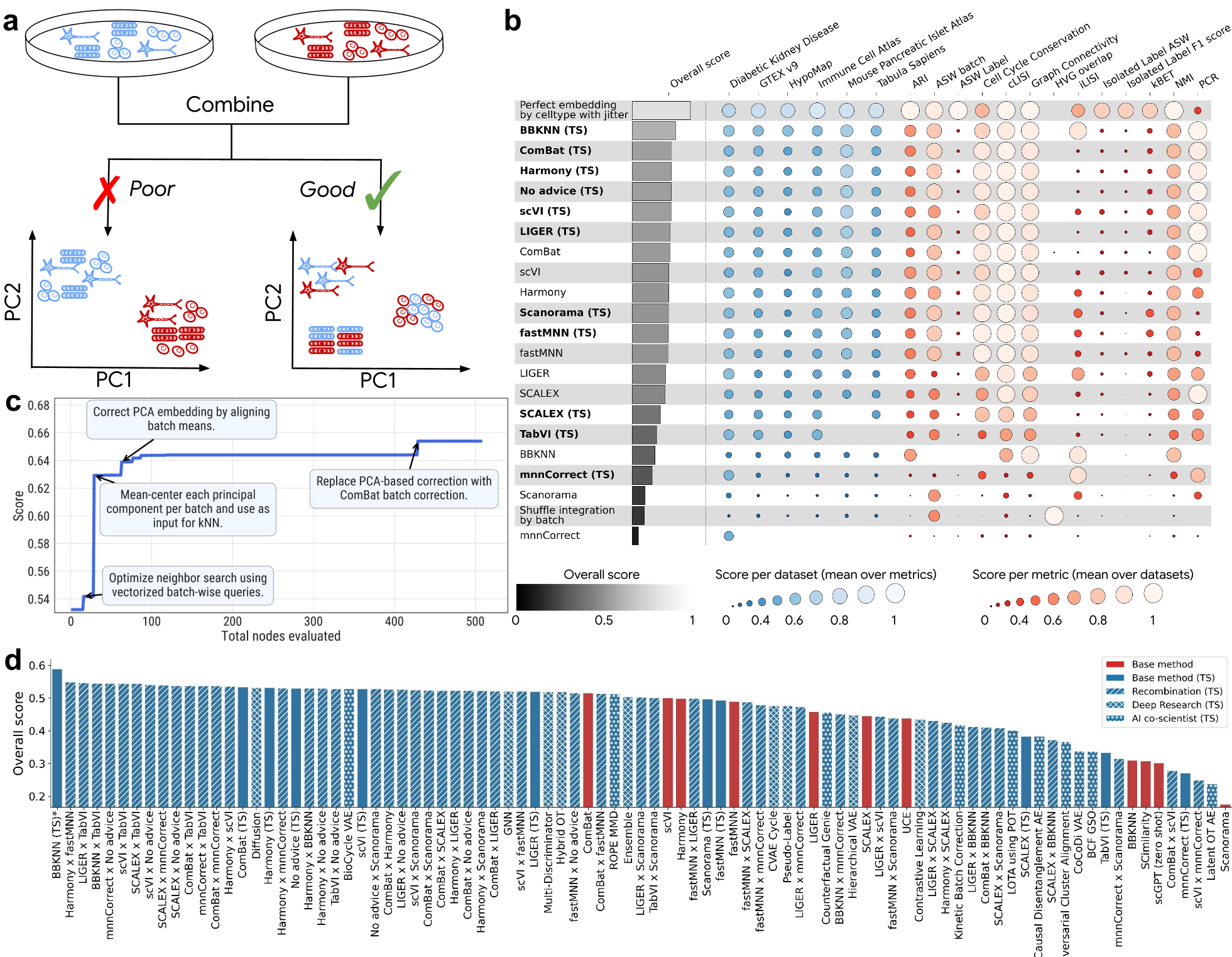 Figure 2: Performance comparison showing ERA's superior accuracy (WIS) across the majority of U.S. states compared to the CDC ensemble.
Why It Works: The "Needle-in-the-Haystack" Effect
The authors highlight a critical phenomenon: Breakthrough Plots. As the tree search progresses, the score often remains flat until a specific "semantic mutation" (like a new feature transform or a change in optimizer) triggers an abrupt jump in performance. Humans lack the patience to perform the thousands of trial runs required to hit these "needle-in-the-haystack" solutions; ERA does not.
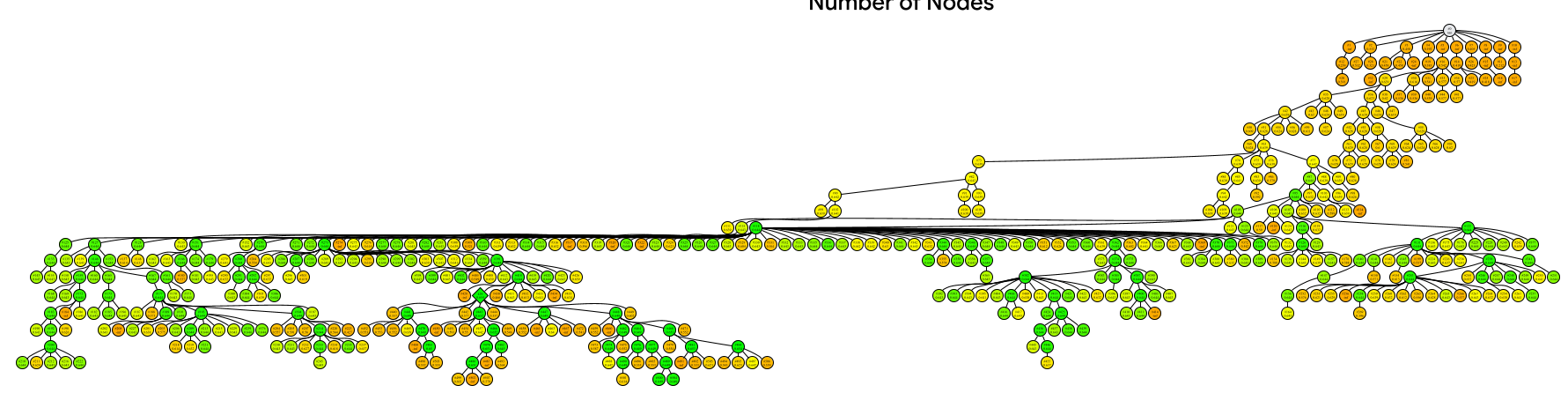 Figure 3: A breakthrough plot for scRNA-seq batch integration showing how specific code modifications lead to stepwise increases in metric scores.
Critical Insight: Beyond Empirical Optimization
ERA represents a massive leap in Empirical Software Engineering, but the authors are careful to distinguish this from "Genuine Discovery." While ERA excels at maximizing a score, genuine science requires reasoning about causal mechanisms.
However, the paper hints at the future: by providing ERA with structural priors (like brain wiring diagrams in the ZAPBench task), the system began to recover causal effective connectivity. This suggests that if we can "score" a hypothesis, ERA can discover the underlying theory.
Conclusion & Future Outlook
ERA proves that LLMs, when unshackled from "one-shot" constraints and embedded in a rigorous search framework, can outperform human engineers. For any scientific field where a metric can be defined—from climate modeling to drug discovery—the "trial and error" phase of research is about to accelerate by orders of magnitude.
Takeaway: We are entering the era of "Agentic Discovery," where the scientist's role shifts from writing the code to defining the Metric and the Search Space.