
Predicting Bank Telemarketing Success: A Comparative AI Approach
Applying AI Techniques to Predict the Success of Bank Telemarketing
This research applies three AI techniques—Logistic Regression (LR), Decision Tree (DT), and Support Vector Machine (SVM)—to predict the success of bank telemarketing for long-term deposits. Using the Portuguese bank dataset from the UCI repository, the study achieves a peak classification accuracy of 90.8% using Logistic Regression.
TL;DR
Telemarketing remains a vital but costly tool for banks. This study evaluates three foundational AI models—Logistic Regression, Decision Trees, and SVM—to predict whether a customer will subscribe to a term deposit. Results show that Logistic Regression is the most robust predictor with 90.8% accuracy, while Decision Trees offer better discriminative power (AUC).
Moving Beyond the "Cold List"
In the banking sector, a "List" is considered the lifeblood of marketing. However, many lists are "Cold," meaning they lack segmentation, leading to poor interaction rates and high costs. The authors argue that the competitive advantage lies in processing efficiency: using AI to transform "Cold Lists" into "Targeted Clusters" by predicting customer behavior before a single phone call is made.
Methodology: The Traditional ML Trifecta
The research leverages the classic Portuguese banking dataset (45,211 profiles) and tests three distinct mathematical approaches:
- Logistic Regression (LR): Used for its strength in binary classification, transforming independent variables into a probability score via the sigmoid function.
- Decision Tree (DT): Employed to capture non-linear relationships and generate "If-Then" rules that are easily interpretable for bank managers.
- Support Vector Machine (SVM): Utilized to find the maximum margin hyperplane, particularly useful for high-dimensional customer data.
 Figure 1: Conceptual overview of the AI-enhanced telemarketing workflow.
Experimental Results & Insights
The evaluation focused on four key metrics: Accuracy, Recall, F1-score, and ROC-AUC.
| Model | Accuracy | Recall | F1-Score | ROC-AUC |
|---|---|---|---|---|
| Logistic Regression | 0.908 | 0.976 | 0.949 | 0.679 |
| Decision Tree | 0.887 | 0.931 | 0.934 | 0.731 |
| SVM | 0.899 | 0.619 | 0.945 | 0.619 |
Key Breakthroughs:
- The Accuracy Leader: Logistic Regression achieved the highest overall accuracy (90.8%), suggesting that the relationship between demographics and deposit subscription has strong linear components.
- The Precision Balance: While LR wins on accuracy, the Decision Tree (DT) achieved a significantly higher ROC-AUC (0.731). This suggests DT is better at handling the "unbalanced" nature of the data (where subscribers are the minority).
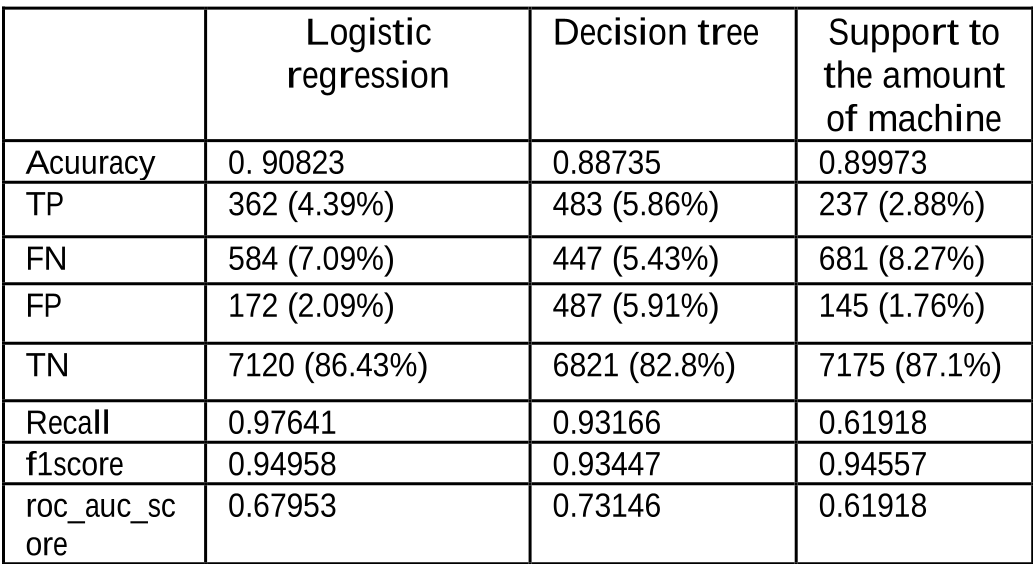 Figure 2: Detailed Confusion Matrix and Metric Comparison.
Critical Analysis & Professional Perspective
The study successfully demonstrates that even "classic" AI techniques can achieve over 90% accuracy in real-world banking scenarios.
Limitations: The paper relies on standard parameters (e.g., Linear kernel for SVM). In a modern production environment, solving the class imbalance problem (as subscribers are often less than 10% of the data) would require techniques like SMOTE or cost-sensitive learning to further improve the ROC-AUC beyond 0.73.
Future Outlook: The next step for this research should be the inclusion of Temporal Data. Marketing success often depends on macroeconomic trends (interest rates) and the timing of the call. Integrating these dynamic features into a Gradient Boosting framework (like XGBoost) would likely push performance into the 95%+ range.
Conclusion
By implementing LR or DT models, banks can pre-filter their telemarketing lists, focusing resources strictly on high-probability leads. This doesn't just increase revenue; it improves the customer experience by reducing unwanted solicitation for those unlikely to engage.