
AI and Information Tech: Breathing Life into Ideological and Political Education
Discussion on Artificial Intelligence and Information Technology Application of in the Teaching of Ideological and Political Courses
This paper investigates the integration of Artificial Intelligence (AI) and Information Technology into Ideological and Political (Ide.&Pol.) courses. It proposes a framework utilizing AR/VR, virtual assistants, and intelligent platforms to transform abstract theories into immersive, interactive learning experiences.
TL;DR
This paper addresses the long-standing challenge of "dry" and "abstract" Ideological and Political (Ide.&Pol.) education. By leveraging AI, AR/VR, and intelligent cloud platforms, the author proposes a shift from passive "knowledge indoctrination" to active, immersive exploration. The core achievement is a framework that successfully bridges the gap between complex theories and student engagement in the digital age.
Background: The "Head-Down" Crisis in the Classroom
In the context of modern higher education, traditional lecturing often fails to capture the attention of "digital natives." Ideological courses, in particular, face a "head-down" crisis where students are physically present but mentally detached due to the abstract nature of the content. Previous digitalization efforts often focused only on the form (e.g., uploading PPTs) rather than the essence of interaction.
Motivation: Why AI is the "Game Changer"
The author identifies a critical insight: Ide.&Pol. education must be internalized into the heart before it can be externalized into action. AI provides the unique capability to:
- Animate the Abstract: Turning text-based history into interactive 3D simulations.
- Scale Personalization: Providing virtual assistants to solve the teacher-shortage problem in large-scale lectures.
- Align with Student Habits: Meeting students in their natural habitat—the digital world.
Methodology: A Three-Tiered Integration
The paper outlines a comprehensive methodology for structural reform in teaching:
1. Preparation: Data-Driven Insights
Teachers use network technology to collect multi-modal materials (audio, animation) and utilize data platforms to gauge student baseline knowledge before the first slide is even shown.
2. Classroom: Immersive Interaction
The core innovation lies in the use of Virtual Historical Figures. Imagine a dialogue where a student can "interface" with a digital version of a philosopher to discuss theory.
- AR/VR Integration: Transforming the classroom into a "task-driven" scene where theory is applied in role-playing.
- Real-time Feedback: Implementing "bullet chats" (barrage functions) during lectures, allowing students to evaluate peer answers and teacher explanations instantly.
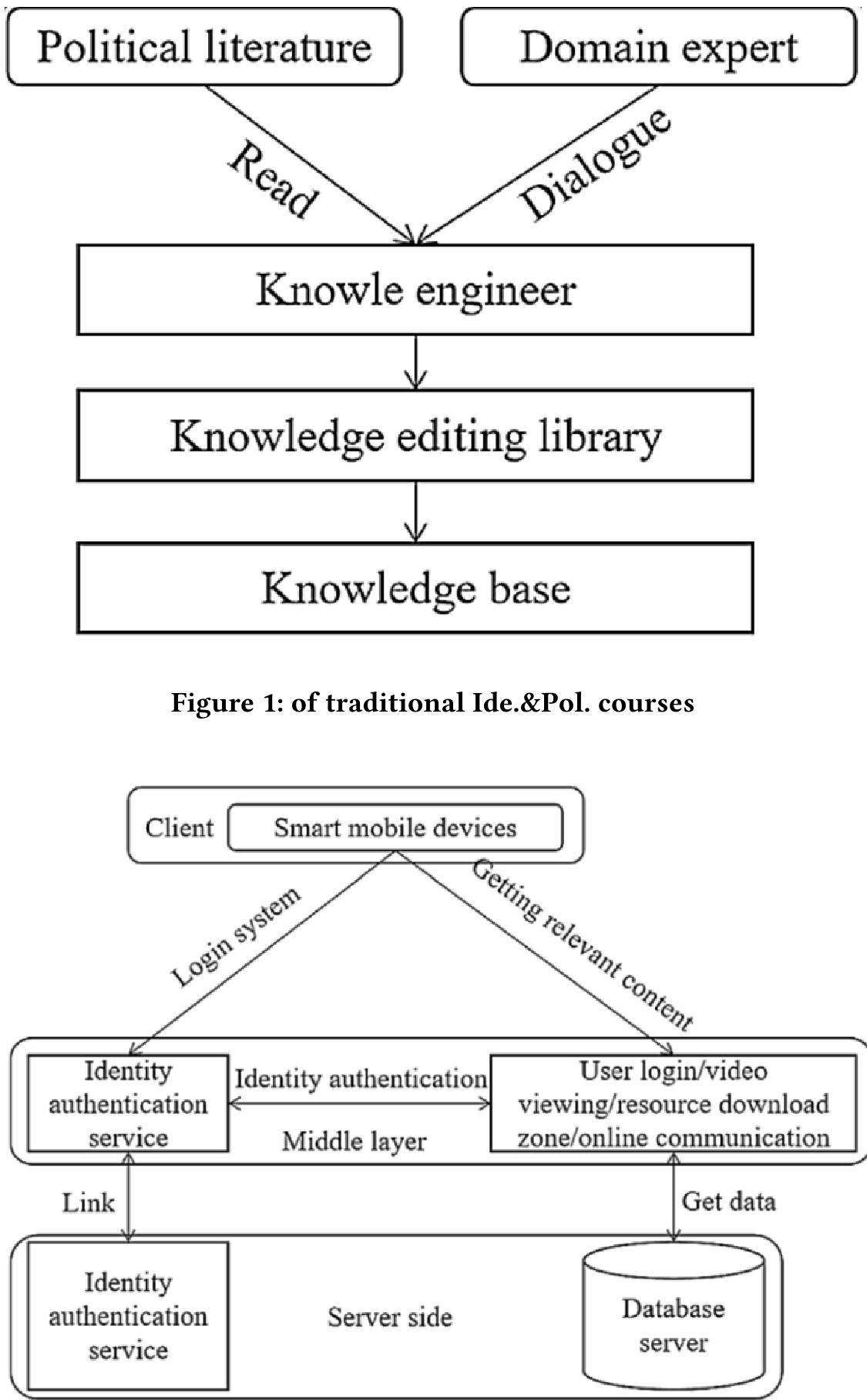 Figure 1: The synergy between AI/IT and Ide.&Pol. Education structure.
3. After-Class: The Dialogue Mechanism
The education doesn't end at the bell. The paper emphasizes using BBS, WeChat, and personal blogs to create an equal teacher-student dialogue mechanism, ensuring that guidance continues in the students' private digital spaces.
Results & Critical Impact
The paper highlights that while technology provides the "stage," the "craftsman" spirit of the teacher remains the "director." The key performance indicator is the increase in the "head-up rate"—a qualitative shift where students become active explorers rather than passive recipients.
| Feature | Traditional Method | AI-Enhanced Method |
|---|---|---|
| Content | Static, Text-heavy | Multi-modal, Dynamic |
| Interaction | One-way (Lecture) | Two-way (Virtual Chat, Danmu) |
| Assessment | Final Exam (Summative) | Task-based (Formative) |
Deep Insights & Conclusion
The "Form vs. Content" Trap
A significant warning from the author is the "Excessive Emphasis on Form." Technology should not be a gimmick. If a teacher uses high-tech tools but ignores the value-leading nature of the course, the educational purpose remains unfulfilled.
Future Outlook
The work suggests that the future of Ide.&Pol. courses lies in the "Intelligence + Safety" environment. As schools solve the lack of technical support platforms, the role of the teacher will evolve from a "lecturer" to a "trainer of sentiment" and a "meaning constructor."
In conclusion, this paper serves as a roadmap for higher vocational colleges to revitalize their curriculum. It proves that when AI is used to foster empathy and perception rather than just automating tasks, it becomes a powerful tool for moral and political growth.