
From Passive Viewing to Active Sharing: Deciphering the AISAS Model in the Vlog Era
Implementation of Marketing Communication Strategy in Attention, Interest, Search, Action, and Share (AISAS) Model through Vlog
This study investigates the implementation of the AISAS (Attention, Interest, Search, Action, Share) marketing model through Video Blogs (Vlogs) on YouTube. By utilizing an experimental quantitative approach, the research explores how specialized vloggers (beauty, food, and travel) serve as critical information hubs that drive consumer purchasing decisions and subsequent information sharing in the digital era.
Executive Summary
TL;DR: This paper explores the paradigm shift in consumer behavior from the traditional AIDA/AIDMA models to the AISAS (Attention, Interest, Search, Action, Share) framework within the context of YouTube Vlogging. The study identifies vloggers—specifically in the beauty, food, and travel niches—as the pivotal agents who trigger the "Search" and "Share" behaviors that are unique to the digital age.
Positioning: This work serves as an empirical validation of the Dentsu-pioneered AISAS model, bridging the gap between traditional marketing theory and modern social media influence.
The Evolution of the Consumer Funnel: Motivation and Pain Points
The cornerstone of early marketing was linear: grab a customer's Attention, spark Interest, create Desire, and prompt Action (AIDA). However, the internet has fractured this linear path.
The authors argue that consumers are no longer passive recipients. In the digital "Information and Communication Technology" (ICT) landscape, there is a fundamental hunger for detail. Before a purchase happens, there is a "Search" phase; after the purchase, there is a "Share" phase. Traditional models fail to capture this recursive cycle, where one person's "Share" becomes the next person's "Search" trigger. This gap represents a significant Blindspot for brands relying solely on conventional advertising.
Methodology: The AISAS Framework in Vlogging
The researchers utilized a positivistic experimental approach, focusing on the unique affordances of YouTube—a platform that allows for "broadcast yourself" storytelling.
The paper draws a clear distinction between the legacy models and the AISAS model:
| Stage | AIDA Model | AIDMA Model | AISAS Model |
|---|---|---|---|
| Cognitive | Attention | Attention | Attention |
| Affective | Interest, Desire | Interest, Desire | Interest |
| Behavior | Action | Memory, Action | Search, Action, Share |
The Vlogger as the Informational Hub
The core insight is that vloggers (Beauty, Travel, Food) do not just "advertise"; they "demonstrate." Their content—often recording personal thoughts and natural interactions—provides the Search results consumers are looking for.
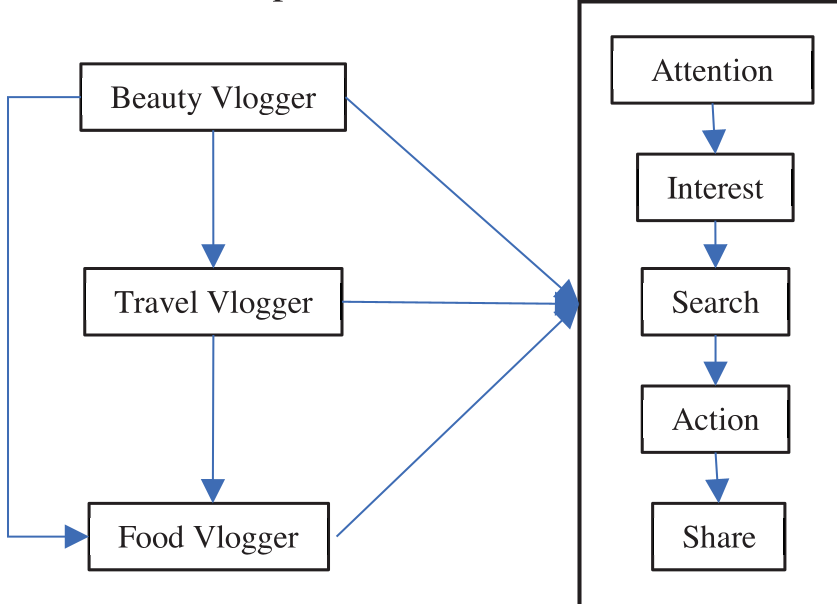 Figure 1: The researcher’s conceptual framework for how Vlogs facilitate the AISAS stages.
Key Results and Experimental Insights
The study highlights several critical findings:
- Search as Validation: Consumers use Vlogs to move beyond corporate claims. The more natural and "expert" a vlogger appears (e.g., using a personal camcorder in a bedroom), the more trust is established during the Search phase.
- The "Share" Multiplier: Unlike the AIDA model, where the funnel ends at 'Action,' the AISAS model proves that 'Share' creates a recurring cycle. This sharing of positive or negative sentiment via comments and video responses effectively reduces marketing costs for firms by utilizing organic consumer labor.
- Niche Effectiveness: Specific categories like "Beauty Hauls" and "Food Reviews" are particularly potent under the AISAS model because they provide the instructional detail necessary for the 'Action' phase.
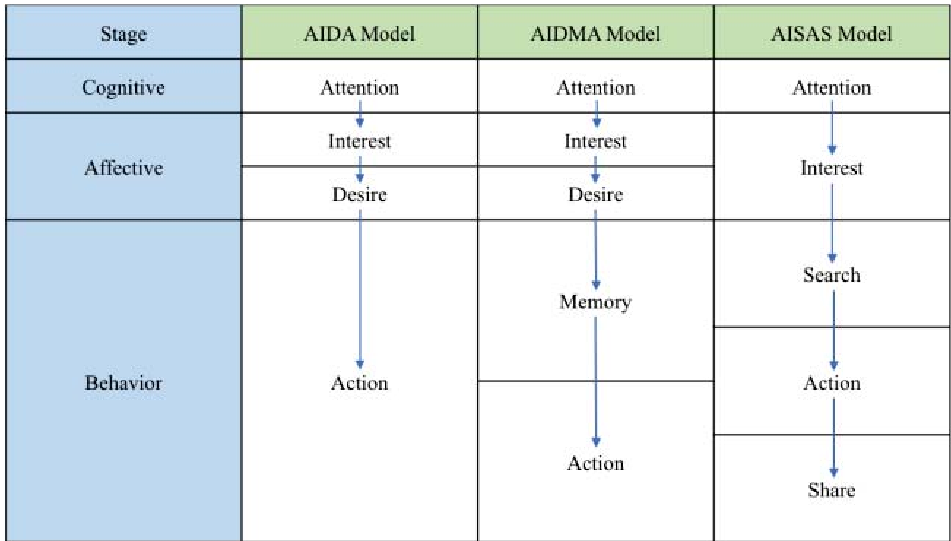 Figure 2: Evolution of consumer behavior models from cognitive to behavioral stages.
Critical Analysis & Conclusion
Takeaway
The paper effectively demonstrates that in the modern ICT landscape, "The Share is the new Ad." Brands must stop focusing on the "Desire" phase (AIDA) and instead provide the tools and content (via vloggers) that facilitate the "Search" and "Share" behaviors.
Limitations & Future Work
While the study provides a robust quantitative baseline, it relies on a specific set of vlogger niches. A key limitation is the lack of focus on algorithm-driven discovery. In 2024 and beyond, the "Attention" phase is heavily mediated by Recommendation Engines (AI), which might bypass some stages of the AISAS model or accelerate them in ways not fully captured in this 2011-2018 era methodology. Future research should investigate how Vertical Short-Form Video (TikTok) compresses the AISAS cycle compared to the "Full Video" YouTube format studied here.