
AL-TUNE: Revolutionizing UAV Controller Tuning with Model-Free In-Flight Adaptation
AL-TUNE: A Family of Methods to Effectively Tune UAV Controllers in In-flight Conditions
The paper introduces AL-TUNE, a family of real-time, model-free auto-tuning methods for UAV altitude controllers. Utilizing zero-order (derivative-free) optimization like Fibonacci and Golden-search, it enables in-flight gain adaptation based solely on basic sensor measurements, achieving high-performance tracking without the need for complex mathematical models.
TL;DR
Researchers have developed AL-TUNE, a family of algorithms that allow drones to "tune themselves" while flying. By using simple mathematical search patterns (like Fibonacci search), a UAV can optimize its altitude controller gains without needing a complex physics model or a supercomputer on board. It is fast, deterministic, and proven to work in real-world windy conditions.
The Problem: The "Tuning Torture"
In the world of autonomous drones, precision is everything—especially during tasks like grasping objects or landing on a moving car. Traditionally, getting a drone to behave perfectly requires one of two things:
- Manual Tuning: An expert pilot spends hours or days tweaking parameters in the field.
- Model-Based Tuning: Engineers build a complex mathematical model of the drone's physics.
The Catch? As soon as you add a payload or a gust of wind hits, the model becomes obsolete. Existing autotuning solutions often rely on heavy machine learning or fuzzy logic, which are either too slow for small on-board chips or require "expert knowledge" to set up.
The Insight: Zero-Order Optimization
The authors of AL-TUNE realized that you don't need to calculate complex derivatives or "train" a neural network to find the best controller gains. Instead, you can treat the problem as a minimum-seeking task using Zero-Order algorithms.
The core idea is simple:
- Pick a range for your controller gains ( and ).
- Fly the drone using two different gain values within that range.
- Measure which one performs better (lower tracking error).
- Discard the "bad" half of the range and repeat.
The Methodology: The Bootstrap Scheme
AL-TUNE uses a Bootstrap cycle. Since a PID controller has multiple gains, the algorithm fixes one (e.g., ) and optimizes the other (), then swaps them. This coordinate-descent-like behavior ensures the drone remains stable throughout the process.
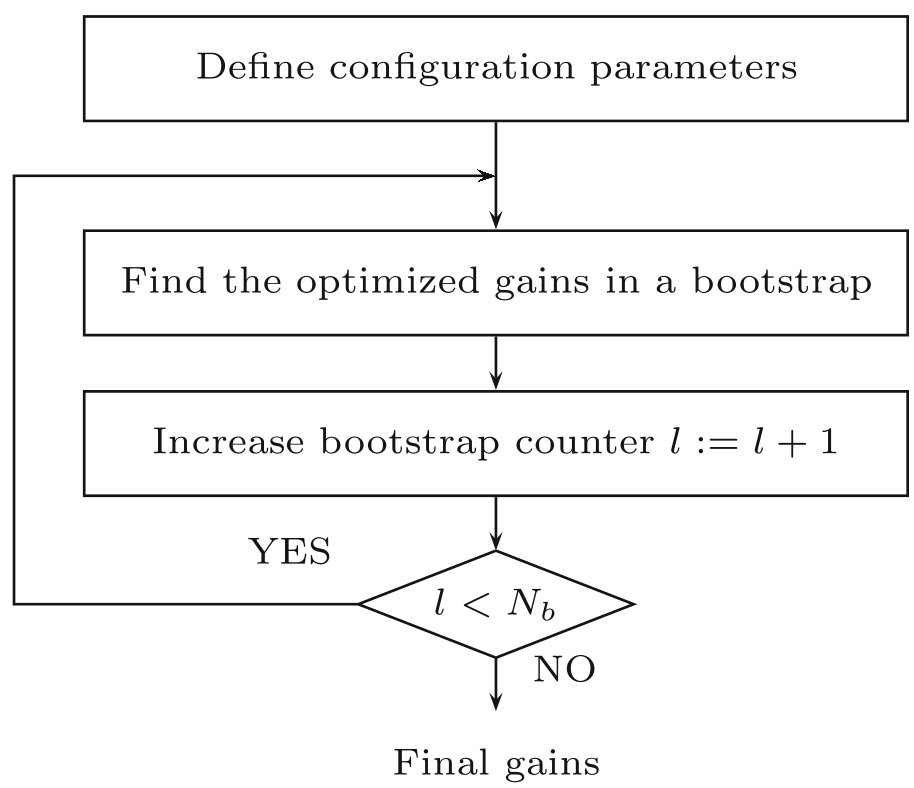 Figure 1: The AL-TUNE Flowchart showcasing the iterative selection and evaluation of gain parameters.
The paper evaluates several search methods:
- FIB (Fibonacci): Highly efficient range reduction.
- GLD (Golden Section): Similar to FIB but uses the constant Golden Ratio.
- EQL (Equal Division): Proved to be the most robust in noisy environments because it keeps the search points far enough apart to distinguish "real" improvements from "wind noise."
Experimental Proof: From Simulation to Desert Realities
The team tested AL-TUNE on a DJI hexacopter equipped with a PixHawk autopilot and an Intel NUC. They didn't just test it in a lab—they used data from the MBZIRC 2017 Challenge, involving high-speed landing on moving vehicles.
Key Findings:
- Robustness: Even with wind gusts, the algorithm converged to optimal gains.
- Adaptability: When a 0.5kg load was added, the algorithm automatically increased the proportional gain () to compensate for the added mass.
- Efficiency: The "Equal Division" (EQL) method emerged as the winner for real-world use because its contraction ratio is less "aggressive," preventing the algorithm from getting confused by sensor noise.
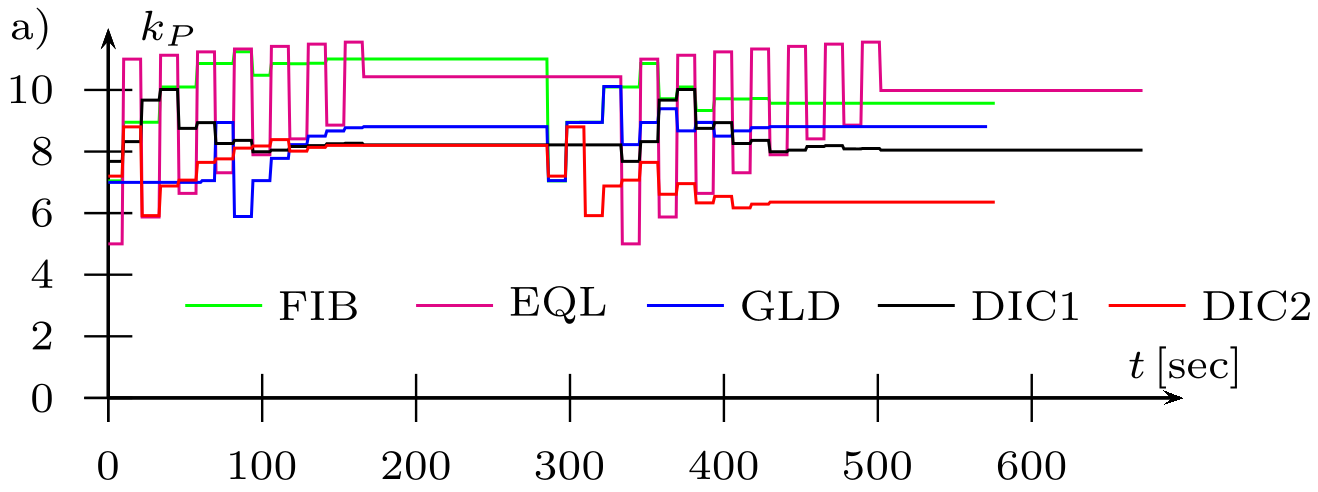 Figure 2: Altitude tracking error convergence. Note how the error narrows as the AL-TUNE process identifies the optimal gains.
Why It Matters (The Takeaway)
The real value of AL-TUNE is its simplicity. In an era where "AI" is the buzzword for everything, this paper reminds us that elegant, deterministic algorithms can often outperform complex ones in reliability and speed. For commercial drone operators—from delivery services to search-and-rescue—AL-TUNE offers a way to ensure drones are always operating at their peak performance, regardless of the environment or payload changes.
Future Horizon
The researchers plan to extend this to multi-UAV pairs, where two drones can assist each other in tuning, and to more complex "aerial manipulation" tasks where the center of mass shifts constantly.
Keywords: UAV, PID Tuning, Model-Free, Real-Time Optimization, Zero-Order Algorithms, Robotics.