
Mind the Gap: Quantifying the Privacy Paradox in Third-Party Social Apps
An Alert System Based on Shared Score for Online Social Networks
This paper introduces an "Alert System" for Online Social Networks (OSNs) designed to quantify and visualize privacy risks associated with Third-Party Applications (TPAs). The system computes a "Share Score" by comparing actual user data exposure against a survey-based preferred privacy level, utilizing emojis to categorize TPAs as Good, Satisfactory, or Bad.
TL;DR
Online Social Networks (OSNs) like Facebook have become gateways for thousands of Third-Party Applications (TPAs). While users value their privacy, they often succumb to the "All or Nothing" permissions trap. This paper presents a Share Score Alert System that calculates the numerical gap between what you think you are sharing and what you actually give away, using emojis to label data-hungry apps.
The "All or Nothing" Trap: Why Privacy Settings Fail
The modern OSN ecosystem operates on a predatory permission model. To play a game or use a utility, a user must "Agree" to share a laundry list of attributes—Email, Birthday, Friends List, and even Private Messages.
The authors identify a critical Privacy Paradox:
- Lack of Transparency: Once data leaves the OSN for a TPA server, the user loses all control.
- Cognitive Overload: Standard warning screens are so frequent they become white noise.
- The Least Privilege Violation: Research shows that 91% of top apps request data that is entirely unnecessary for their core functionality.
Methodology: Calculating the Share Score
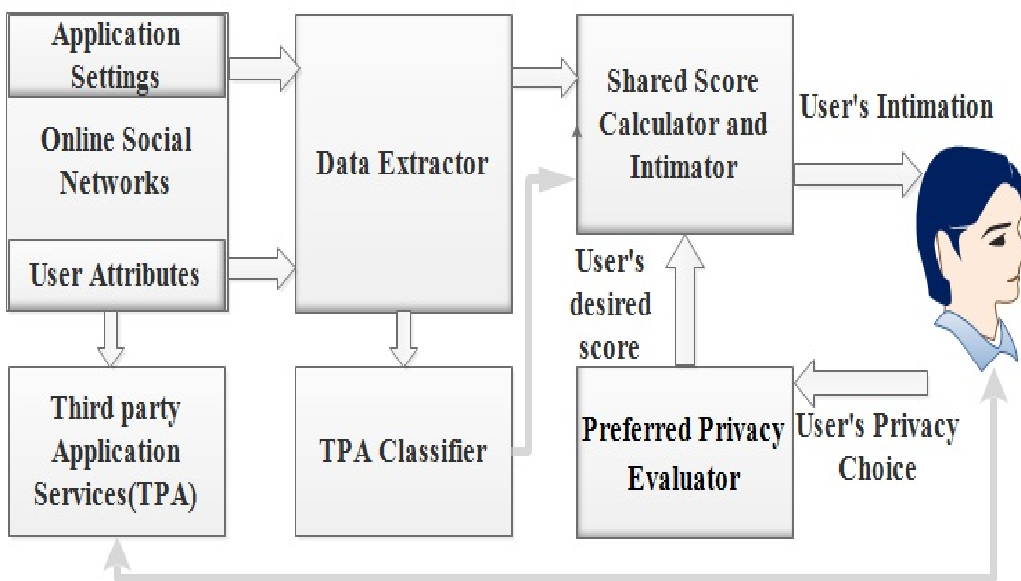
The core of the research is the Shared Score Calculator, which bridges the gap between user intention and reality.
1. Data Extraction & Sensitivity Weighting
The system categorizes 17 user attributes based on Facebook's hierarchy:
- Basic: Public profile, Email.
- Extended Profile: Work history, Hometown, Birthday.
- Extended Permissions: Messages, Relationships, Photos.
Each category is assigned a weight (). The Share Score () is then calculated: A user sharing "Relationship Status" (high sensitivity) receives a much higher (worse) share score than someone sharing just their "Public Profile."
2. The Visual Feedback Loop
Instead of complex legal jargon, the system classifies TPAs into Good, Satisfactory, and Bad based on their data acquisition breadth. Emojis are used to create an immediate psychological impact.
Experimental Insights: A Stark Reality
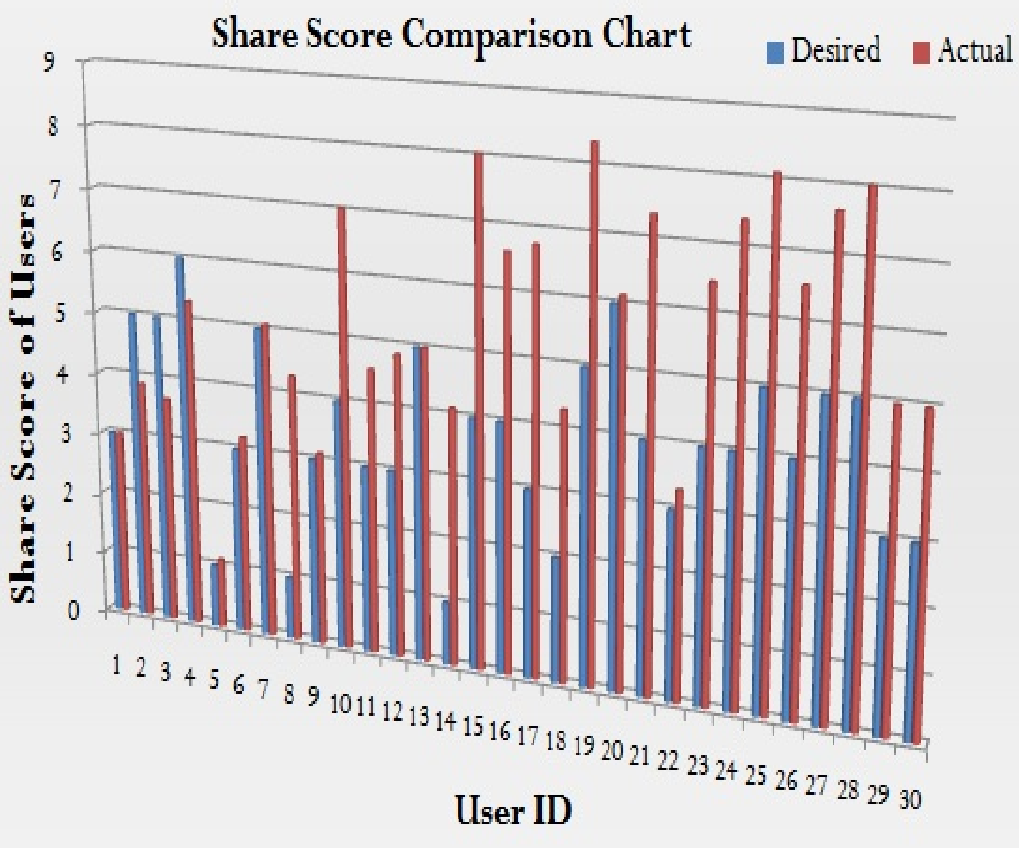
The study analyzed 122 users (ages 19-37) across 170 applications. The results were telling:
- The Over-Sharers: 53% of users were sharing 1.5x more than their stated comfort level.
- The Extreme Cases: 6% of users were sharing 4 times more data than they preferred.
- The Mismatch: Only 41% of users actually understood their sharing settings well enough to match their actual behavior with their preferred score.
Critical Insight & Future Outlook
The brilliance of this work lies in its Human-Centered Computing approach. By converting abstract data permissions into a single "Score" and a relatable "Emoji," the researchers tackle the cognitive barrier that prevents users from exercising privacy rights.
Limitations: The current system is reactive (it informs) rather than proactive (it doesn't block data). Furthermore, it does not yet track "indirect leakage"—where a TPA sells your data to a fourth-party aggregator or ad broker.
The Takeaway for Developers: As privacy regulations (like GDPR) tighten, systems that provide visual awareness will become essential features rather than academic prototypes. The goal is to move from "All or Nothing" to "Informed and Minimalist" data sharing.