
Unmasking the Invisible: How Graph Topology Exposes Private Data in Social Networks
Algorithms for Data Retrieval from Online Social Network Graphs
This paper presents an automated data extraction framework and a novel vulnerability metric for Online Social Network (OSN) graphs, specifically tested on MySpace. By combining nodal content (PII) with graph-theoretical properties like clustering coefficients and in-degree/out-degree, the authors identify nodes most susceptible to social engineering attacks.
TL;DR
Even if your profile is set to "Private," you might still be one of the most vulnerable nodes in a network. This paper explores an automated approach to scraping MySpace data to build friendship graphs and introduces a Vulnerability Metric that combines what you share with what your friends share. The results prove that your social circle is often a louder whistleblower than your own profile.
The "Neighborhood Watch" Paradox
In the world of Online Social Networks (OSNs), we often assume that privacy is a binary switch. However, the authors of this study argue that privacy is actually a structural property.
Previous works often struggled with "top friends" lists which provided a sparse view of the world. This paper moves toward "all friends" extraction, revealing a much denser and more dangerous web. The core insight is simple yet terrifying: Vulnerability isn't just about what you post; it's about where you sit in the graph. If you are the center of a highly connected cluster (clique), information about you leaks through your neighbors like water through a sieve.
Methodology: Calculating the Cost of Connection
The researchers developed a multi-stage pipeline:
- Automated Extraction: Using a BFS crawler to bypass structural hurdles in MySpace.
- Graph Construction: Modeling the data as a directed multigraph .
- Vulnerability Scoring: Merging nodal content with structural metrics.
The Vulnerability Formula
The paper defines Individual Vulnerability () based on PII (Personally Identifiable Information) like Date of Birth, Full Name, and Mobile Number. But the true "Worst Case Scenario" is captured by Absolute Vulnerability ():
Where (Relative Vulnerability) is the sum of the vulnerabilities of all your neighbors. This means even if you share nothing (), a high from over-sharing friends can drive your to critical levels.
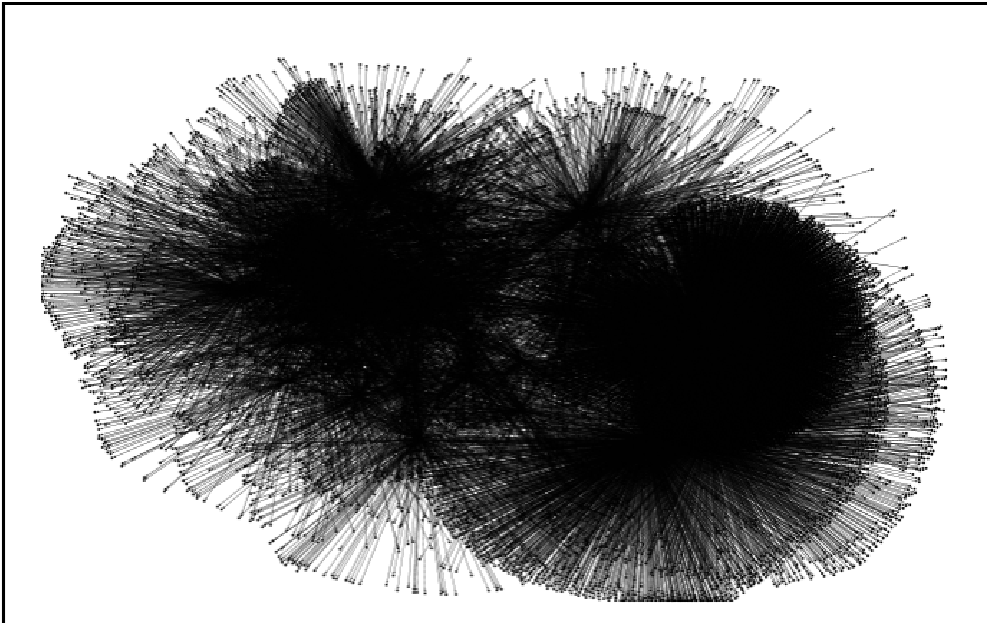 Figure 1: The extracted MySpace friendship network, showing the complexity of interconnectivity.
Key Metrics & Experimental Insights
The study analyzed 10,196 friends and found several structural "red flags":
- Clustering Coefficient (0.0354): While generally low, specific "cliques" showed high connectivity where information flows instantly.
- Average Path Length (3.229): Significantly lower than Milgram’s "Six Degrees," suggesting that in modern OSNs, social engineering attacks can jump across a network in just 3 steps.
- In-degree vs. Out-degree: A private user might have an out-degree of 0 (hiding their friends), but a high in-degree (appearing on many public lists), making them easily discoverable via reverse-lookup.
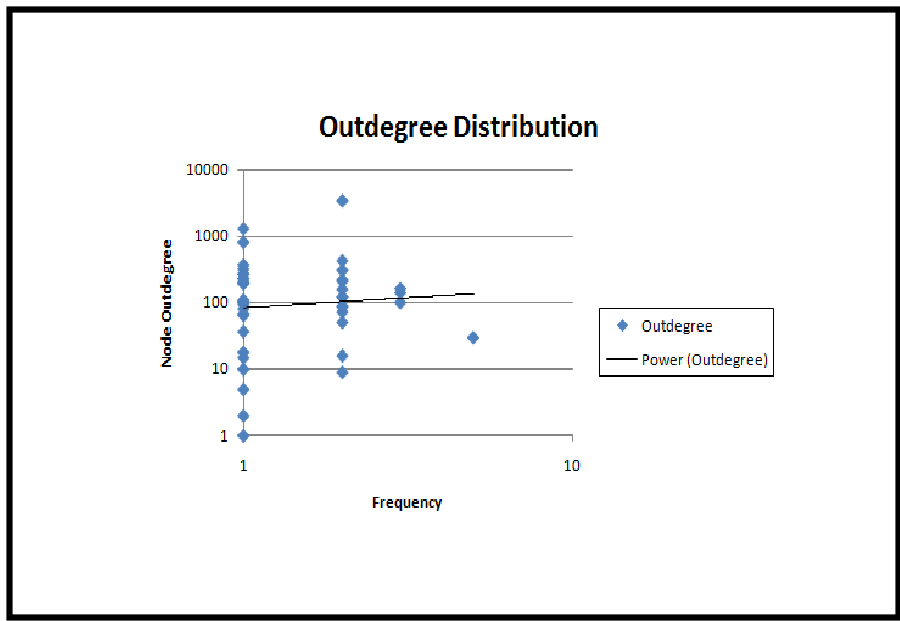 Figure 2: Visualizing how a node (Node 1) acts as a sink for information through reciprocal relationships (In-degree/Out-degree).
Validation: The "Private" Fallacy
The authors validated their metric across three case studies (Highest, Medium, and Lowest vulnerability). One of the most striking findings was that a Private Profile with only 5/6 attributes shared could still be identified as vulnerable if it resided in a dense neighborhood.
| Profile Type | No. of Vulnerable Attributes | Absolute Vulnerability () | Justification |
|---|---|---|---|
| Highest (Public) | 6/6 | 145.87 | Extreme spread due to 230 out-degree neighbors. |
| Lowest (Private) | 5/6 | 1.0 | Isolated; no presence in other friends' lists. |
Critical Analysis & Future Outlook
This work serves as a stark reminder that Anonymity is not Privacy. The ability to infer a private "friends list" just by looking at the neighbors' public lists is a major flaw in OSN architecture.
Limitations: The study was limited by processing power (larger graphs crashed the visualization software) and the specific HTML-tag-dependency of their crawler, which breaks as MySpace updates its UI.
The Takeaway for Researchers: Future privacy-preserving algorithms must move beyond "Individual Privacy" and start calculating "Graph-Aware Privacy." Your security is only as strong as your most talkative friend.