
All Our Messages Are Belong to Us: Bridging the Gap Between Privacy and Usability in Social Networks
All Our Messages Are Belong to Us: Usable Confidentiality in Social Networks
The paper introduces a lightweight, non-disruptive confidentiality mechanism for Online Social Networks (OSNs) like Facebook, utilizing a browser-based Greasemonkey script to provide end-to-end AES encryption. The system achieves "usable security" by integrating visual security indicators and seamless cryptographic operations directly into the existing OSN user interface.
TL;DR
This research tackles the "Privacy Paradox"—where users claim to value privacy but sacrifice it for convenience—by introducing a seamless encryption plugin for Facebook. By utilizing client-side scripts and intuitive visual cues, the authors provide end-to-end confidentiality that requires zero cryptographic knowledge and adds less than 200ms of latency to the user experience.
Background & Motivation: The Centralization Trap
Modern Online Social Networks (OSNs) act as giant "privacy sinks." From the moment of birth, every interaction is stored persistently on servers we do not control. While end-to-end encryption (E2EE) exists, it is rarely found in mainstream social platforms because:
- Provider Self-Interest: OSNs rely on data mining for revenue.
- The Usability Barrier: Tools like PGP are notoriously difficult for average users.
- Context Disruption: Most security tools force users to leave their favorite interface to encrypt/decrypt messages.
The authors argue that for a security mechanism to be adopted, it must be unobtrusive and integrated into the common workflow.
Methodology: Invisible Cryptography
The system architecture relies on two components: a lightweight third-party authentication service and a browser extension (Greasemonkey).
1. The Interaction Model
Instead of building a new social network, the authors "skin" the existing one. The script intercepts the Facebook UI, adding encryption hooks to the message composer and decryption hooks to the message feed.
2. Physical Intuition: Visual Security Indicators
To solve the "Is this safe?" problem, the authors use a simple color-coding system:
- Red Borders: Indicate information that is currently unprotected but should be.
- Green Borders: Indicate that the content has been successfully decrypted and verified.
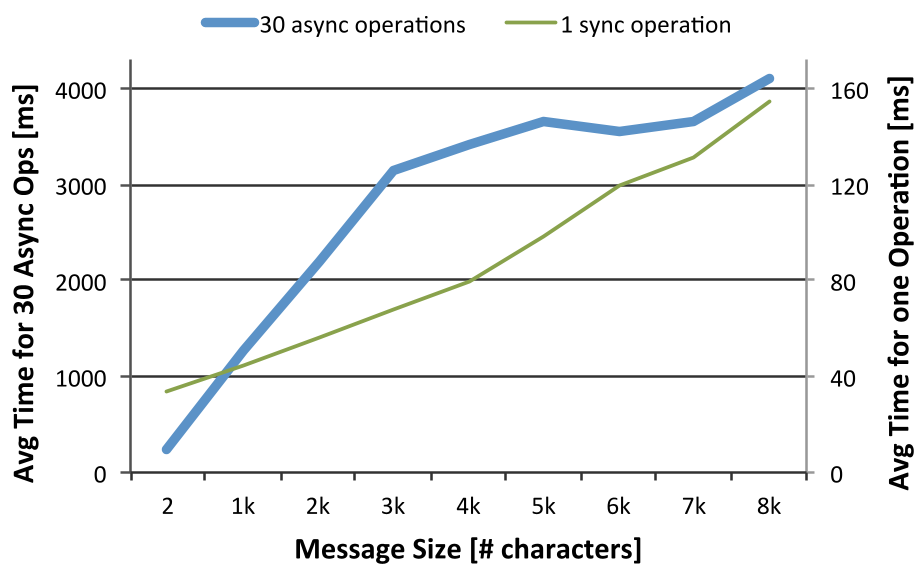 Figure 1: The modified Facebook message composer showing the integration of security controls.
Experiments & Performance
A study involving 20 students focused on two metrics: Onboarding Time and Technical Latency.
- Ease of Entry: The average user was up and running in just over 3 minutes. This is a massive improvement over traditional certificate-based encryption setups.
- Computation Overhead: Using AES (Symmetric Encryption), the delay for a standard message is nearly imperceptible. Even loading a history of 30 encrypted messages only takes between 222ms and 4s—often occurring while the rest of the Facebook page is still loading.
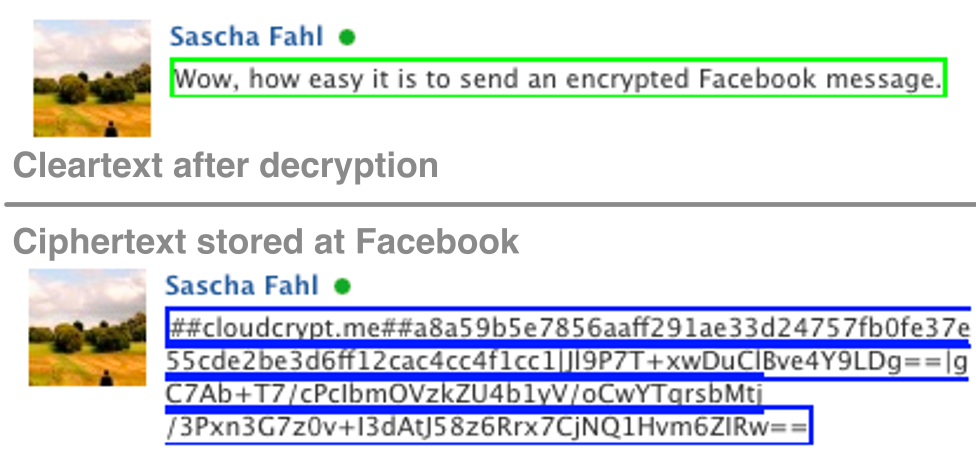 Figure 2: Side-by-side comparison of a message before and after client-side decryption.
Critical Analysis & Conclusion
Takeaway
The paper proves that "Usable Confidentiality" is possible even on proprietary, closed-source platforms. By moving the security logic to the browser (the "edge"), users can reclaim ownership of their data without waiting for OSN providers to implement privacy-first features.
Limitations
- Platform Dependency: The tool relies on the DOM structure of Facebook. If Facebook changes its UI code (which it does frequently), the script breaks.
- Trust in the Third Party: While the third-party service doesn't see the message content, it still handles the identity binding, creating a new point of potential (though minimized) failure.
- Mobile Gap: The solution is tied to desktop browsers (Firefox/Greasemonkey), leaving mobile app users—who make up the majority of OSN traffic today—unprotected.
Future Outlook
This work paved the way for modern "Privacy Plugins" and highlights the ongoing battle between user-side agency and platform-side control. As we move toward Web3 and decentralized identity, the "visual indicator" approach remains a gold standard for making security understandable to the masses.