
Beyond the Archive: Why Institutional Repositories are Failing the Social Media Test
Altmetrics of the Open Access Institutional Repositories: a webometrics approach
This study employs a webometric approach to analyze the "altmetric" presence of 2,185 Institutional Repositories (IRs) across 28 social tools, including ResearchGate, Facebook, and Wikipedia. Using Google-based link mention analysis, it reveals that most IR contents have a surprisingly low visibility on social platforms, identifying a critical gap between Open Access archiving and social impact.
TL;DR
Is self-archiving in an Institutional Repository (IR) enough to guarantee impact? According to Isidro F. Aguillo’s webometric study, the answer is a resounding "No." By analyzing 2,185 repositories across 28 social platforms, the research finds that most IR contents are virtually invisible on the social web. The culprit? A lack of promotional strategy and technical "best practices" that actually hide institutional identity.
The Visibility Paradox
The Open Access (OA) movement was built on the promise of democratization. By placing papers in IRs, research should be "more visible." However, the study identifies a Visibility Paradox: while the documents are technically "free" to read, they are rarely talked about, shared, or cited in the public sphere—at least not via their repository links.
The author argues that the "altmetrics" (alternative metrics) of these repositories are hampered by two main issues:
- Passive Management: Librarians focus on archiving rather than active dissemination.
- The Handle Trap: Using persistent URLs (pURLs) like
hdl.handle.netstrips away the institutional "brand" (e.g.,.edudomains) that often signals authority to a reader.
Methodology: Gaming the Google Black Box
One of the most impressive technical aspects of this paper is its webometric rigors. Measuring global link mentions is notoriously difficult because Google’s search results vary by data center.
To solve this, the research team:
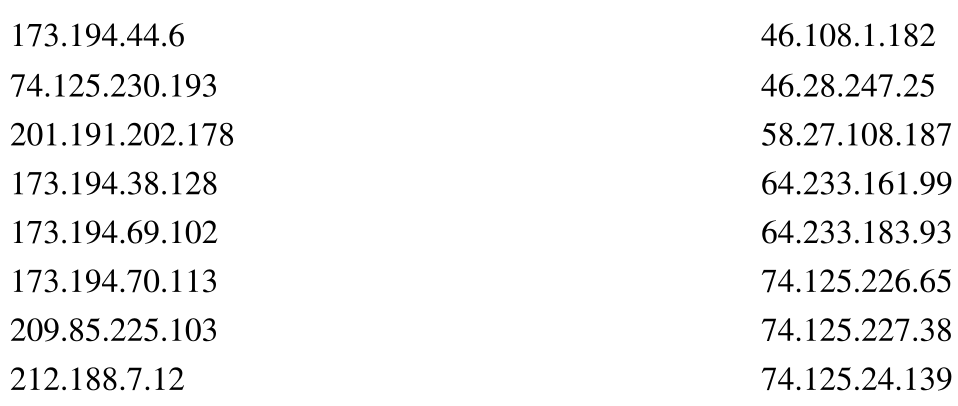
- Identified 150 Google IP addresses to find the most consistent data centers.
- Used "Link Mentions": Searching for the URL as a text string (e.g.,
site:facebook.com "digital.csic.es") rather than just active backlinks. This captures citations in plain text where a clickable link might not exist.
Key Findings: A Ghost Town of Mentions
The data suggests that for the vast majority of universities, their IR is a "silo."
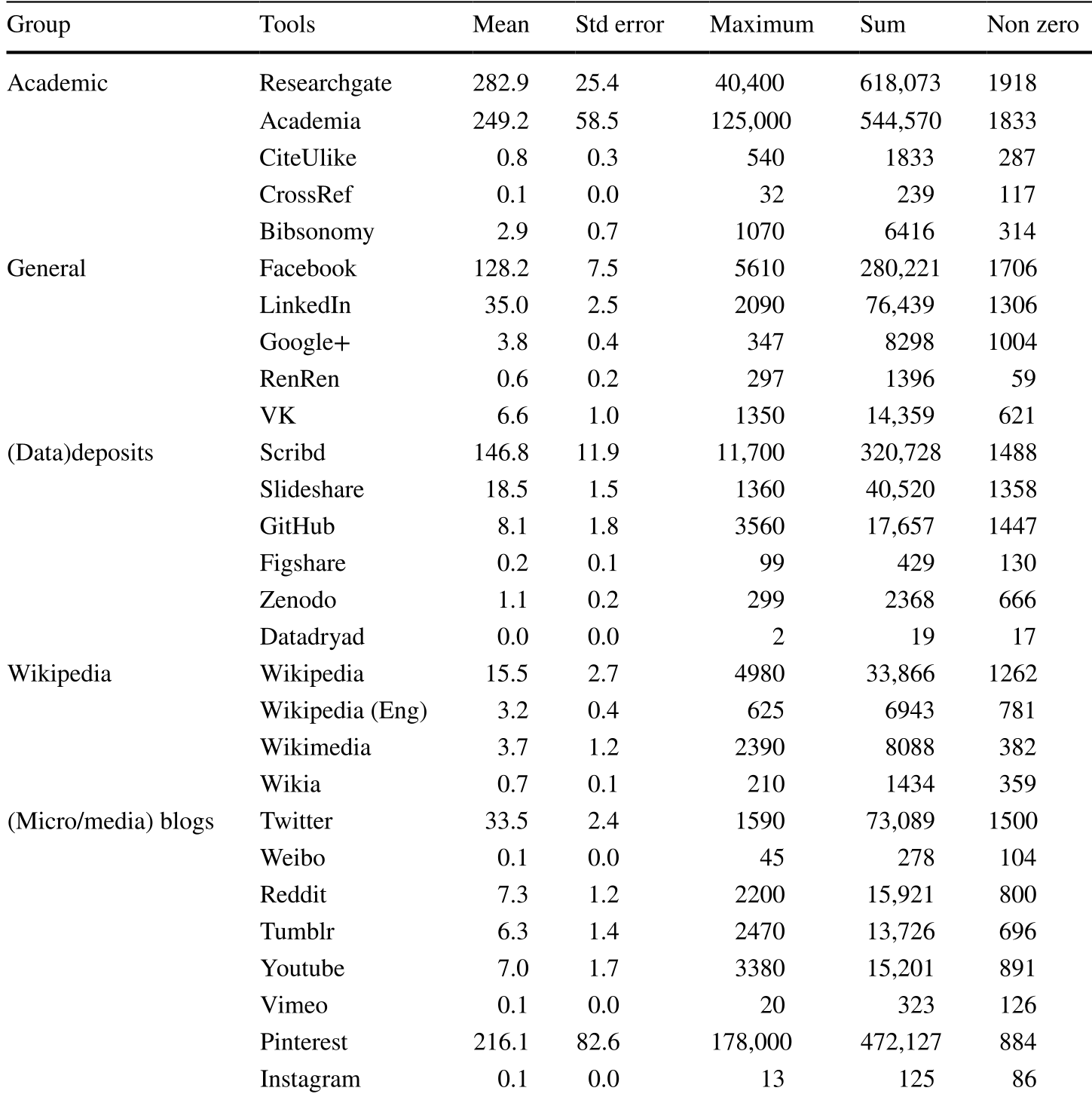
- Academic Networks Win (Relatively): ResearchGate and Academia.edu are the primary drivers of IR mentions, outperforming general networks like LinkedIn or Facebook.
- The Wikipedia Mystery: Despite Wikipedia’s requirement for references, IR links are surprisingly rare. The author suggests editors may prefer citing the "canonical" version (the journal DOI) or local language sources rather than the repository version.
- Geographic Divide: North America and Europe account for the lion's share of social mentions, while Asia and Latin America struggle with lower visibility despite having a high number of repositories.
Critical Insight: The "Handle" vs. "Branding" Debate
The most controversial takeaway is the author’s stance on Persistent URLs (pURLs). While the library community loves Handles and DOIs for their stability, Aguillo argues they are "bad practice" for altmetrics.
When a researcher shares a link that looks like hdl.handle.net/1234/567, the social value of the institution (e.g., "Harvard" or "MIT") is lost in the string. This lack of "Institutional Branding" may actively discourage clicks from non-specialists who rely on institutional prestige as a proxy for quality.
Conclusion: A Call to Action
The study concludes that the "Green Road" to Open Access is currently a one-way street ending in a quiet archive. For research to achieve true Societal Impact, institutions must:
- Stop being passive: Proactively post IR links on Twitter, LinkedIn, and Facebook.
- Review URL Policies: Consider using institution-branded URLs alongside pURLs to capture "brand equity."
- Localize: Leverage local platforms (like VK in Russia or Weibo in China) to reach regional audiences.
Takeaway: An archive is not a marketing department. If Institutional Repositories want to be relevant in the 2020s, they need to stop hiding and start sharing.