
Social Network Analysis in Nursing Homes: Unmasking the Isolation of Alzheimer’s
Resident’s Alzheimer Disease and Social Networks Within a Nursing Home
This study utilizes Social Network Analysis (SNA) to investigate the friendship structures of residents in a Tehran nursing home. By comparing 10 residents with Alzheimer’s Disease (AD) to 32 cognitively healthy peers, the research identifies a significant correlation between social connectivity and cognitive health.
TL;DR
This research applies Social Network Analysis (SNA) to quantify the social landscape of a nursing home. It reveals a stark contrast in "friendship ties" between healthy residents and those with Alzheimer's Disease (AD), suggesting that social isolation is not just a byproduct of the disease, but a critical factor that defines the "lived experience" and potentially the progression rate of cognitive decline.
Background: Beyond the Lab
While most Alzheimer’s research focuses on blood plasma misfolding or APOE4 status, this study shifts the lens to the sociology of aging. In a nursing home setting, "nodes" (residents) and "ties" (friendships) form a complex web. The authors argue that your position within this network—how many people you call friends and how many people call you a friend—can be as revealing as a clinical scan.
The Pain Point: Social Death Before Physical Death
Residents with dementia are at high risk of social isolation. Prior work has noted that subjective loneliness accelerates cognitive performance loss. This study aims to solve the problem of measurement: How do we objectively map the disappearing social world of an Alzheimer’s patient?
Methodology: Mapping the Friendship Matrix
The researchers used a triad of data collection methods:
- SNA Interviews: Residents were shown photos of peers and asked, "Who is your friend here?"
- Global Deterioration Scale (GDS): To stage the severity of AD from 1 (normal) to 7 (severe).
- Observational Audits: Assessing hearing, vision, and speech—the physical "hardware" required for social "software" to run.
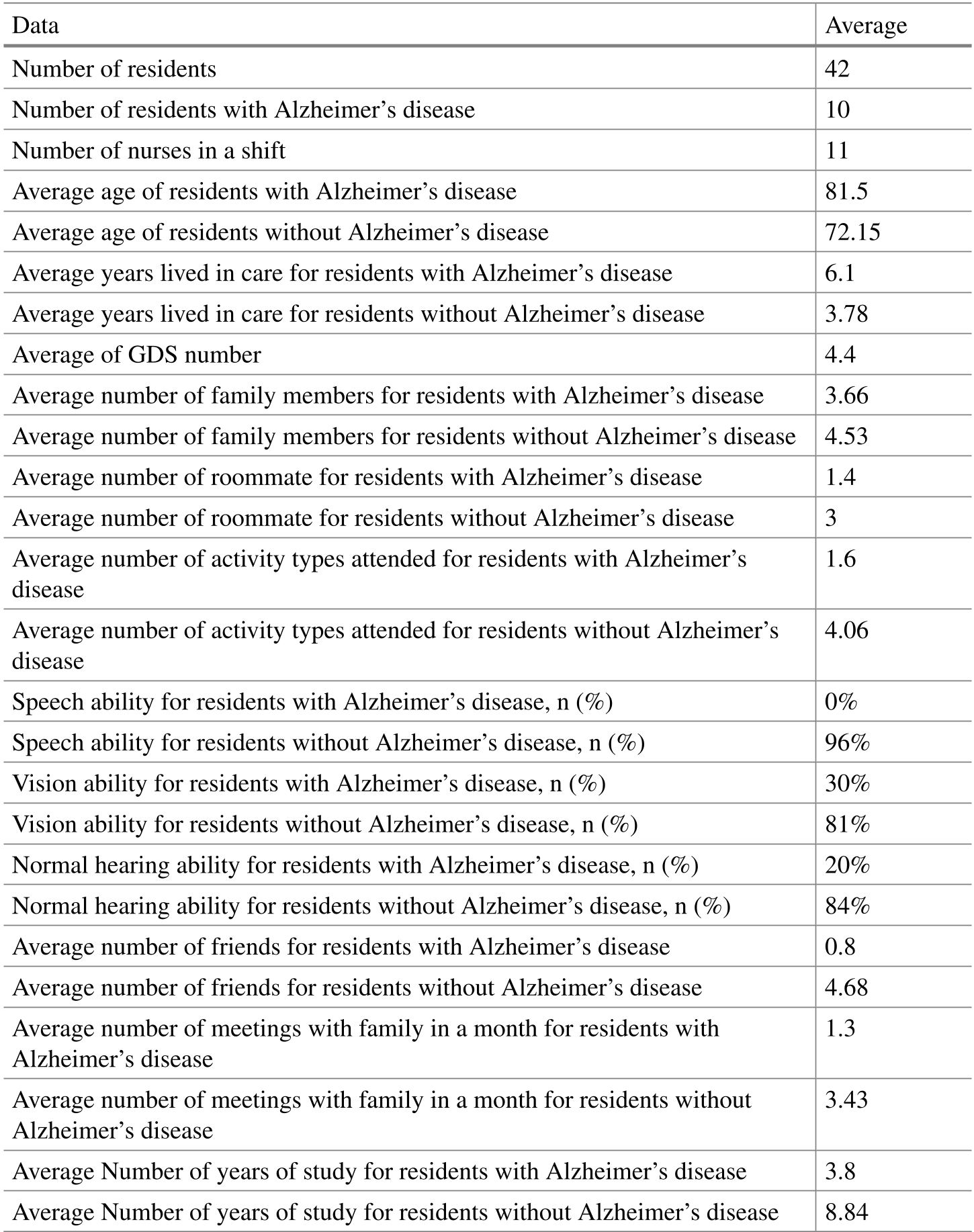 Table 1: Drastic differences in hearing, speech, and friend counts between AD and normal residents.
Key Network Metrics:
- In-degree/Out-degree: Who you nominate vs. who nominates you.
- Density (0.09): Only 9% of potential connections in the home were actually made, indicating a high risk of "Social Isolates."
- Reciprocity (0.9): While high, the gap is caused by AD residents who may nominate a roommate as a friend without that feeling being mutual or recognized by the peer.
Hard Results: The Vanishing Network
The disparity found was quantification of a tragedy:
- Friend Count: Healthy residents averaged 4.68 friends, while those with Alzheimer’s averaged only 0.8.
- Communication Barriers: Only 20% of AD residents had normal hearing, and 0% were recorded with full speech ability in the studied cohort, creating a physical wall around their social self.
- Education as a Shield: There was a clear trend where more years of education correlated with lower AD progression, likely due to increased "cognitive reserve" developed through decades of social and mental stimulation.
 Note: The study uses Python-generated graphs to identify "Central Nodes" (highly social individuals) versus "Isolates" (those with zero ties).
Critical Analysis & Deep Insights
The most profound insight from the study is the distortion of friendship in late-stage AD. One resident (GDS stage 7) claimed a roommate was a friend simply because of physical proximity, while the roommate (who was cognitively healthy) did not reciprocate the claim. This suggests that as Alzheimer’s progresses, the very definition of a social tie shifts from emotional connection to mere familiarity.
The Depression Link
The study highlighted "Resident 37," who had no AD but lived as an "isolate" due to chronic depression. This confirms that Social Isolation is a precursor to cognitive decline, acting as a shared symptom or catalyst for both depression and eventual dementia.
Conclusion: A Call for Staff-Facilitated Ties
The takeaway for the industry is clear: Social networks are a vital sign. Nursing homes cannot rely on residents to form ties organically when sensory and cognitive impairments are present.
- Policy Shift: Staff must act as "social bridges," facilitating interactions for those with limited mobility.
- Early Intervention: Controlling the disease at GDS stage 1 or 2 is critical to saving the "communication capability" of the patient before the network collapses entirely.
Future Outlook: Integrating SNA into routine clinical assessments could allow caregivers to intervene before a resident becomes a "hidden isolate," potentially slowing the descent into severe Alzheimer’s.