
Ambient Affiliation: How Organic Farming Communities Flourish Through Digital Traces on Twitter
Ambient affiliation on twitter: A case study on organic farming
This paper presents a "virtual excavation" of Twitter to explore "ambient affiliation"—the formation of loose, interest-based social connections. Using the case study of organic farming and the account "Bio Organic Tea," the authors analyze digital trace data (replies and retweets) to reveal how organizational and individual actors cultivate virtual alliances.
TL;DR
In the asymmetric world of Twitter, you don't need to know someone to build a community with them. This paper explores Ambient Affiliation—a social phenomenon where users align through shared interests and "digital traces." By "excavating" Twitter data related to organic farming, the researchers demonstrate how retweets and replies transform a simple micro-blogging feed into a powerful engine for business-to-business alliances and brand "loudness."
The Logic of "Imagined" Communities
The traditional view of social networks often focuses on mutual ties—if I follow you, you follow me. However, Twitter operates on an asymmetric model that fosters Ambient Affiliation. This means users can feel a sense of shared commitment and community with "ambient" listeners they have never met.
The authors identify a critical gap: while we know these communities exist, we don't fully understand the mechanics of how they are "enacted" through technology. They distinguish between:
- Inscribed Connectivity: The code, APIs, and algorithms that allow for retweeting.
- Enacted Connectivity: The actual social accomplishment of building a movement, such as the Fair Trade discourse.
Methodology: Virtual Excavation
To look under the hood of Twitter, the research team conducted a "virtual excavation." By utilizing the Twitter API to extract JSON data, they tracked the interactions of a prominent account, Bio Organic Tea.
They focused on two primary digital traces:
- Tweet Replies: Measuring the depth of a conversation.
- Retweets: Measuring the "retweetability" and the "loudness" of a topic.
Architecture of Interaction
The study utilized specialized visualization tools to categorize nodes not just by activity, but by identity (Individuals vs. Organizations).
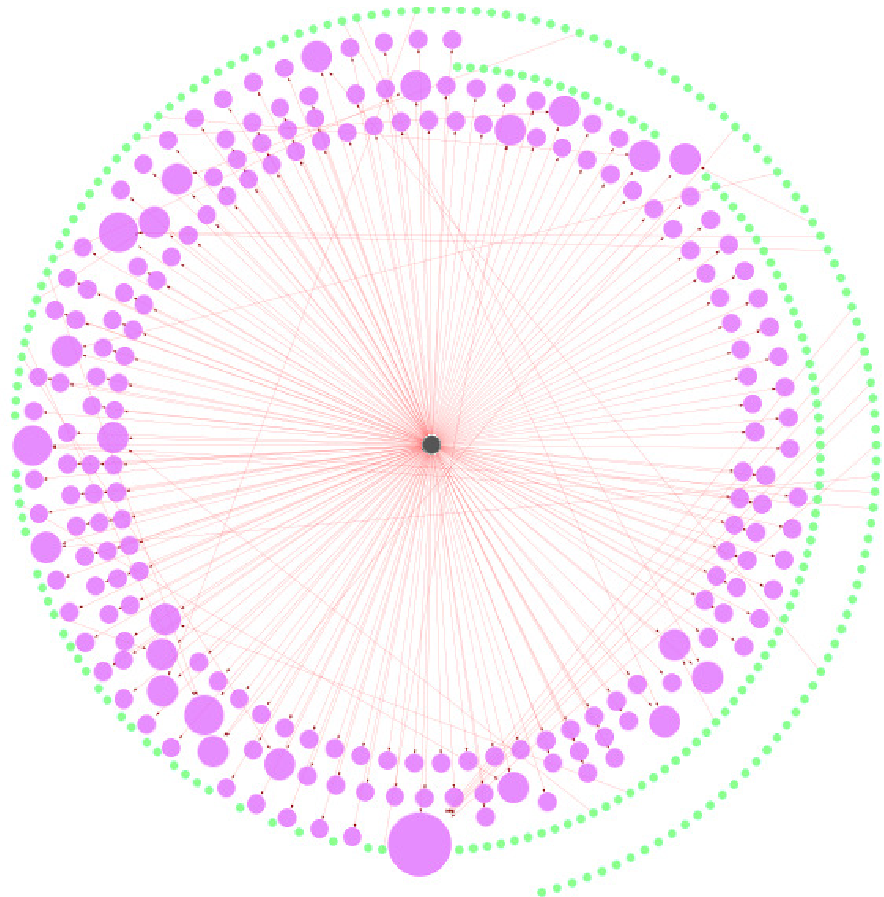 Fig. 2: The network of replies surrounding the Bio Organic Tea account.
Key Insights: Organizations vs. Individuals
The data revealed a surprising trend: in the organic farming niche, organizations are the primary drivers of discourse.
As seen in the following visualization, when we separate users by affiliation, the purple nodes (organizations) are significantly involved in retweeting patterns. Interestingly, these organizations show a distinct preference for retweeting other organizations rather than individual users, creating a "business-oriented virtual partnership."
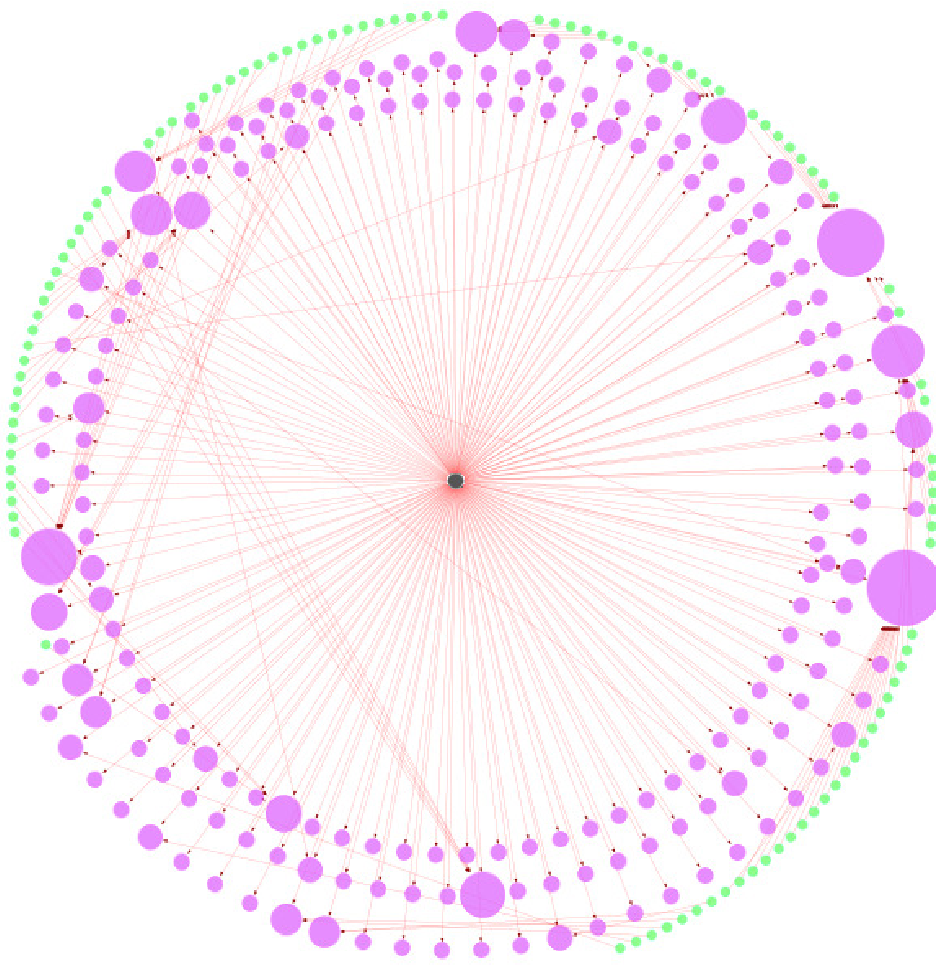 Fig. 5: Distinguishing between retweets from organizations (purple) and individuals (green).
The Power of the Hashtag
Content analysis through word clouds showed that the most successful "ambient" connections were built around shared principles. Hashtags like #FairTrade, #BeFair, and #FairTradeMonth served as the semiotic anchors that brought disparate users together. This suggests that for a business, "ambient affiliation" is best triggered by aligning with cultural values rather than just pushing product features.
Critical Analysis & Future Outlook
The study concludes that Twitter is a vital tool for organic farming because it solves the "information gap." For a sector that relies on up-to-the-minute data on pesticides, bio-products, and regulations, ambient affiliation allows for a rapid exchange of knowledge without the friction of formal networking.
Limitations: As the authors note, these digital traces are dynamic. A snapshot taken today might differ from one taken a month later. Furthermore, the search API provides a filtered view that may not capture the entirety of the "ambient" audience hidden behind private accounts.
Future Work: Looking forward, this methodology of "virtual excavation" could be applied to more complex multi-modal platforms. As businesses move from text-based Twitter to visual-heavy platforms, how will "ambient affiliation" change when the "trace" is a video remix rather than a retweet?
In the end, this research serves as a reminder that every "Like" and "Retweet" is more than just a metric—it is a material remain of a digital community in the making.