
ExplorARTorium: Mining the "Wisdom of the Crowd" to Uncover Art History Facts
Analysing user generated content related to art history
The paper introduces "explorARTorium," a crowdsourcing Web platform designed to bridge the vocabulary gap between art history experts and laypersons. By analyzing over 90,000 user-generated tags (folksonomies), the study demonstrates that data mining can effectively reproduce historical art facts and identify cultural biases in art perception.
TL;DR
The explorARTorium project tackles the "vocabulary mismatch" between art experts and the general public. By inviting laypersons to freely tag thousands of artworks, researchers proved that "low-quality" user tags can actually reconstruct precise historical truths—like the gradual disappearance of the halo in Christian art or the secular shift in Dutch paintings—revealing that collective intuition often mirrors formal academic knowledge.
The Expert-Layperson Divide
In the digital age, access to art is no longer the bottleneck; the Google Art Project and Europeana provide millions of high-res images. However, the understanding of these images remains locked behind a wall of expert jargon. When an art historian sees a "Chiaroscuro liturgical scene," a layperson might simply see a "dark church with candles." This project asks: Can we use these "simple" tags to create a more accessible gateway to culture?
Methodology: Browsing through Context
The core of the explorARTorium is its interactive 5x5 matrix. Instead of a static gallery, it places a selected artwork in the center of its peers, categorized by:
- Artist & Title: Direct meta-data.
- School & Motive: Geographical and thematic context.
- Random Escape: To encourage serendipity and prevent filter bubbles.
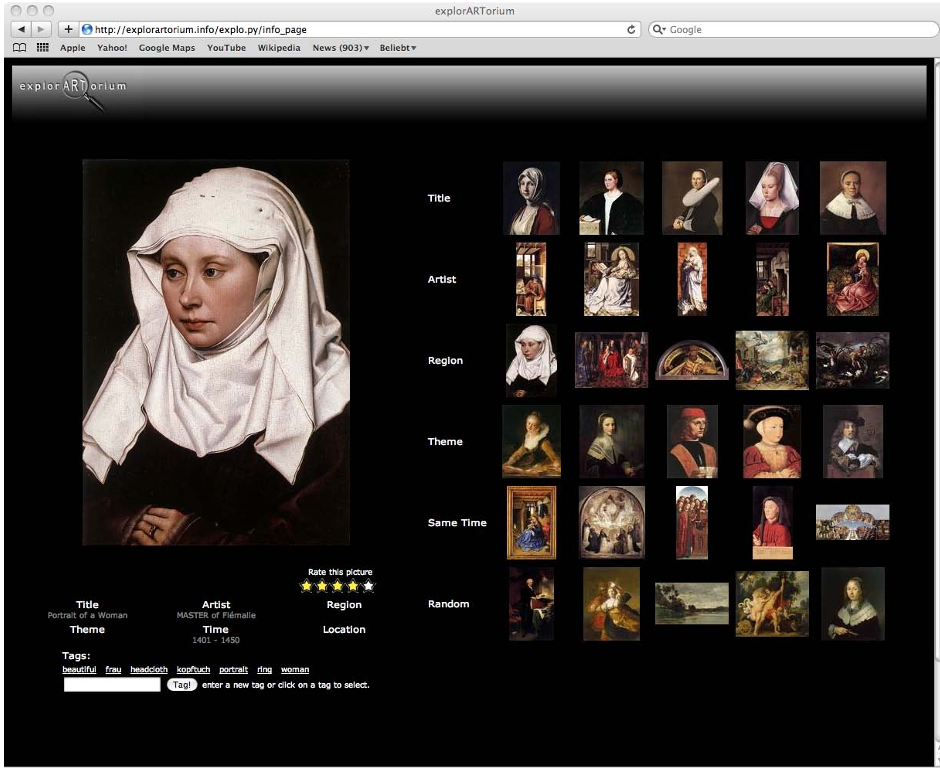 Figure 1: The explorARTorium interface, balancing expert metadata with user-generated tags.
Validating Folksonomies: The "Halo" Case Study
Can "untrained" eyes see what history books record? The authors tested this by tracking the Halo (Heiligenschein). Art history tells us the halo was ubiquitous in the 13th century but vanished by the 18th as realism took hold.
By applying association rules to the user tags, the researchers produced a "Confidence Curve." They found that for artworks tagged with "Jesus" in the 13th century, the probability of the user also tagging "Halo" was 100%. By the 18th century, even though users still identified "Jesus," the "Halo" tag dropped to 0%.
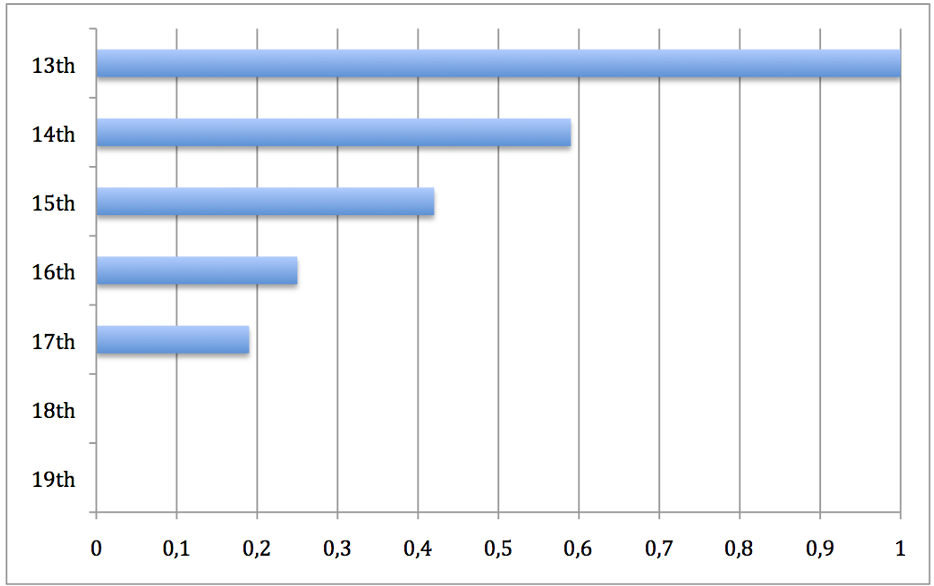 Figure 2: Statistical evidence of the decline of the halo, reconstructed solely from layperson tags.
Cultural Bias: Italy vs. The Netherlands
The data mining also revealed deep regional shifts.
- Italian Art: Tag clouds were dominated by religious figures like Maria, Jesus, and Engel (Angel).
- Dutch Art: The focus shifted to the mundane—Hut (Hat), Hund (Dog), and Tisch (Table).
This confirms the historical shift where Protestant Dutch society moved toward secular, middle-class subjects, while Catholic Italy remained focused on the clerical canon.
Critical Insight & Future Outlook
The explorARTorium demonstrates that Folksonomies are highly effective for "Iconography"—the identification of content. While laypersons might not know the name of a specific saint (e.g., St. Anne), they are excellent at identifying "secondary features" (donkey, ox, gifts) which, when processed through data mining, allow researchers to build a "User-Generated Taxonomy."
Limitations: The study currently faces challenges with multilingual tag merging (German vs. English) and typos. Future Work: The team aims to implement stemming and language identification to clean the data, ultimately creating an "artwork recommender" that understands art through the lens of human emotion and perception rather than just dry metadata.
Conclusion
This work repositioned the "layperson" from a passive consumer to an active co-creator of knowledge. It proves that while a single user tag might be trivial, the aggregated folksonomy is a powerful analytical tool that bridges the gap between the 21st-century mind and 500 years of art history.