
Social Network Analysis in the Shadow of GDPR: Can Research Survive Regulation?
An Analysis of the Consequences of the General Data Protection Regulation on Social Network Research
This article provides a comprehensive assessment of the European General Data Protection Regulation (GDPR) and its specific impacts on Social Network Analysis (SNA). It introduces a structured guide for GDPR-compliant data processing through the entire research lifecycle, emphasizing the unique challenges of anonymization and informed consent in networked data.
TL;DR
The advent of the General Data Protection Regulation (GDPR) has sent shockwaves through the computational social science community. This paper by Kotsios et al. serves as a "survival guide," arguing that while social network data is inherently difficult to anonymize, the GDPR provides specific research exemptions that—if documented correctly—allow rigorous science to continue. However, the study also warns that "automatic transparency" on social media often fails due to platform anti-spam policies.
The "Network" Problem: Why SNA is a Privacy Nightmare
Traditional data privacy relies on the "anonymity of the individual." If you remove a name from a table of medical records, the record becomes (theoretically) anonymous. Social Network Analysis (SNA) breaks this paradigm completely.
The authors point out two critical "Network Effects" that complicate GDPR compliance:
- Structural Fingerprinting: A user with a unique position (e.g., a "bridge" between two departments) can be identified by their connections even if their name is replaced by a random ID.
- Collateral Data: When "User A" consents to a study, their data often reveals "User B's" relationship to them. "User B" never consented, yet their social orbit is now part of the dataset.
Methodology: Mapping Law to the Research Pipeline
The authors break down the GDPR compliance process into a technical "checklist" for researchers, focusing on the roles of Controllers (Universities) and Processors (Researchers).
1. The Search for a Lawful Basis
Researchers often assume they need "informed consent." However, the authors argue that for public universities, the "Public Task" basis (Art 6.1.e) is often more robust. Relying on consent for a network of 1 million Twitter users is a recipe for failure, as a single retraction could theoretically break the connectivity of the entire graph.
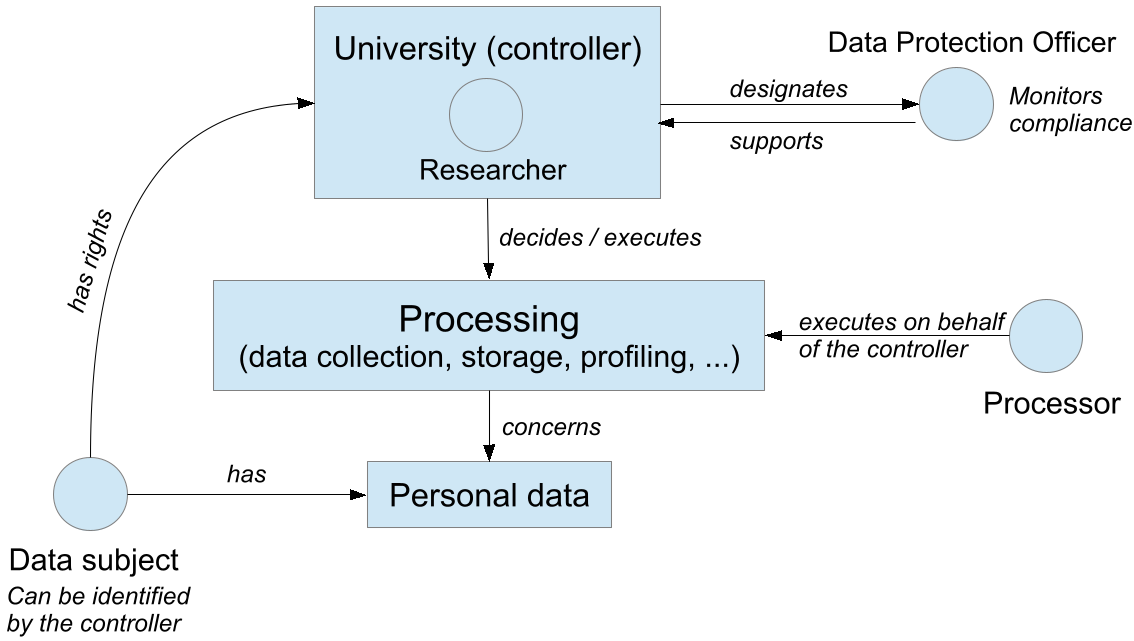 Figure 1: The ecosystem of data subjects, controllers, and processors in an academic context.
2. The Myth of Anonymization
The paper takes a hard stance on anonymization: it is rarely perfect in graphs. Instead, they emphasize Pseudonymization—separating identifiers from the network structure—and keeping the "key" in a highly secure, separate location.
The Twitter Experiment: A Reality Check
A fascinating part of this research is the attempt to be "hyper-transparent." The authors tried to notify 45 Twitter users that their data was being collected for research.
- The Result: Only one person clicked the link.
- The Twist: Twitter’s own algorithms flagged the research account as a spam bot and suspended it.
This highlights a massive paradox: GDPR mandates transparency, but the platforms where the data lives (Twitter/X, Facebook) treat the tools of transparency as violations of their own Terms of Service.
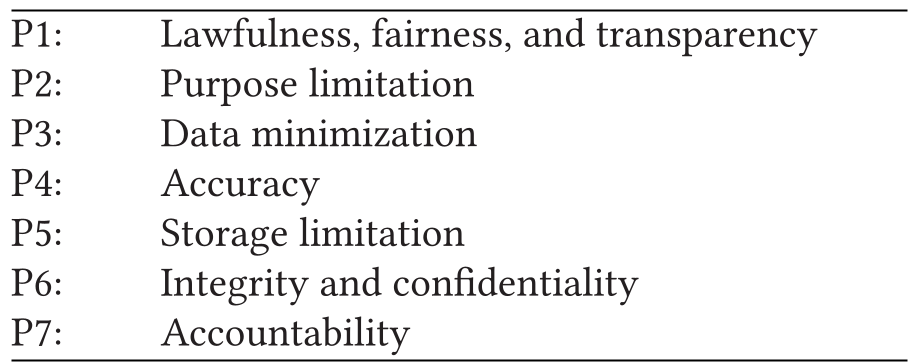 Table 1: The seven core principles of GDPR that must be instantiated in any network study.
Critical Insight: The Research Exemptions (Art. 89)
The "saving grace" for the community is Article 89. It allows:
- Further Processing: Using data for a new research question without re-notifying everyone.
- Storage Extension: Keeping data longer than "necessary" for academic archival.
- Right to Erasure Limitations: If deleting a user would "seriously impair" the research objectives, the controller may have grounds to refuse.
Conclusion & Future Outlook
Kotsios et al. conclude that the future of SNA requires GDPR-compliant software. We cannot rely on manual compliance; we need tools that automatically generate Data Protection Impact Assessments (DPIAs) and manage pseudonymization keys.
Key Takeaways for Researchers:
- Check your local laws: GDPR is a regulation, but "Research" is often defined by individual EU Member States.
- Document everything: Compliance under GDPR is not just about what you do, but what you can prove you thought about (The Accountability Principle).
- Engagement over Obfuscation: Total anonymity is impossible; professional codes of conduct and ethical vetting are your best defense.
Disclaimer: This analysis is based on academic research and does not constitute official legal advice.