
Analysis of Social Media Policies in Saudi Higher Education: A Digital Governance Gap
An Analysis of the Current Policies for Social Media Use in Saudi Higher Education
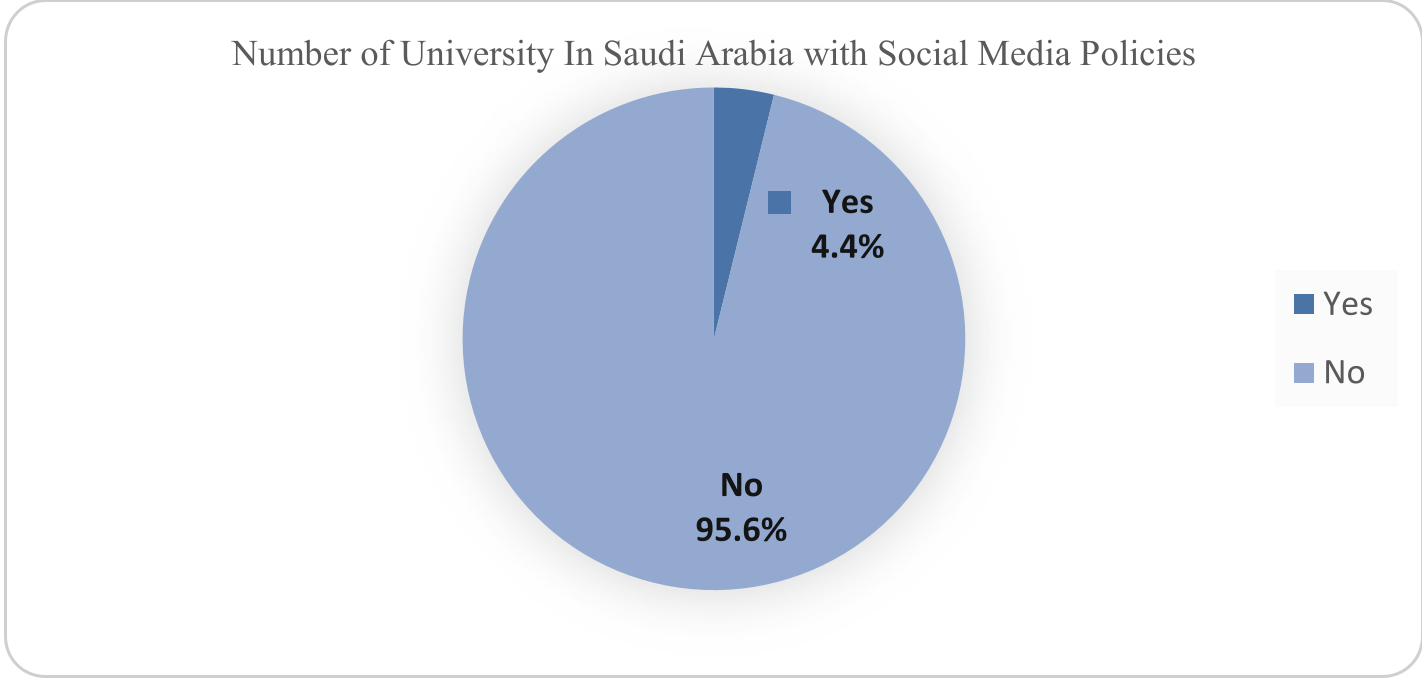
This research study analyzes the status of social media policies across 68 Saudi Arabian Higher Education Institutions (HEIs). Utilizing the NVivo qualitative tool and readability metrics (FRE/FGL), it reveals a significant lack of formal governance, with only 4.4% of institutions having published policies.
Executive Summary
Despite the explosive growth of social networking in Saudi Arabia, academic institutions are struggling to keep pace with the regulatory demands of the digital age. This study provides a critical audit of 68 Saudi Higher Education Institutions (HEIs), revealing that a staggering 95.6% lack official social media policies. For the few that do, the focus remains primarily on institutional reputation rather than empowering pedagogical innovation.
Problem: The Policy Vacuum in a Hyper-Connected Society
Social media is no longer just for leisure; it is a vital tool for peer-to-peer communication and teacher-student engagement. However, without a formal "rulebook," faculty members often avoid these platforms due to perceived risks of job loss or privacy breaches. Prior work suggests that relying on vague governmental policies is insufficient for the unique needs of a university setting. The problem is twofold: a lack of administrative support and a theoretical gap in how to regulate digital behavior without stifling educational creativity.
Methodology: Auditing the Digital Architecture
The researchers didn't just look for the existence of policies; they measured their utility using three professional benchmarks:
- Accessibility: Applying the "three-click rule" to see if a student or faculty member could actually find the guidelines.
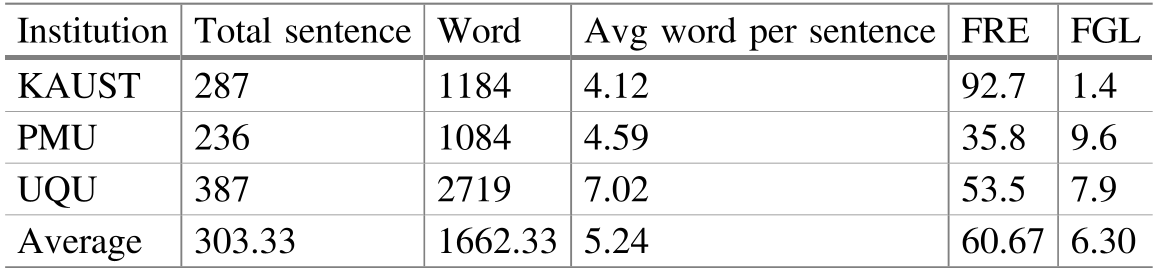
- Readability: Using the Flesch Reading Ease (FRE) and Flesch-Kincaid Grade Level (FGL) to ensure the text isn't buried in dense legalese.
- Content Coverage: Using NVivo for inductive coding, specifically looking for "Security" and "Ethics" nodes.
Core Findings: A Tale of Three Universities
Only three institutions—KAUST, PMU, and UQU—had available policies. The analysis reveals a fragmented landscape:
1. The Accessibility Hurdle
Surprisingly, none of the policies were reachable within three clicks from the homepage. Users had to rely on search functions, which is a major barrier to "passive" policy awareness.
2. Readability Scores
While the average readability was at a 6th-grade level (making them accessible to most), individual results varied. One institution (PMU) reached a grade level of 9.6, requiring a higher degree of literacy, whereas others were perhaps too simplistic to cover complex legal nuances.
3. Ethical vs. Security Focus
The NVivo analysis highlighted a divergence in priorities.
- PMU focused heavily on Security (39.45%), emphasizing reputation management and the risks of "defamatory comments."
- KAUST leaned toward Ethics (43.39%), providing a more informative guide on "best practices" and how to maintain accounts safely.
- UQU showed a significant gap, with 0.00% coverage of ethical principles in the context of general or academic social media use.
Critical Analysis: Beyond Reputation Management
The study concludes with a sobering insight: Saudi HEIs view social media as a PR tool, not a classroom tool. Most policies are designed to protect the "University's Mission" and public image rather than protecting the student's learning experience or the faculty's right to academic expression.
Limitations & Future Work
The research is limited to publicly available online documents and does not account for "internal-only" memos. However, it serves as a vital wake-up call. Future research must investigate the human factor—the specific challenges Saudi administrators face when trying to balance cultural norms with the open nature of the global internet.
Takeaway for the Industry
For Saudi HEIs to fulfill the goals of "Vision 2030" regarding education reform, they must transition from passive observation to active governance. Establishing a policy is not just about prohibiting "bad behavior"; it is about creating a "safe harbor" where digital learning can thrive.