
The Invisible Storm: How Social Apps Overload 3G Control Planes
Analysis and Measurement of Signaling in 3G Environment for Social Networking Services
This paper presents an empirical analysis of Radio Resource Control (RRC) signaling overhead generated by Social Networking Services (SNSs) like Facebook and Skype in 3G UMTS environments. By using protocol analyzers on real operator networks, the authors demonstrate how frequent state transitions between idle and connected modes create a "signaling storm" on the control plane.
TL;DR
While we often worry about data caps and 4G/5G speeds, a silent "signaling storm" is brewing in the background. This paper reveals that social networking apps like Facebook and Skype, despite consuming minimal data, can generate a signaling load equivalent to thousands of voice calls per day. This happens because devices constantly "wake up" to check for notifications, overwhelming the network's control plane.
Background: The Power-Performance Paradox
In a mobile network, your phone isn't just "on" or "off." It cycles through various Radio Resource Control (RRC) states. High-power states (CELL_DCH) allow fast data transfer, while low-power states (CELL_PCH or Idle) save battery.
The industry introduced Fast Dormancy to let phones drop to idle faster. However, Social Networking Services (SNSs) utilize "keep-alive" packets to maintain real-time interactivity. The result? A constant tug-of-war where the phone tries to sleep, and the app forces it to wake up, triggering a cascade of 23+ signaling messages every single time.
Problem & Motivation: Why Data Usage Lies to Us
Current network monitoring often focuses on the Data Plane (how many GBs you use). However, the authors argue that the Control Plane (the signaling required to set up those data paths) is the real bottleneck.
Prior work focused on bandwidth allocation, but this study highlights a "signaling storm" phenomenon:
- SNS apps send tiny packets (status updates, friend queries).
- Each packet requires a state transition.
- These transitions consume limited processing power at the Radio Network Controller (RNC).
Methodology: Real-World Probing
Unlike laboratory simulations, the authors measured a live 3GPP Release 8 UMTS environment using:
- Iub Interface Monitoring: Examining the link between Base Stations (Node B) and the RNC to count RRC, NBAP, and ALCAP messages.
- Gi Interface Monitoring: Analyzing actual application packets (Facebook/Skype) leaving the core network.
They tested various devices (iPhone 3GS, 4, iPad, HTC Desire) to see how different hardware manufacturers handle the same app behavior.
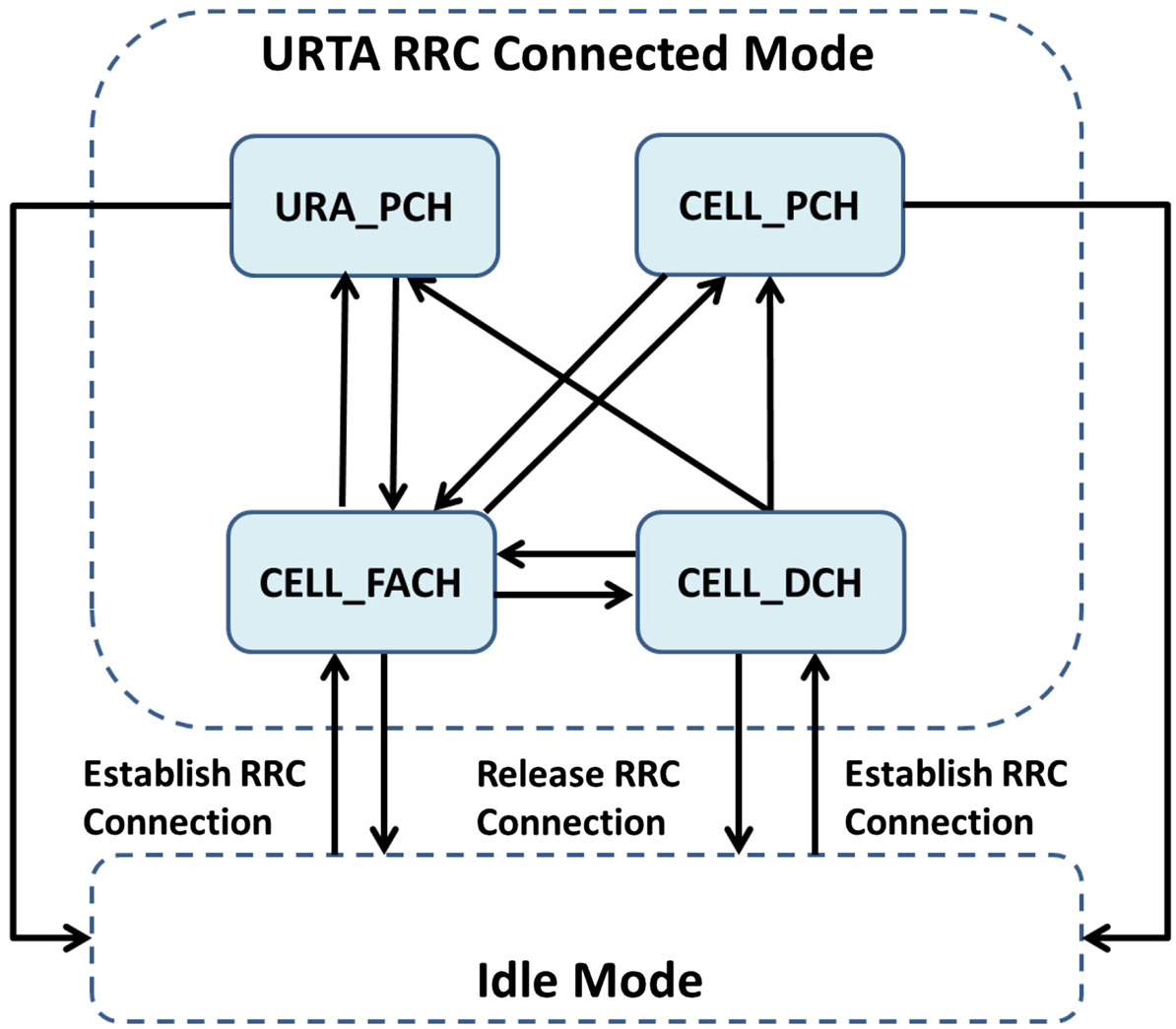 Figure 1: The complex RRC state machine. Each arrow represents a signaling exchange that taxes the network.
Experimental Insights: The 2,900-Call Comparison
The findings are startling. An iPhone 3GS with Facebook and Push Notifications enabled generated 101 RRC signaling messages per minute.
To put that in perspective:
- A standard 1-minute voice call generates ~50 signaling messages.
- A single smartphone running Facebook background tasks creates the same control-plane stress as 2,900 voice calls per day.
| Device | App State | RRC Msgs / Min |
|---|---|---|
| iPhone 3GS | FB + Push ON | 101 |
| iPad | Skype Active | 73 |
| HTC Desire | FB Background | 37 |
The data also proved that hardware matters. The iPhone 3GS was significantly more "chatty" than the iPhone 4, likely due to differences in the Infineon communication chipsets and RRC management algorithms.
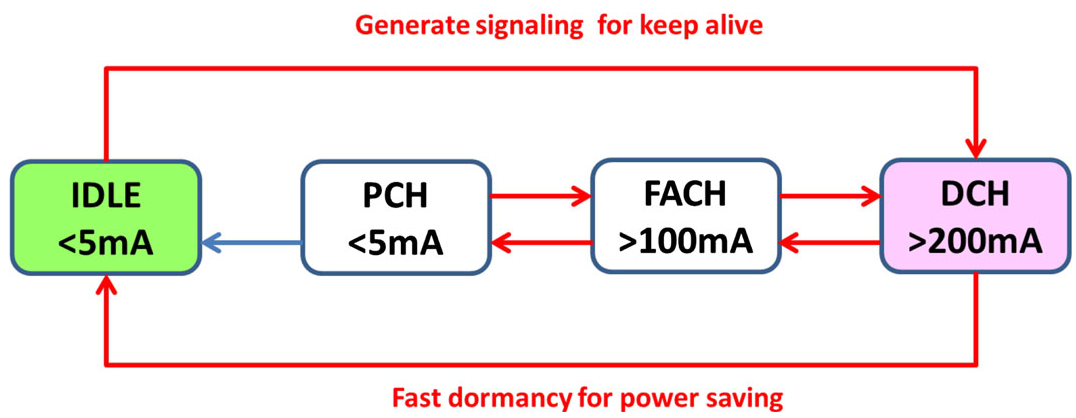 Figure 2: The experimental setup using JDSU protocol analyzers to mirror real-world operator traffic.
Critical Analysis & Future Outlook
The paper identifies a fundamental conflict: Device Manufacturers want to save battery at all costs, while Network Operators want to minimize signaling overhead.
Key Recommendations:
- Cloud-RNC: Moving from fixed hardware RNCs to a virtualized, pool-based architecture to handle sudden signaling spikes.
- App Design Awareness: Developers need to synchronize "pull" operations so the radio stays in a high-power state longer but transitions fewer times.
- Dynamic Timers: Operators should adjust inactivity timers based on user profiles and specific app characteristics (Cross-layer scheduling).
Limitations:
The study is based on 3G environments. While 4G (LTE) and 5G have more efficient state models (like RRC_INACTIVE in 5G), the core logic—that frequent small packets destroy control plane efficiency—remains a critical challenge for the Internet of Things (IoT) era.
Takeaway
The "always-on" connectivity we enjoy comes at a high price of hidden signaling. As we move toward 6G, the industry must rethink the "charged data / free signaling" business model to ensure network stability.