
Analysis of Agricultural Features: Enhancing Yield through Ensemble Vision
Tarımsal Özniteliklerin Analizi Analysis of Agricultural Features
This paper presents a robust framework for multi-class agricultural plant classification using a fusion of diverse feature descriptors including Texture, Color, HOG, and GIST. By leveraging a Majority Voting strategy across ensemble classifiers (Random Forest, Bagging, and Adaboost), the method achieves a high classification accuracy of up to 96.48% on the TARBIL dataset.
Executive Summary
TL;DR: In this research, a comprehensive machine vision framework was developed to classify six major agricultural crops (wheat, barley, lentils, cotton, pepper, and corn). By combining sophisticated feature descriptors like HOG and GIST with ensemble learning and a majority voting mechanism, the researchers achieved a state-of-the-art accuracy of 96.48%.
Context: This work positions itself as a robust solution for the TARBIL (Agricultural Monitoring and Information System) project in Turkey, bridging the gap between raw sensor data collection and automated crop management. It serves as a critical step toward full agricultural automation.
The Challenge: Nature’s Variability
Precision agriculture requires near-perfect accuracy, as misclassification can lead to improper irrigation, fertilization, or harvesting. However, field conditions are far from ideal. The study identifies several pain points:
- Growth Stages: Plants look vastly different from seedling to maturity.
- Environmental Noise: Changing lighting conditions and seasonal shifts interfere with standard color sensing.
- Complexity: Distinguishing between similar-looking crops like barley and wheat requires more than just basic color or texture analysis.
Methodology: A Multi-Dimensional Feature Strategy
The "secret sauce" of this paper is not just one algorithm, but the strategic fusion of four distinct feature types:
- Texture (GLCM): Captures internal patterns (Energy, Entropy, Homogeneity).
- Color: Provides stability against orientation changes via RGB histograms.
- HOG (Histogram of Oriented Gradients): Focuses on local shape and object appearance.
- GIST: Describes the "spatial envelope" or the dominant global structure of the scene without needing segmentation.
Process Flow
The pipeline follows a rigorous path: Image Acquisition → Pre-processing (Patch Extraction) → Feature Extraction → PCA-based Dimensionality Reduction → Classification via Ensemble Voting.
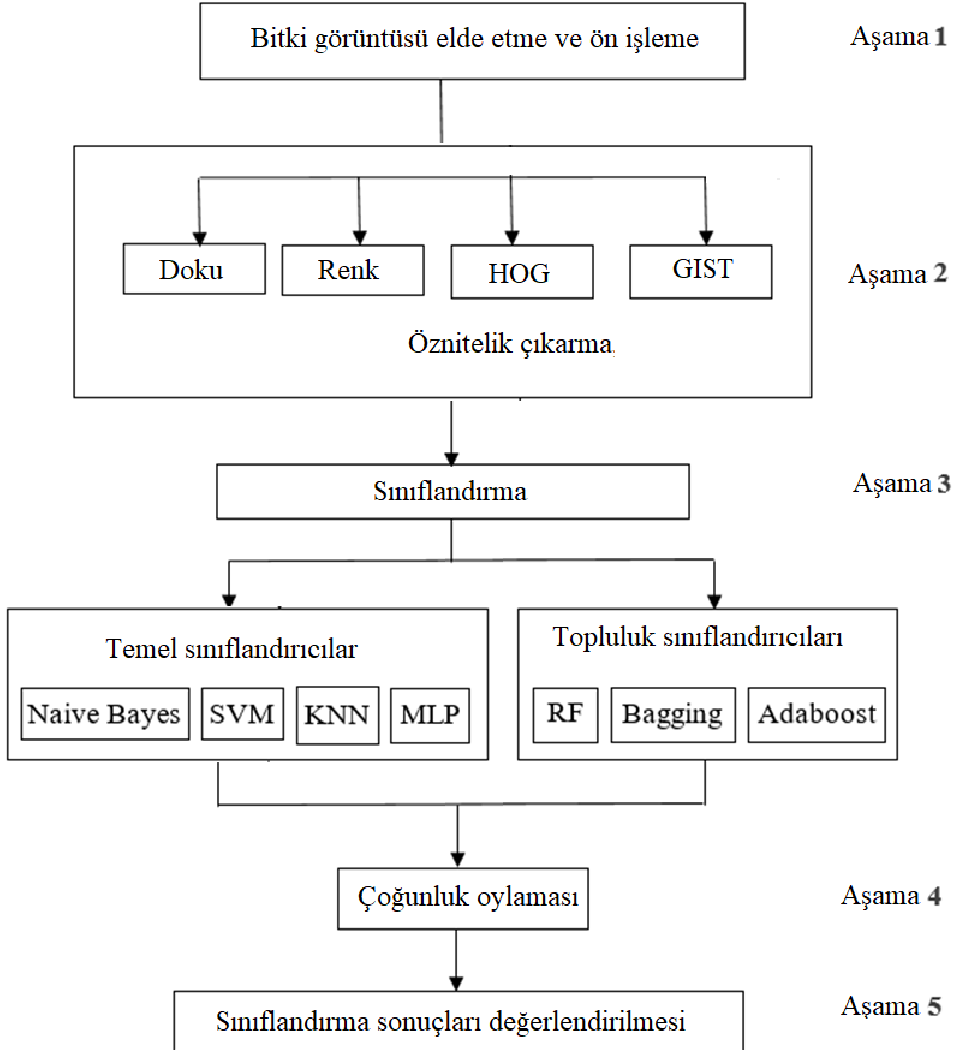 Figure 1: The proposed workflow for plant classification.
Experiments and Results
The researchers used a dataset of 2,400 images across 6 classes. To handle high-dimensional data from HOG (3780 features) and GIST (512 features), Principal Component Analysis (PCA) was employed to maintain variance while reducing computational load.
Performance Comparison
The study compared Base Classifiers (SVM, KNN, MLP, NB) against Ensemble Classifiers (Random Forest, Bagging, Adaboost). The results were conclusive: Ensemble methods combined with Majority Voting significantly outperformed individual models.
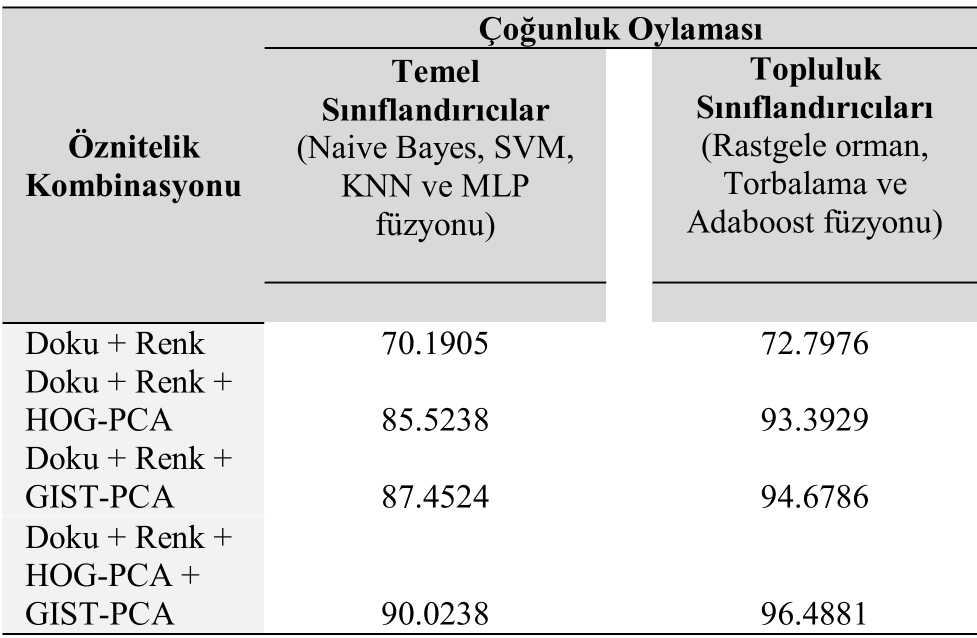 Table 1: Accuracy gains through feature and classifier fusion. Note the peak at 96.48% for the full descriptor set.
Key Findings:
- MLP was the strongest base classifier.
- Random Forest proved to be the most efficient ensemble learner, capable of handling large feature vectors with lower processing time.
- Synergy: The combination of HOG and GIST was particularly effective, bridging the gap between local detail and global context.
Critical Insight & Perspective
This research demonstrates that even in the era of Deep Learning, carefully engineered feature fusion remains a powerful tool, especially when data might be limited or computational efficiency on edge devices (like field sensors) is required.
Limitations: While the accuracy is high, the model relies on hand-crafted features which may require recalibration for different geographic regions or entirely different plant species.
Future Outlook: The next logical step is applying Hyper-parameter Optimization and exploring Deep Feature Extraction (like CNN/ViT backbones) to see if the need for manual descriptor selection can be bypassed while maintaining the robustness provided by the Majority Voting mechanism.
Conclusion
By integrating multiple visual perspectives (texture, color, shape, and structure) and a democratic ensemble voting approach, this work provides a reliable "eye" for smart farming systems, ensuring that future digital fields are monitored with unprecedented precision.