
Pseudo ACPM: Unmasking the Overlapping Hierarchies of Social Networks
Analysis of Social Networks Using Pseudo Cliques and Averaging
The paper introduces Pseudo ACPM (Alternative Clique Percolation Method), a community detection algorithm designed to uncover overlapping structures in social networks. By relaxing the strict clique requirements of traditional CPM via parameters for edge density (α) and node overlap (σ), the study provides a nuanced analysis of college friendship networks and their temporal growth.
TL;DR
Social networks are messy; people don't fit into single, isolated boxes. Traditional community detection often fails by being too rigid. This paper introduces Pseudo ACPM, an improved version of the Clique Percolation Method that relaxes strict connectivity rules. By allowing for "imperfect" cliques and flexible overlap, the researcher successfully mapped the hidden sub-structures of college SNS sites, proving that invitation-based social systems create much tighter community bonds than open registration ones.
The Motivating Insight: Life is Not a Partition
In network science, we often try to "partition" a graph—dividing nodes into non-overlapping groups. But in sociology, this is fundamentally flawed. You belong to your family, your university seminar, and your local gym simultaneously.
The Clique Percolation Method (CPM) was a step forward because it allowed for overlap. However, CPM is a "perfectionist." It requires groups to be perfect cliques (everybody knows everybody) and demands they share almost all their members to be considered part of the same community. In real-world data, where a few edges might be missing due to privacy or simple lack of interaction, CPM often sees one giant, undifferentiated blob or nothing at all.
Methodology: Introducing "Soft" Constraints
The author proposes the Pseudo Alternative Clique Percolation Method (Pseudo ACPM). The "Alternative" part comes from a parameter , while the "Pseudo" part comes from a parameter .
- Relaxed Overlap (): Instead of requiring shared nodes to fuse two -degree cliques, the algorithm allows for a lack of nodes. This act of "alleviation" allows smaller communities to be detected inside larger ones.
- Pseudo-Cliques (): A perfect 5-node clique has 10 edges. If , the algorithm treats a 5-node cluster with only 8 edges as a clique.
This dual relaxation acts like a "zoom lens," allowing researchers to see structures that are dense enough to be meaningful but not mathematically perfect.
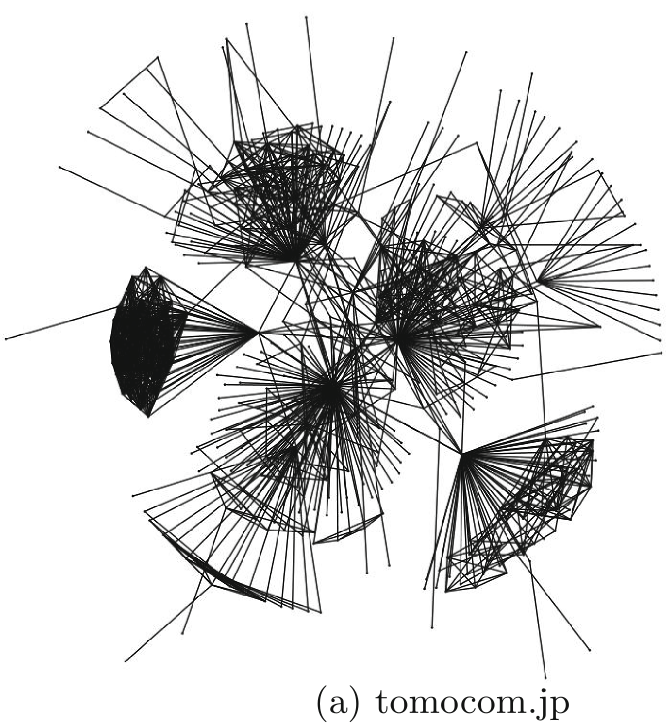 Figure 1: Comparison between the invitation-based tomocom.jp (Left) and the registration-based FLECCS (Right).
Experimental Results: Invitation vs. Registration
The researcher applied this to two different systems: tomocom.jp (invitation-only) and FLECCS (open registration).
- Community Depth: In the invitation-based system, as increased, the "Giant Component" effectively broke down into distinct, middle-scale communities (visualized in the paper as white, black, and square nodes).
- Systemic Difference: In the registration-based FLECCS, there were almost no clear dense communities. This suggests that the gatekeeping of an invitation system is what actually generates social density.
- Temporal Growth: By averaging node degrees over time, the author found that friend connections grow logarithmically, though they are subject to "spikes" caused by real-world campus events.
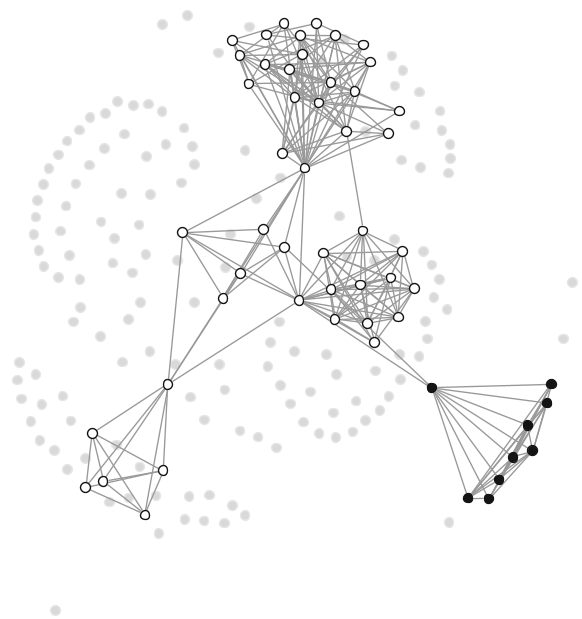 Figure 2: Visualizing how increasing allows the detection of sub-communities within the larger network structure.
Critical Analysis & Takeaways
The primary contribution of this work is the practical acknowledgement that social "cliqueness" is a spectrum, not a binary.
Key Strengths:
- Intuitive Flexibility: The introduction of translates the mathematical concept of a clique into something that reflects human behavior (where a group might be "tight" even if two members haven't met yet).
- Sociological Validation: The comparison between invitation and registration models provides empirical evidence for how platform mechanics shape social topology.
Limitations & Future Work:
The paper admits that predicting the future of these networks is difficult because the time ranges analyzed were relatively narrow. Furthermore, determining the "optimal" and remains a heuristic choice.
Conclusion: Pseudo ACPM provides a robust framework for anyone trying to analyze "noisy" real-world networks where overlap is the rule rather than the exception. It reminds us that to see the true structure of a community, we sometimes need to stop looking for perfection.