
Deciphering the Digital Cry for Sleep: A Large-Scale Analysis of Insomnia on Sina Weibo
An analysis of sleep complaints on Sina Weibo
This study presents a large-scale computational analysis of sleep complaints on Sina Weibo, China's leading microblogging platform. Using a supervised Support Vector Machine (SVM) classifier on approximately 394 million postings, the researchers identified patterns in insomnia symptoms, user demographics, and diurnal activity to gauge the potential of social media for mental health monitoring.
TL;DR
Researchers analyzed nearly 400 million posts on Sina Weibo to map the landscape of sleep disorders in China. By leveraging an SVM classifier and clinical coding, the study identifies that while many users disclose insomnia, few seek professional help. The findings reveal that economic hubs like Beijing and Shanghai are insomnia hotspots and that "difficulty falling asleep" is the primary digital symptom expressed by the Chinese public.
Background: Beyond the Clinic
Insomnia is more than just a lack of sleep; it is a significant public health crisis linked to cognitive impairment, psychiatric disorders, and motor accidents. Despite affecting over 10% of adults, it remains chronically underdiagnosed. Traditionally, studying this required costly face-to-face surveys. This paper positions Sina Weibo—China’s answer to Twitter—as a vital, low-cost sensor for monitoring the nation's mental health in real-time.
The "Why": Why Social Media Mining?
The authors argue that the anonymity of social media provides a "safe space" for individuals to discuss private health issues that they might be hesitant to share in clinical settings. However, the technical challenge lies in signal vs. noise. Searching for the word "insomnia" isn't enough; one must distinguish between someone mentioning the word and someone suffering from the condition.
Methodology: From Big Data to Clinical Insight
The research pipeline transition from raw data to nuanced themes:
- Data Collection: Crawling 394 million posts from 1 million users.
- The Classifier: Utilizing Support Vector Machines (SVM) to filter 160,000 genuine sleep complaints (AUC: 0.99).
- Thematic Analysis: Experts coded a subset into themes like "Disclosure and Negative Emotion" or "Help Seeking."
- Symptom Mapping: Aligning tags with the ICSD-3 (International Criteria for Sleep Disorders).
 Figure 1: The systematic pipeline for filtering 400M posts down to 160k verifiable complaints.
Key Findings: The Geography and Timing of Sleeplessness
The study unearthed several high-value insights for public health officials:
- The 3 a.m. Ghost: Most "poor sleepers" are active on Weibo from midnight until noon the next day. While the general population peaks in the evening, insomniacs show a unique activity surge at 8 a.m., possibly reflecting a heightened state of sensitivity following a sleepless night.
- Economic Pressure: The heat map of insomnia aligns almost perfectly with China's economic powerhouses. Provinces like Guangdong and municipalities like Shanghai show higher complaint densities, suggesting that "fierce competition" is a social determinant of sleep.
- The Gender Paradox: While clinical data often suggests women suffer more from insomnia, this study found that men were slightly more prone to complaining about it on Weibo (45.15% vs 43.78% in the general population).
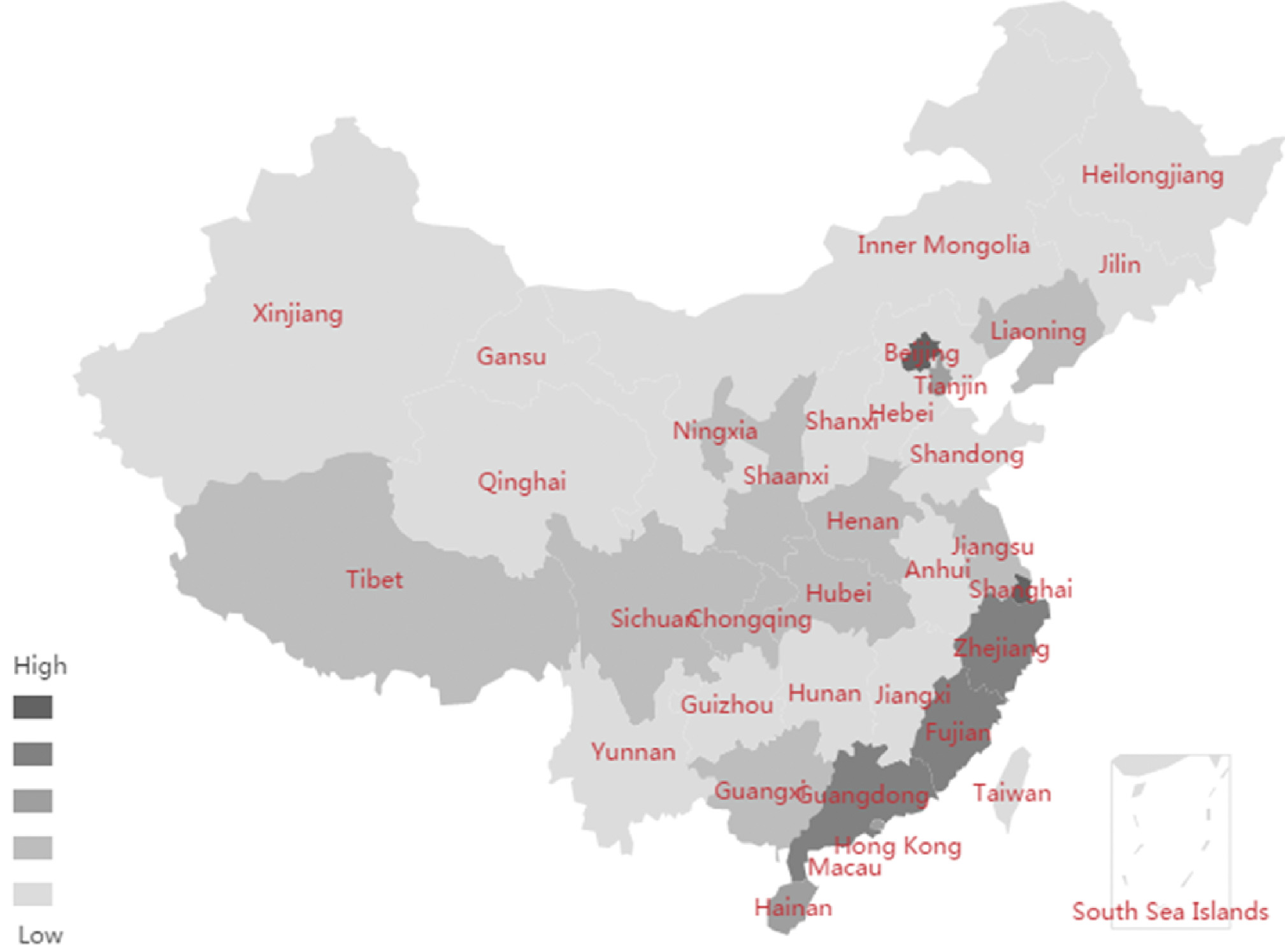 Figure 2: Heatmap showing the concentration of sleep complaints in China's southeastern economic hubs.
Qualitative Reality: What Are They Saying?
The thematic analysis reveals a troubling gap:
- 39.9% just disclose their disorder.
- 34.7% pair their complaint with negative emotions (sadness, anger).
- Only 2.3% mentioned taking any corrective measures, and many of those measures (like "getting up to go shopping") were clinically counterproductive.
 Figure 3: Breakdown of symptoms—Difficulty with sleep initiation overwhelmingly dominates the discourse.
Critical Analysis & Future Outlook
This work serves as a foundational "proof of concept" for digital epidemiology in China. However, it has its limits: the data cannot capture age or education levels due to privacy/API restrictions, and "complaints" are a proxy for—not a diagnosis of—clinical insomnia.
Future Implications: For mental health practitioners, the "takeaway" is clear: social media is a fertile ground for targeted intervention. By identifying users who frequently post sleep complaints at 3 a.m., health facilities could theoretically push tailored sleep hygiene advice directly to those most in need during their peak hours of distress.