
Social Media in eLearning: From Distraction to Pedagogical Powerhouse
An Analysis of Social Collaboration and Networking Tools in eLearning
The paper presents a comprehensive empirical analysis of social collaboration and networking tools within eLearning environments. It evaluates how integration with platforms like Moodle and MOOCs impacts student engagement, achieving a finding that 84% of learners utilize these tools for educational purposes.
TL;DR
Is social media a catalyst for collaborative learning or a black hole of distraction? This study analyzes students across 12 countries to prove that social tools are now integral to education, with 84% of students actively using them for learning. While Facebook and discussion forums lead the way, the paper argues for deeper integration and the use of AI to personalize the social experience.
Background & Motivation
The evolution of Web 2.0 transformed the internet from a static library into a dynamic social hub. In education, this birthed two distinct categories:
- Social Collaboration Tools: Wikis, blogs, and forums designed for group tasks.
- Social Networking Tools: Chats and Facebook, designed for interpersonal connection and file sharing.
The authors' core "Insight" is that despite the fear of distraction, students are already "social learners" by default. The problem isn't the presence of social media; it's the fragmentation of these tools across different platforms (LMS vs. MOOCs) and the lack of professional integration.
Categorizing the Digital Classroom
The paper provides a vital comparison of how different eLearning systems implement these tools. While LMS (like Moodle) focus on integrated features like SMS and virtual classrooms, MOOCs (like Coursera) rely heavily on scaled discussion forums.
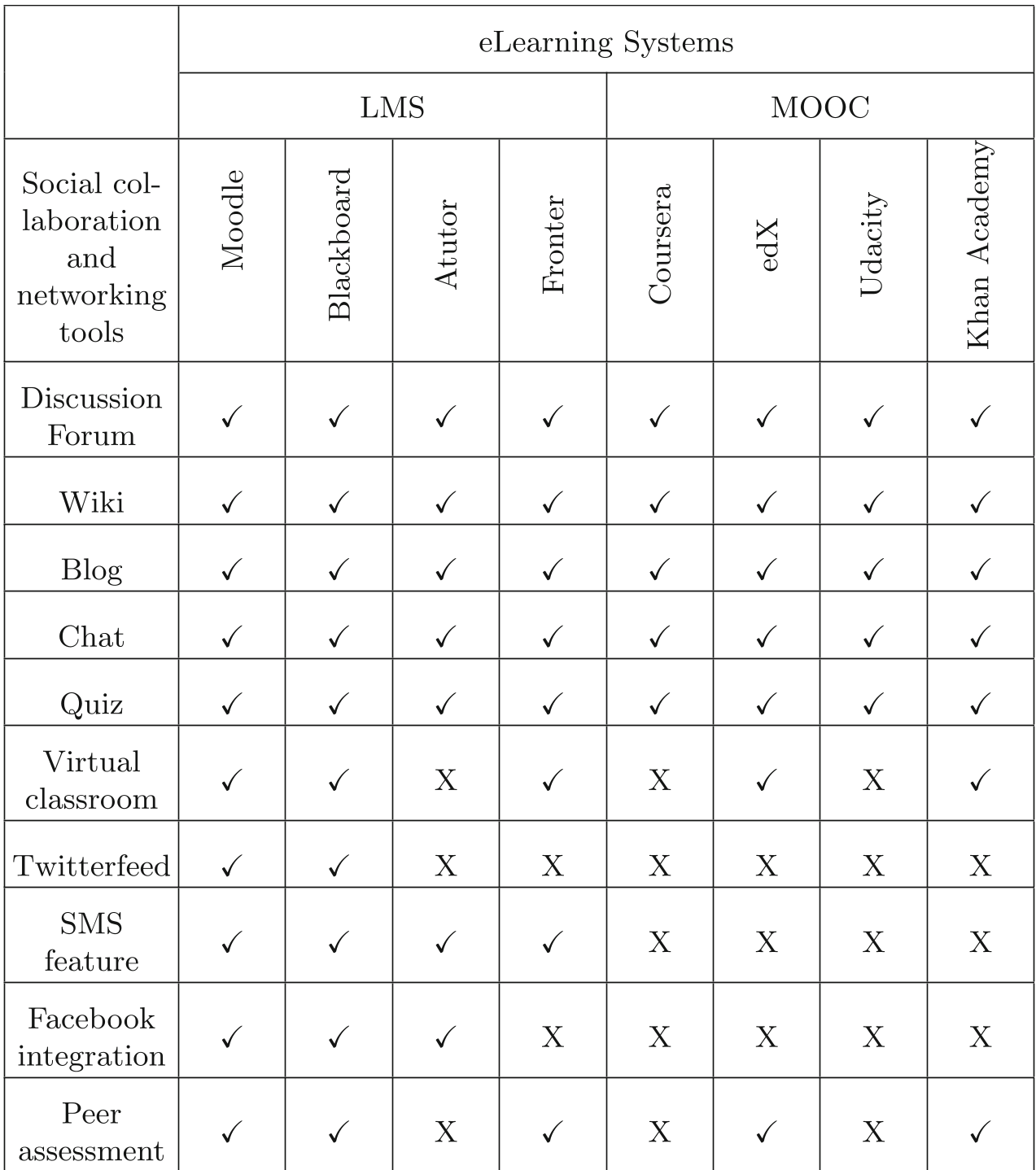 Table 1: Feature comparison showing Moodle and Blackboard as the most "socially diverse" platforms.
The "Why" behind this strategy is clear: LMS platforms aim for a "all-in-one" service model, whereas MOOCs prioritize features that scale to thousands of users simultaneously.
Methodology: A Global Student Perspective
To move beyond theory, the authors surveyed 218 students (mostly in Computer Science and Engineering) to gauge real-world impact.
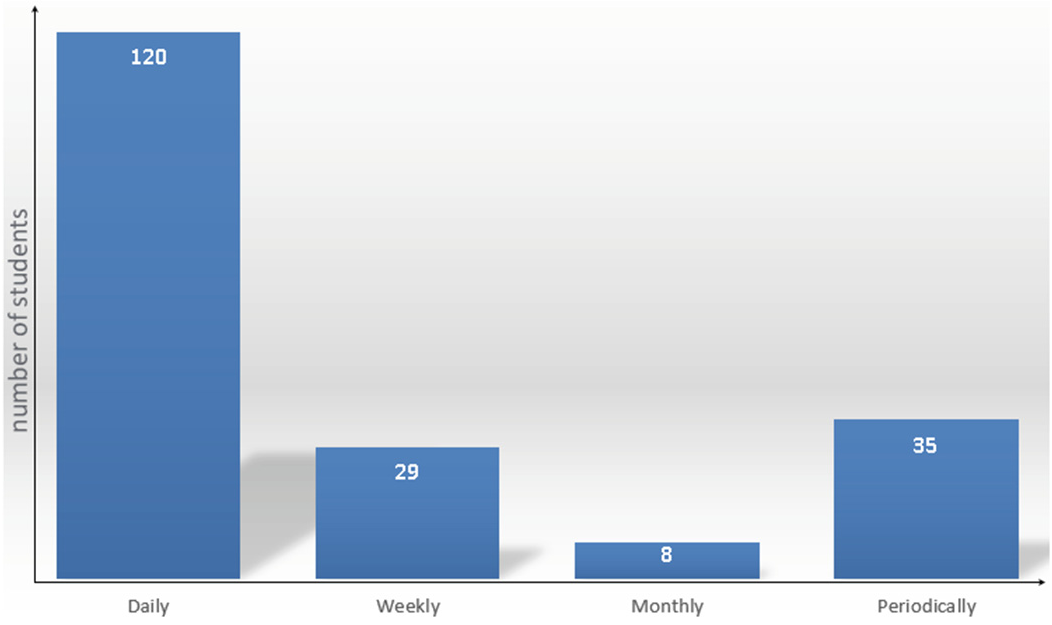 Figure 4: Students' feedback on social tool usage.
The results were striking:
- 95% are familiar with social networking tools.
- 53% use tools supported by LMS, but a staggering 84% use tools supported by MOOCs.
- Facebook remains the "King" of supplementary communication, preferred by 168 participants for its ease of document sharing and group creation.
The "Friction" in Social Learning
While the data is positive, the paper identifies a critical "Pain Point": Privacy and Distraction.
- 39% of students reported difficulties, specifically in "keeping up the pace" with group discussions.
- Privacy Concerns were cited as the #1 barrier to adoption.
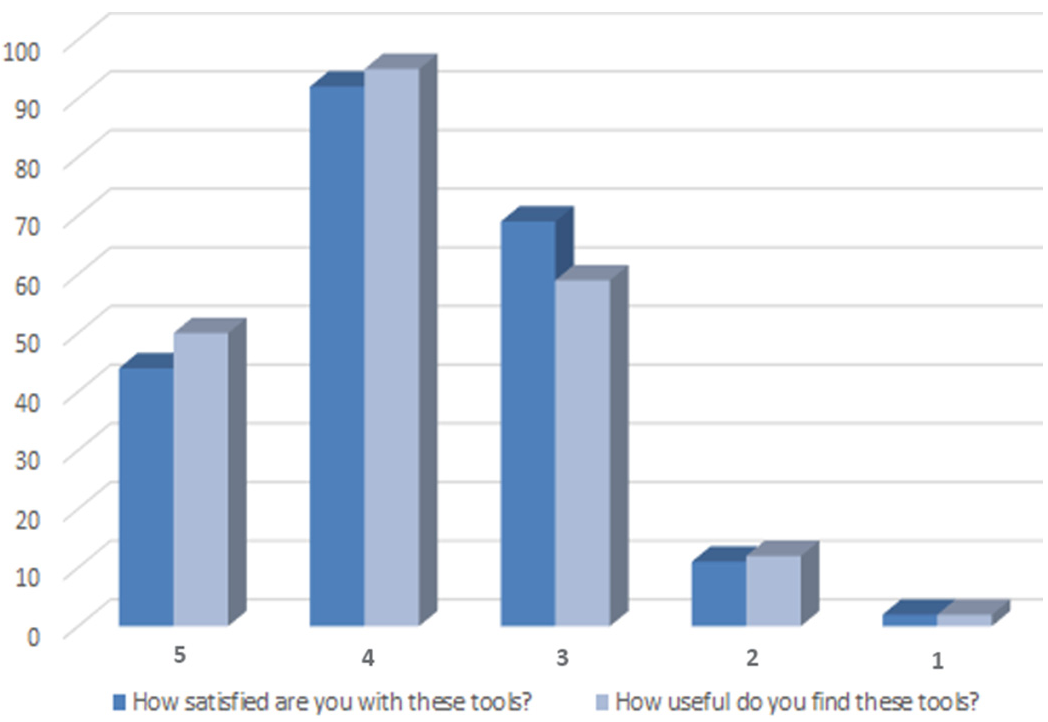 Figure 7 & 8: High levels of satisfaction correlate with the perceived contribution to the learning process.
Critical Insight: The Future is Personalized
The most forward-looking conclusion of this paper is the call for Artificial Intelligence in social learning. The authors propose that the next step isn't just "more tools," but "smarter tools."
Specifically, they envision:
- Pedagogical Chatbots: Utilizing AI to mimic live instructors for one-to-one social communication.
- Recommender Systems: Using AI to filter social noise and highlight the most relevant collaborative tasks for the learner.
Conclusion
This paper serves as an empirical validation that the boundary between "social life" and "academic life" has permanently blurred. To succeed, future eLearning platforms must prioritize privacy-safe, AI-enhanced social environments that leverage the collaborative habits students already possess on platforms like Facebook, within the structured environment of an LMS.