
Decoding the Invisible: Using HMMs to Uncover Latent User Intent in Web Behavior
Analytical method of web user behavior using Hidden Markov Model
This paper proposes an analytical framework to classify web user behavior by mapping clickstream data into latent states using a Hidden Markov Model (HMM). Applied to a social network game "Girl Friend BETA," it successfully categorizes user actions into distinct behavioral clusters such as "Main Content Enthusiasm," "Daily Routine," and "Light User" sessions.
TL;DR
Researchers from the University of Tokyo have developed a novel analytical framework that goes beyond simple Page Views. By employing a Hidden Markov Model (HMM) and Network Community Detection, they've created a way to "read the mind" of web users—categorizing sessions based on latent motivations rather than just clicks. Tested on the popular game Girl Friend BETA, the method successfully distinguished between high-intensity "addicted" play and low-motivation "daily routine" browsing.
Background: The "Same Page, Different Intent" Problem
In traditional web analytics, two users landing on a 'MyPage' URL are counted identically. However, one might be a hardcore player checking raid stats, while the other is a casual visitor just seeking a login bonus. Relying solely on raw click logs creates a massive Inductive Bias error. To understand why users stay or leave, we must model the Latent States—the hidden psychological drivers behind the sequences.
Methodology: From Clickstream to Latent Communities
The proposed pipeline consists of three sophisticated layers:
- HMM Modeling: The team treated the clickstream of 20,000 users as a Markov process. By setting 30 hidden states, the model captures the nuances of page co-occurrence and sequential transition.
- State Transition Network: The transition probabilities between these 30 states form a directed graph. The authors then applied the Walk Trap algorithm to find communities—highly connected clusters of states where users "linger."
- Session Clustering: Each session is transformed into a feature vector based on time spent in these latent communities. These vectors are then clustered using K-means to generate final behavioral labels.
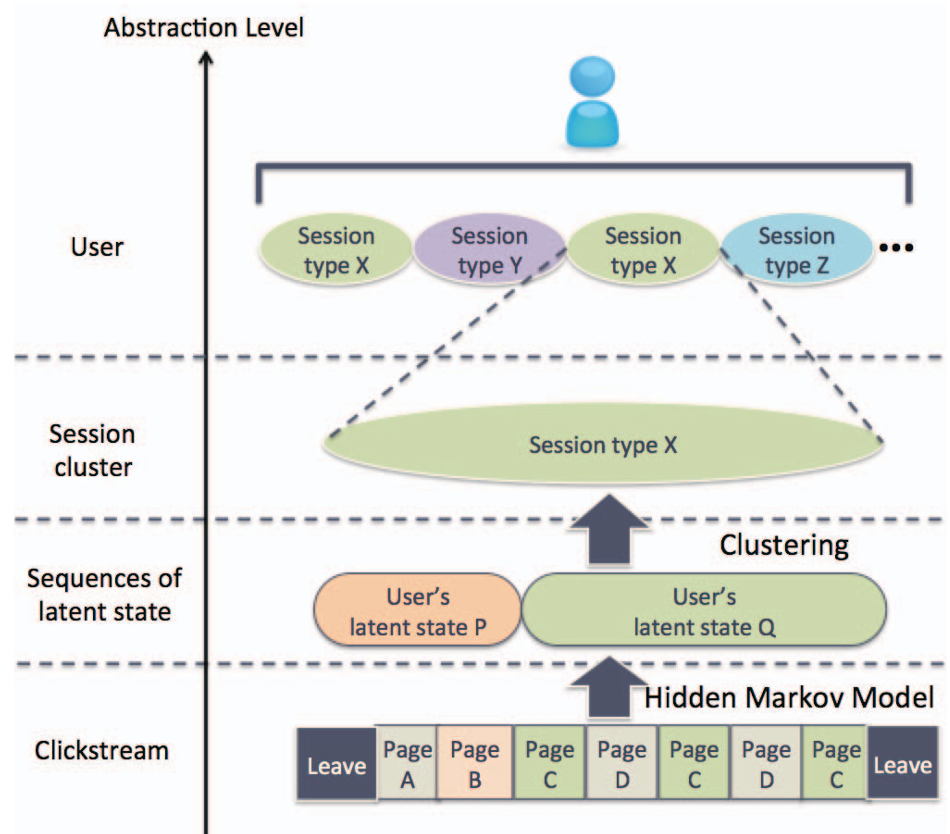 Figure 1: The dual-stage approach—mapping clicks to hidden states and consolidating sequences into meaningful session labels.
Key Insights from the State Network
The analysis revealed six distinct "communities" of behavior (L0 to L5). For instance:
- L1 (Raid Enthusiasm): Dominated by interaction with the game's main competitive content.
- L2 (Daily Routine): Characterized by "Top page" visits and "Login bonuses."
- L5 (Basic Content): Focused on quests and battles, typically the domain of newer or "Light" users.
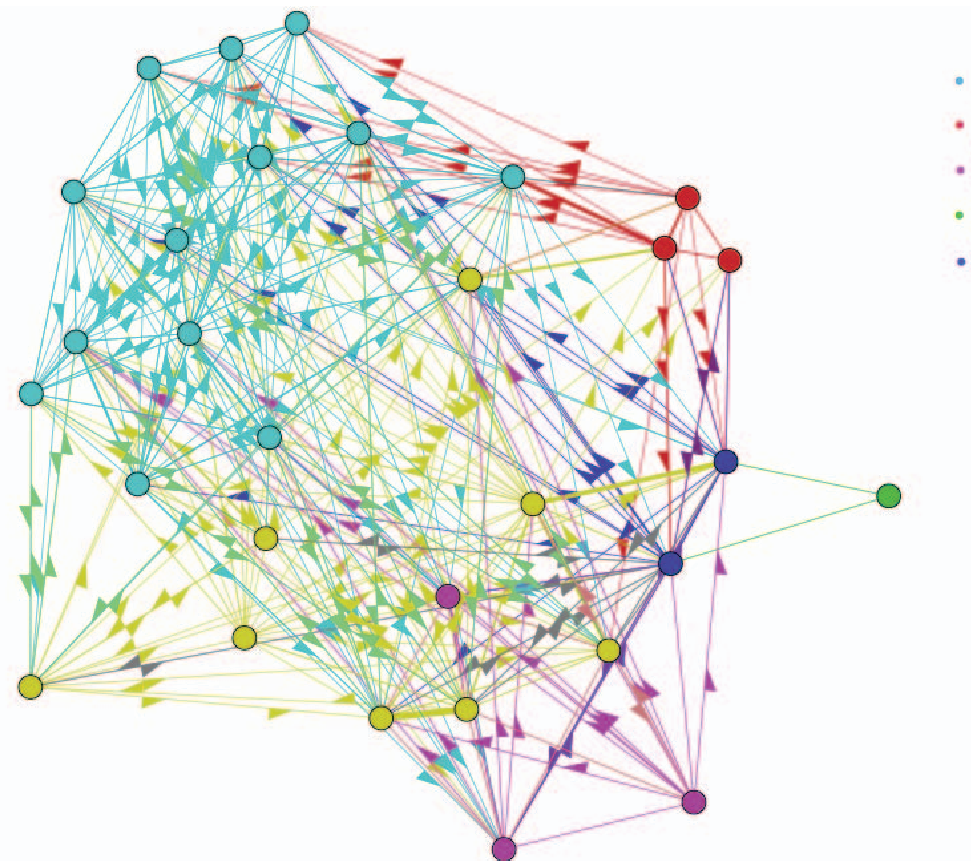 Figure 3: The State Transition Network visualization highlights how users navigate between latent intents.
Experimental Results: The Proof in the Data
The authors compared their HMM-based approach against a baseline "Simple K-Means" (which only looks at page ratios).
- The Difference: The simple method merged "Low Motivation" sessions and "Light User" sessions into a single generic cluster because they both hit 'MyPage' frequently.
- The HMM Advantage: The proposed method successfully separated them. It proved that S6 (Light User sessions) were predominantly generated by low-level users, while S0 (Enthusiasm sessions) were the domain of veterans.
 Table V: Centroids of the session clusters showing the distribution across latent communities.
Critical Analysis & Looking Forward
While the HMM approach is mathematically robust and provides excellent interpretability (each state has a specific page distribution), it faces a few limitations:
- Scalability: Training an HMM on millions of users with highly granular page definitions could lead to a state-space explosion.
- Temporal Dynamics: The current model uses dummy variables for time-outs but doesn't fully capture "time-of-day" effects which often dictate user intent.
Future Outlook: This work lays the foundation for KPI Prediction. By identifying a user's current session label in real-time, service providers could theoretically trigger personalized interventions—for example, offering a specific item to a user identified in a "Low Motivation" state to prevent them from exiting the service.
Conclusion
The study demonstrates that user behavior is a "Network of Intent." Moving beyond raw counts to sequence-based latent modeling allows for a much more granular—and actionable—understanding of the digital customer journey.