
Identifying the "Salespeople" of Facebook: A Hybrid Approach to Viral Diffusion
An Analytical Way to Find Influencers on Social Networks and Validate their Effects in Disseminating Social Games
This paper proposes a two-step analytical methodology to identify "salesperson-type" influencers on Online Social Networks (OSNs) like Facebook. By combining structural social graph analysis with a multi-factor User Activity Index, the authors successfully identified key individuals who drove a 170% increase in social game dissemination compared to traditional promotions.
TL;DR
How do you find the few individuals who can make a social game go viral? This research moves beyond simple friend counts to a two-step methodology: filtering the crowd via Degree Centrality and then identifying "Power Users" through a weighted Activity Index. The result? A 170% boost in dissemination efficiency compared to random seeding.
Problem & Motivation: Beyond the Follower Count
In the early days of social media research, "influence" was often treated as a synonym for "popularity." If you had many friends, you were an influencer. However, the authors argue that structural position is only half the story.
The core pain point identified is Social Spamming—the trend of users accumulating thousands of meaningless connections. To find a true "influencer," especially one who acts like a salesperson (a term borrowed from Malcolm Gladwell’s The Tipping Point), you must look at how they actually use the platform. Why does this matter? Because a well-connected but dormant user cannot trigger the "social cascade" necessary for a product to go viral.
Methodology: The Two-Step Filter
The authors propose a rigorous hybrid pipeline:
1. Structural Analysis
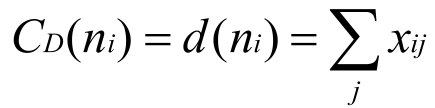
Starting from "seed nodes" (active real-world acquaintances), the authors mapped a subgraph within the "South Korea" network to ensure cultural relevance and reduce noise. They used Degree Centrality to find the top candidates.
2. User Activity Analysis (The Secret Sauce)
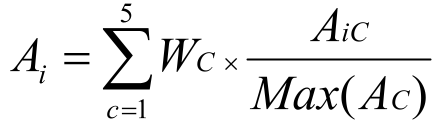
The top candidates were then ranked using a custom Activity Index (). This index isn't just a count; it’s a weighted formula assessing:
- A1/A2: Participation (Groups/Pages).
- A3: Tech-savviness/Interest (Number of installed Apps).
- A4/A5: Engagement (Media uploads/Daily updates).
Experiments: Putting Theory into Practice
The authors tested this by launching a Facebook game, "Beat Bubbles+". They compared their selected influencers against the "Basic Reproduction Number" ()—an epidemiology-based metric used to predict how many new "infections" (users) a single person will create.
Key Results
- Higher Efficiency: In two separate experiments, the influencers identified by the methodology consistently outperformed the theoretical growth expected from average users.
- Competitive Edge: The growth rate (14.13) was significantly higher than games promoted by major media brands like MTVAsia (9.67).
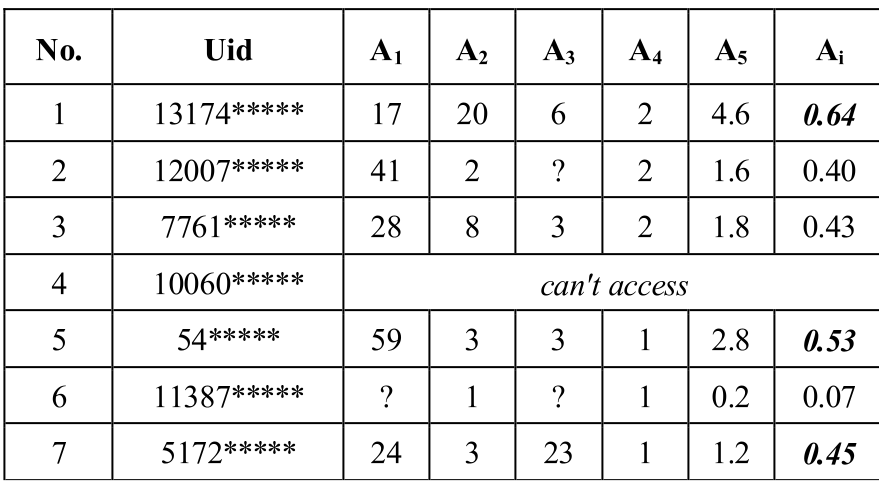 Table: The Activity Index () ranking (No. 1, 5, and 7 were the ultimate winners).
Depth Insight: Why it Works
The most striking finding is that the order of Degree Centrality did not match the Activity Index. User #2 had the second-most friends (52 links) but a lower Activity Index (0.40) because they didn't engage with the platform's features. Conversely, User #7 had fewer friends (20 links) but a high Activity Index due to heavy app usage (A3=23).
The takeaway? Influence is not just about reach; it is about resonance and relevance.
Conclusion & Future Outlook
The paper successfully demonstrates that combining "who you know" (Structure) with "what you do" (Activity) creates a potent predictor for viral success. While the study focused on Facebook, the logic applies to modern platforms like Discord or X (Twitter).
Limitations: The study notes that without incentives, even influencers can underperform, suggesting that "influence" requires both capability (the methodology) and motivation (remuneration). Future research will likely focus on "Tie Strength"—measuring not just if two people are friends, but how much they actually trust each other.