
Frequency Preserving Autoencoders: A Smarter Way to Listen to Nature
Analyzing Big Environmental Audio with Frequency Preserving Autoencoders
The paper introduces Frequency-Preserving Autoencoders (FPAEs) for unsupervised ecological audio feature extraction, specifically designed for biodiversity monitoring. By utilizing non-square convolutional kernels, the method achieves superior performance in hierarchical clustering of bird species compared to traditional square autoencoders and spectral acoustic indices.
TL;DR
Ecologists are drowning in data—thousands of hours of audio recordings that no human can realistically audit. This paper introduces Frequency Preserving Autoencoders (FPAEs), an unsupervised learning method that uses non-square convolutional kernels to extract features from bird calls. By prioritizing frequency information over time, these models outperform standard autoencoders and traditional acoustic indices, offering a fast, label-free solution for biodiversity monitoring.
Background: Why Square Kernels Fail Audio
In the world of Computer Vision, square kernels (e.g., 3x3) are the gold standard because images generally possess spatial symmetry. However, a spectrogram is not a standard image. Its vertical axis represents frequency, while its horizontal axis represents time.
The authors argue that for ecological audio, especially bird calls, the exact timing of a sound is often less informative than its frequency profile. Traditional CNN autoencoders reduce dimensionality equally in both directions, often blurring the very frequency signatures needed to distinguish between species.
Methodology: The Power of Asymmetry
The core innovation lies in the Non-Square (Asymmetric) Architecture. Instead of reducing the spectrogram's dimensions uniformly, the authors designed kernels and strides that are wider in the time dimension than in the frequency dimension.
1. Architectural Innovation
By using kernels like 1x4 and strides that aggressively downsample the "X" (time) axis, the network is forced to compress temporal variability while keeping the "Y" (frequency) axis relatively intact. This ensures that the latent "fingerprint" of the audio retains the harmonic structure of the animal calls.
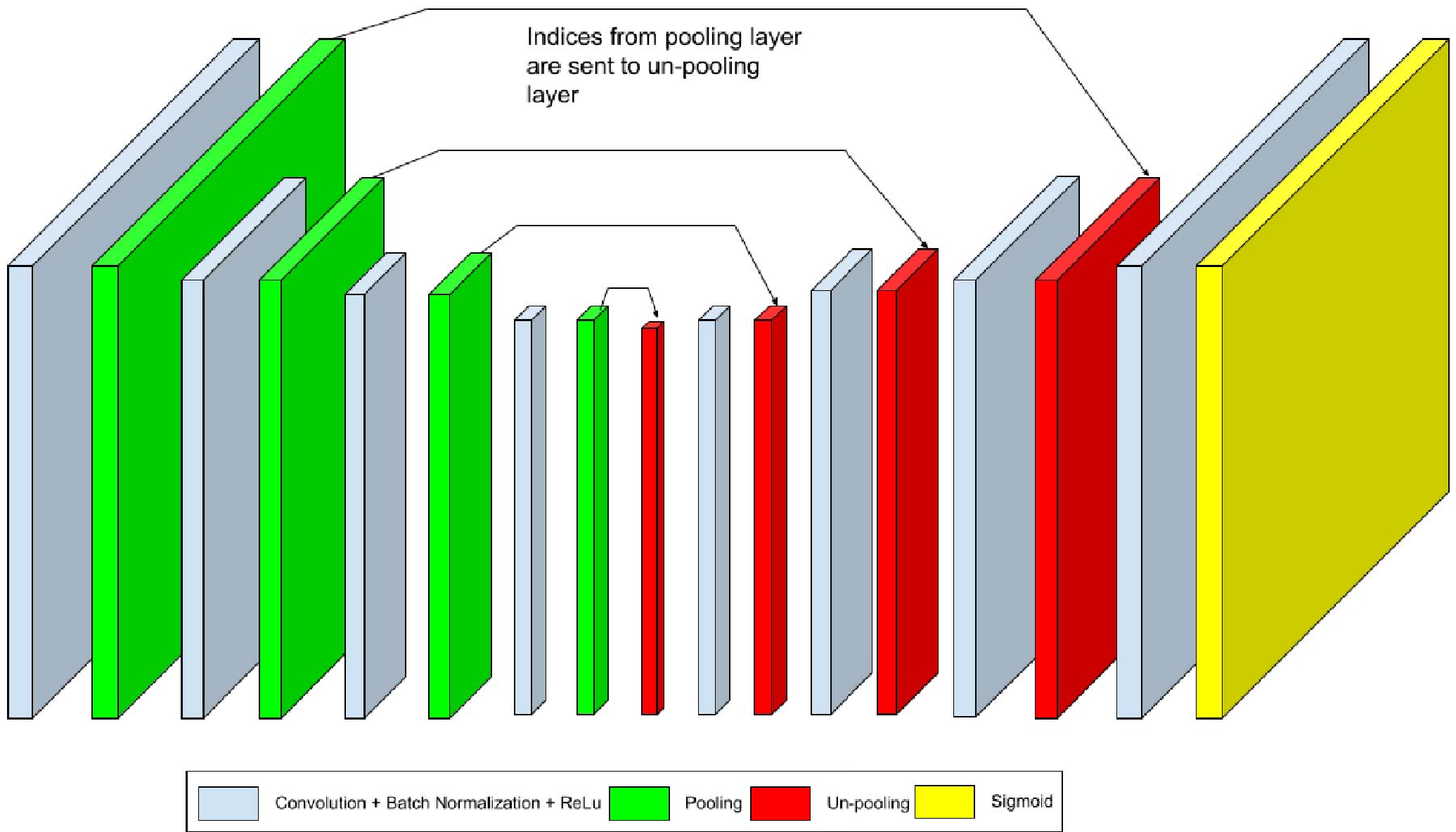 Fig 1. The general structure of the proposed autoencoder, highlighting the transition from high-dimensional spectrograms to a compact feature representation.
2. Encoder-Decoder Pairings
The researchers didn't just stop at one design. They tested several combinations:
- Implicit Pooling: Directly using strides to reduce size.
- Max-pooling & Unpooling: Keeping track of spatial indices to better reconstruct the output.
- Batch Normalization: Used to stabilize the learning process across different acoustic environments.
Experimental Results: Better than Indices, Faster than Labels
The models were evaluated using a hierarchical clustering task involving 23 bird species. The goal: could the model group similar calls together without ever being told which call belonged to which bird?
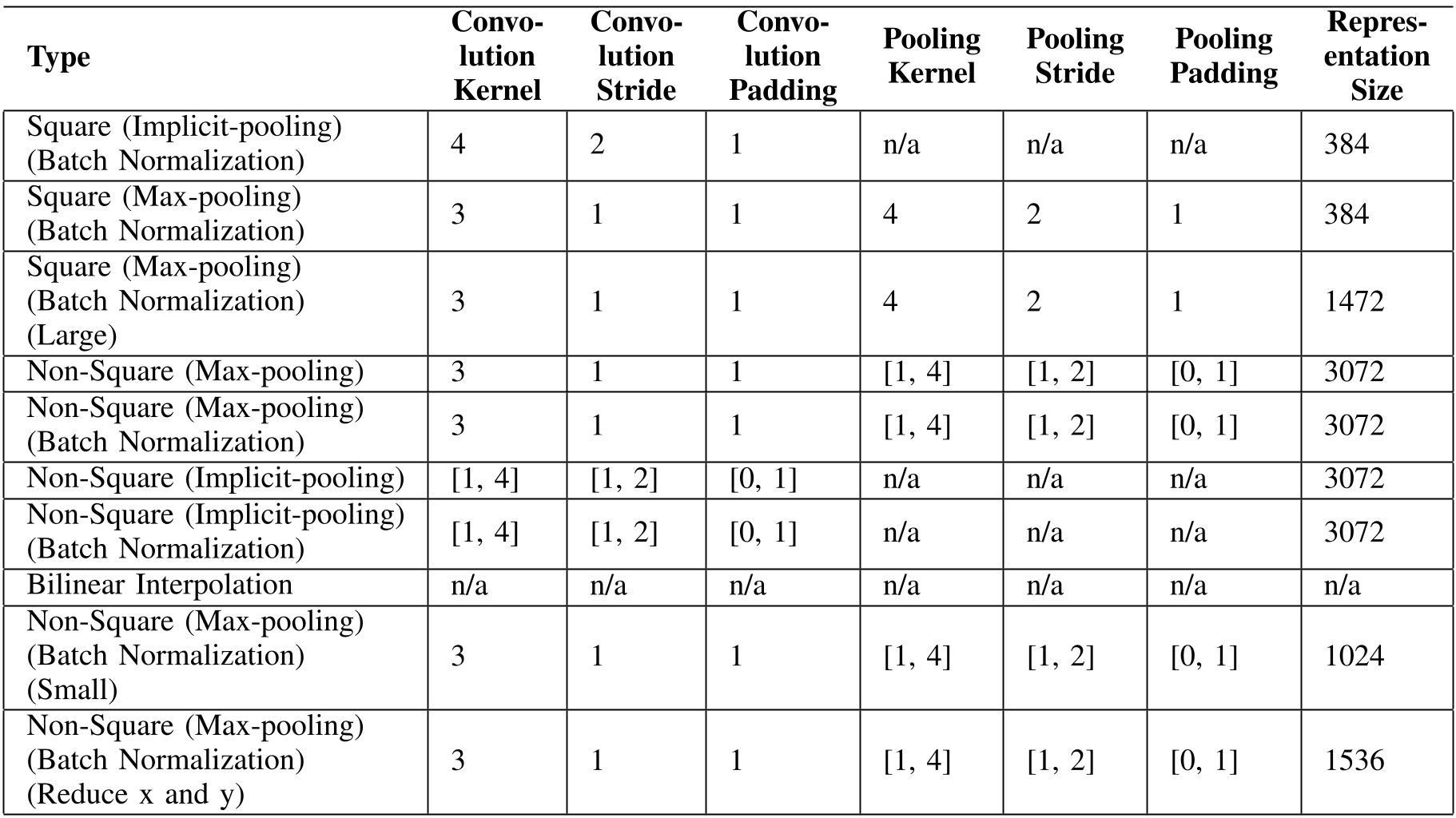 Table 1. Overview of the tested encoder/decoder hyperparameters, showing the shift from square to non-square configurations.
Key Findings:
- Superior Purity: The best non-square models (Average Purity: 0.44) significantly outperformed traditional spectral acoustic indices.
- The Latent Space: Visualizations via t-SNE showed that non-square models created much tighter, more distinct clusters for specific species compared to "square" models.
- Efficiency: Like previous autoencoder attempts, this method remains orders of magnitude faster than calculating complex acoustic indices, making it suitable for "Big Audio" analysis.
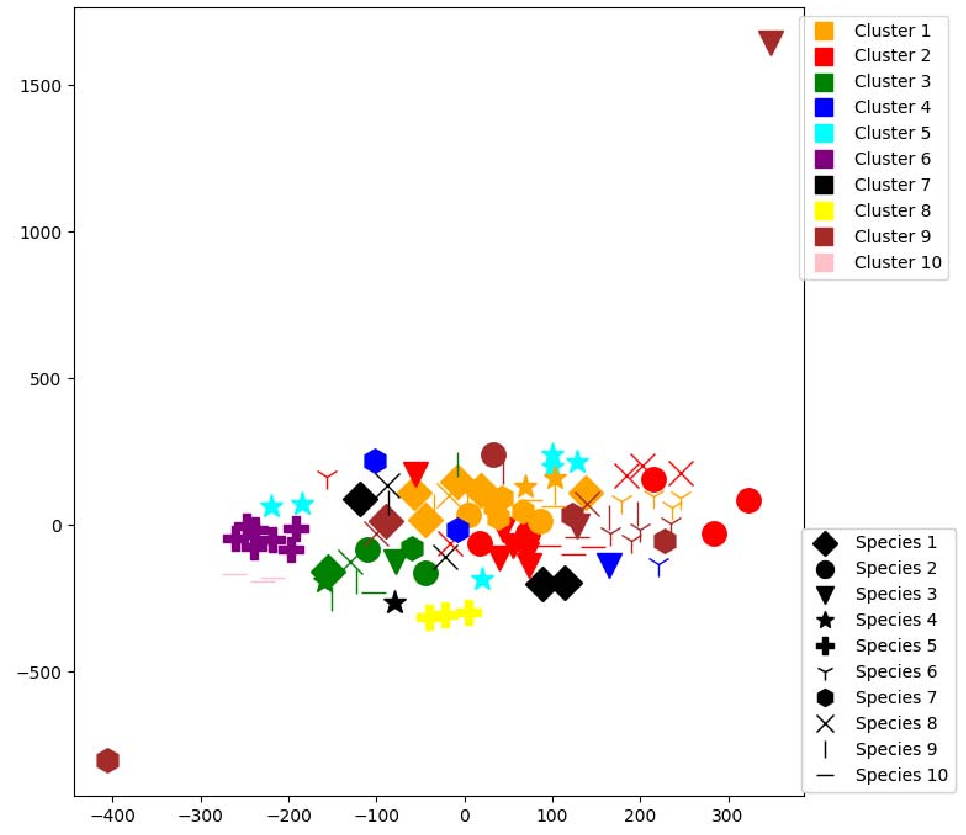 Fig 2. t-SNE plot showing clear species separation using the Non-Square Max-pooling architecture.
Critical Insight: The "Why" Behind the Success
The success of this method confirms a growing trend in deep learning: Inductive Bias. By manually "forcing" the model to care more about frequency through kernel shapes, the researchers compensated for the lack of labeled data. In an unsupervised setting, giving the model a structural "hint" about the nature of the data is often the difference between noise and signal.
Summary & Future Outlook
While the FPAE does not yet beat MFCCs in pure accuracy, it offers a crucial advantage: it preserves the spatial location of frequency information, which is vital for visualizing soundscapes—a key requirement for field ecologists.
Limitations: The study was primarily limited to one-second clips and specific sites. Future work needs to address how these features perform on long-form, complex recordings where multiple species overlap (polyphony).
Final Takeaway: For domain-specific AI, "off-the-shelf" computer vision architectures are rarely the final answer. Modifying the fundamental geometry of the convolution to match the physical properties of the signal is a powerful, underutilized strategy in ecoacoustics.