
Personalized HRI: Transforming Smart Homes with Social Media Intelligence and Fuzzy Logic
Analyzing social networks activities to deploy entertainment services in HRI-based smart environments
2017-07-01
Summary
Problem
Method
Results
Takeaways
Abstract
The paper introduces a novel robot-based architecture for smart homes that integrates Ambient Intelligence (AmI) with personality analysis derived from social media. It utilizes a fuzzy logic inference engine to deliver personalized entertainment recommendations (TV, movies, music, games) via a humanoid robot interface.
## TL;DR
Researchers from the University of Naples Federico II have developed a framework that allows social robots to "know" your personality by looking at your social media. By combining Big-Five personality traits (extracted via APIs) with real-time home sensor data, the system provides high-context entertainment recommendations through a humanoid interface, moving beyond simple automation toward true cognitive personalization.
## The Missing Link in Ambient Intelligence
Ambient Intelligence (AmI) has long been proficient at knowing *what* we do—detecting when we walk into a room or identifying our sleep cycles. However, it rarely understands *who* we are. Most smart homes treat all users as a collection of physical patterns.
The authors argue that for a social robot to be a convincing recommender, it must understand the user's "cognitive characteristics." Traditionally, getting this data required tedious surveys. This paper flips the script by harvesting these personality traits from the digital footprints we leave on Twitter and Facebook.
## Methodology: The Fusion of Context and Character
The architecture is built on a three-layer stack:
1. **Data Acquisition Layer**: Captures environmental context (temperature, light, time) and user-specific data (age, gender, and social media feeds).
2. **Inference Layer (The Brain)**: This is where the magic happens. It uses **Fuzzy Logic** to handle the inherent "vagueness" of human life. It doesn't just see "High Extroversion"; it sees a spectrum that informs whether you'd prefer an action movie over a solitary video game.
3. **HRI Layer (The Interface)**: A humanoid robot serves as the "face" of the house. By using gaze and hand gestures, the robot increases the likelihood that a user will accept a recommendation compared to a standard screen notification.
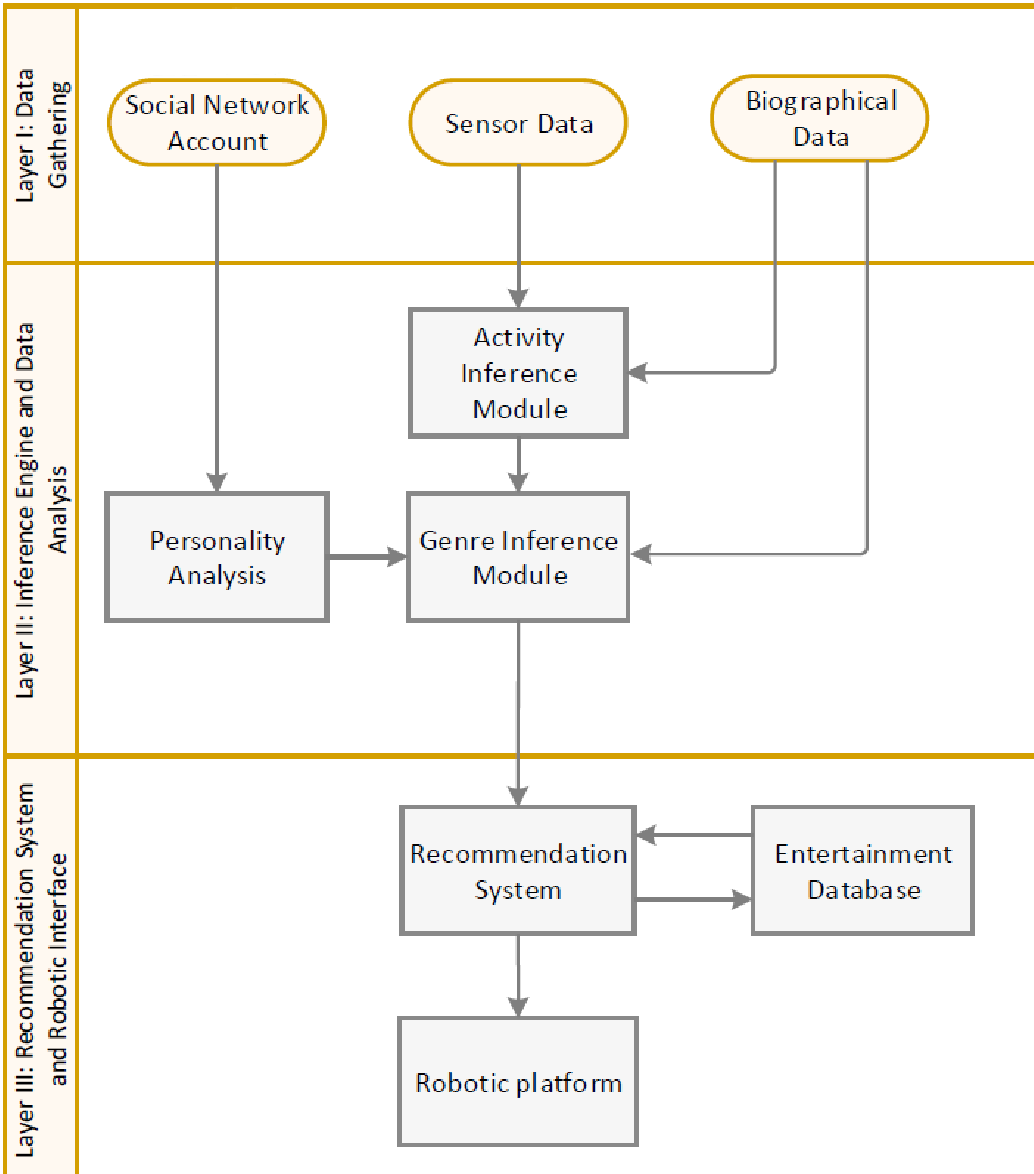
*Fig 1: The three-layer architecture connecting sensors, social media, and the robot.*
### Why Fuzzy Logic?
Human traits aren't binary. You aren't simply "Conscientious" or "Not Conscientious." The authors use fuzzy sets to model variables like "Time of Day" or "Level of Neuroticism." This allows the system to generate a "Control Surface" that maps free time and personality to the probability of an activity being accepted.
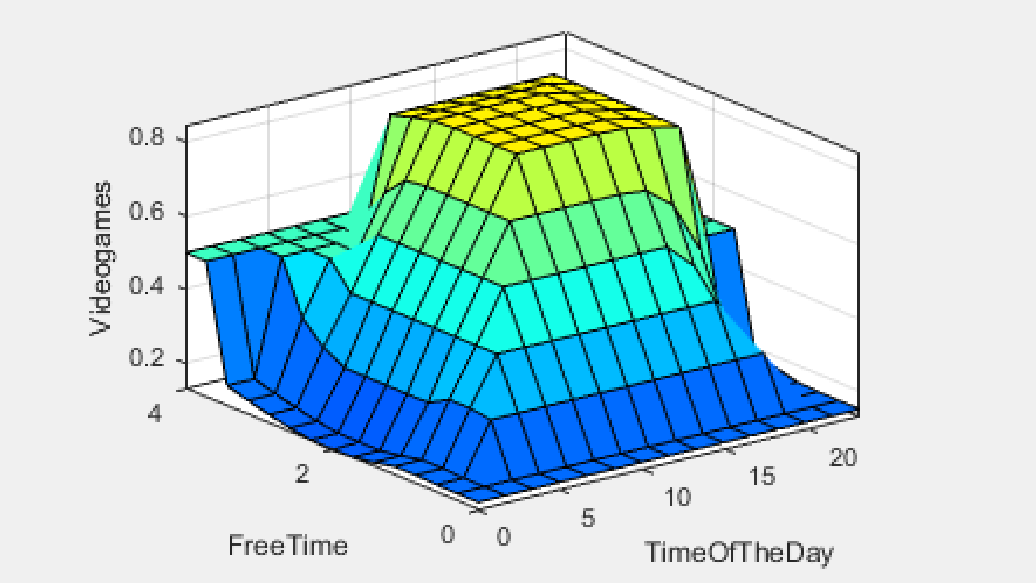
*Fig 2: A control surface visualising how the inference engine balances available free time and the time of day to suggest video games.*
## Experimental Insights: From Tweets to TV Genres
To validate the engine, the authors analyzed public Twitter profiles of celebrities like Oprah Winfrey and LeBron James. Using the IBM Watson Personality Insight API, they generated Big-Five profiles:
* **Oprah (@Oprah)**: High Agreeableness (0.94) and Openness (0.8).
* **Results**: The engine correctly identified a high preference for "Foreign," "Drama," and "Indie" genres, which align with her philanthropic and empathetic personality profile.

*Fig 3: Quantitative mapping of Big-5 traits to movie genre preferences for the case study.*
## Critical Analysis & Future Outlook
The true value of this research lies in solving the "Cold-Start" problem. Most recommenders need months of your data to be useful. This system can profile you the moment you link your Twitter account.
**Limitations**:
* **Privacy**: While the authors mention Twitter counts are "public," deeper emotional analysis of text raises significant privacy concerns for the average user.
* **Dynamic Personalities**: Personality isn't static; it shifts with mood, which the current fuzzy engine doesn't fully capture in real-time.
**Conclusion**:
This paper marks a shift from "Reactive" smart homes to "Empathetic" smart environments. By using a robot as a mediator, the system transforms a recommendation from a data-driven choice into a social interaction, paving the way for robots that truly understand the psychological makeup of the humans they serve.