
Decoding Children's Social Play: A New Framework for Digital Playgrounds
An Annotation Scheme for Social Interaction in Digital Playgrounds
This paper introduces a specialized annotation scheme for analyzing children's social interactions in digital playgrounds. By integrating literature on social development with empirical observations of the "Interactive Playground" system, the authors establish a framework to correlate social behaviors with play phases and physical activity levels, achieving a Cohen's κ of 0.67 for social behavior between primary annotators.
TL;DR
Researchers at the University of Twente have developed a robust annotation scheme designed to map the complex social landscape of digital playgrounds. By tracking social signals alongside physical activity and play phases, this framework provides the "ground truth" necessary to build socially-aware AI that can eventually respond to children's behavior in real-time.
The Evolution of the Playground: From Slides to Sensors
Modern playgrounds are no longer just static wood and metal; they are becoming Digital Playgrounds—augmented environments where projectors, infrared cameras, and motion sensors track every move. However, a significant gap exists: how do we scientifically measure the "social health" of these interactions?
Traditional scales like the Play Observation Scale (POS) are too broad, while clinical tools like MIPO focus purely on impairments. The authors identified a dire need for a scheme that captures the nuance of competition, collaboration, and even "Rough-and-Tumble" play in these high-tech spaces.
Methodology: A Multi-Dimensional Lens
The proposed scheme breaks down the playground experience into three core dimensions:
- Phase of Play: Is the child exploring the system, or are they fully engaged in a known game?
- Social Behavior: Identifying specific interactions like Leadership, Mimicry, Performance (e.g., dancing), and Conflict.
- Physical Activity: Measuring the intensity of exertion, which is a key health goal of digital play.
The Interactive Playground Architecture
To test the scheme, the authors used a system comprising top-down projectors, infrared tracking, and "Sun SPOT" motion sensors on balls and wristbands.
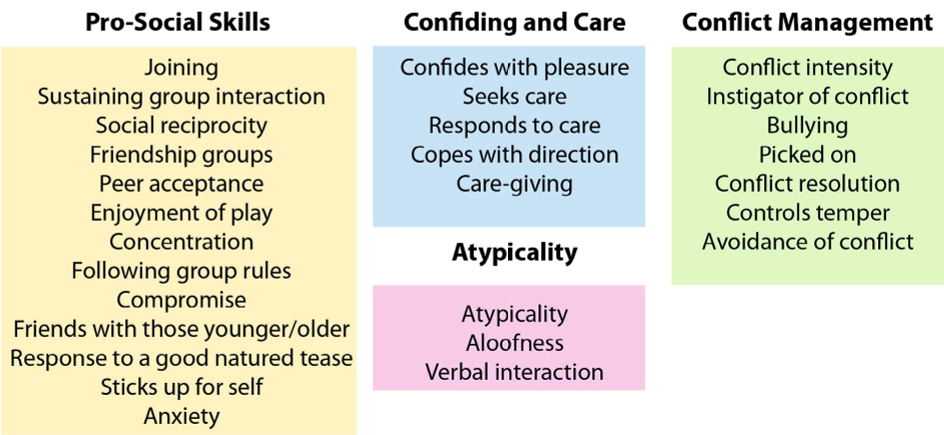 Figure: The Interactive Playground setup, utilizing infrared reflectors and floor projections to stimulate social play.
Key Insights: Can Machines "See" Social Connection?
One of the most striking aspects of this research was the attempt to annotate behavior without audio. This was a deliberate choice to test if computer vision alone could eventually recognize social cues.
1. The "Social" Signal is Strong
The study found that even without hearing what children were saying, annotators could distinguish between competition and cooperation with high accuracy. Physical cues—such as the "sudden invasion of personal space"—serve as reliable proxies for social intent.
2. The Threshold Problem
While social behaviors were distinct, Physical Activity proved surprisingly difficult to agree upon. What one observer calls "Intense," another might call "Normal." This suggests that for future AI systems, objective sensor data (accelerometers) will be superior to human observation for activity tracking.
Experimental Battleground: Results and Reliability
The evaluation involved a rigorous process of pilot testing and refinement. The final agreement scores (Cohen's Kappa) revealed where human observation excels and where it falters.
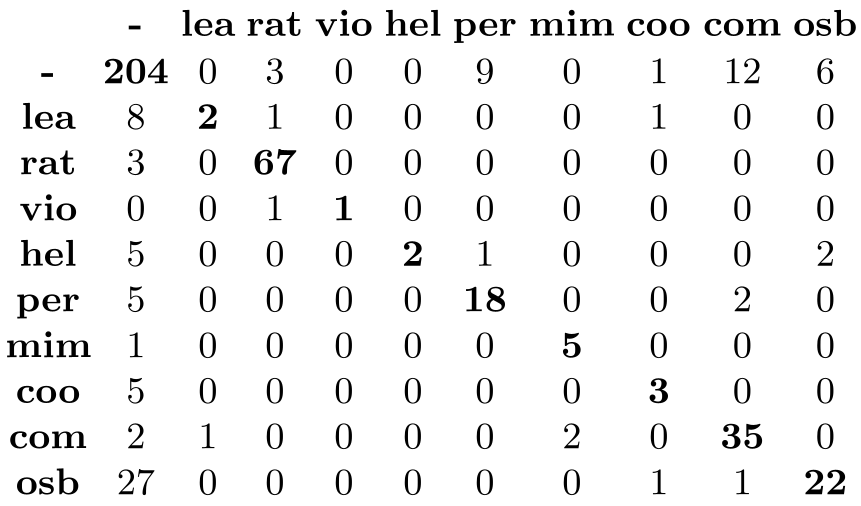 Table: Comparison of social behavior annotations. Note the high agreement in "Rough-and-Tumble" (rat) and "Competition" (com).
Critical Findings:
- Rough-and-Tumble (RAT): This was the most frequent social behavior, often blending into competition.
- Phase Transitions: In free-play environments, children switch between "exploration" and "system play" so rapidly that annotators struggled to keep up, suggesting these categories should be merged for higher reliability.
Deep Insight & Future Outlook
This paper moves us closer to Socially-Aware Digital Playgrounds. By providing a structured way to label social data, the authors have laid the groundwork for Training Sets that can teach AI to recognize when a child is leading a group or when a conflict is escalating.
Limitations: The reliance on human "thresholds" for physical activity remains a hurdle. Future systems should likely hybridize this manual scheme with automated IMU (Inertial Measurement Unit) data to provide a 360-degree view of the play experience.
Conclusion: Play is the "earliest phase of civilization," and as we digitize it, we must ensure we don't lose sight of the social bonds it is meant to forge. This annotation scheme is a vital step in ensuring technology enhances—rather than replaces—the rich social fabric of children's play.