
APD: Safeguarding Indoor Navigation Against Sophisticated Crowdsourcing Attackers
Anomalous Path Detection for Spatial Crowdsourcing-Based Indoor Navigation System
The paper introduces the Anomalous Path Detection (APD) scheme, a security framework for spatial crowdsourcing-based indoor navigation systems. It leverages a dual-layered detection approach involving Reputation Management (RM) and an HMM-based Trajectory Sequence (TS) analysis to identify both malicious and semi-honest attackers.
TL;DR
Indoor navigation systems (INS) increasingly rely on Spatial Crowdsourcing to provide pathing in complex environments like malls. However, "semi-honest" participants often trick the system by providing detours to locations where they benefit financially. The Anomalous Path Detection (APD) scheme solves this by combining reputation tracking with a Hidden Markov Model (HMM) to spot subtle trajectory anomalies that simple distance checks miss.
Problem & Motivation: The "Profit-Driven Detour"
Traditional security in crowdsourcing focuses on Malicious Responders (Level-1)—attackers who lead you to the wrong place entirely. These are easy to spot: the user complains, and the attacker's reputation tanks.
The real threat is the Semi-honest Responder (Level-2). These attackers guide you to the correct destination but force you to take a "scenic route" past a specific store (Spot B) to earn a kickback. Since the user eventually arrives, they often leave positive feedback, making these attackers invisible to standard reputation systems.
The author's core insight: Distance fluctuation is the "fingerprint" of a detour. Even if the total distance isn't "extreme," the mathematical sequence of how the distance to the destination changes over time reveals the anomaly.
Methodology: Dual-Layered Detection
The APD scheme operates on a Fog-based architecture, utilizing two primary modules:
1. Reputation Management (RM)
This handles Level-1 attackers. If a responder provides a wrong destination, the Fog server detects the sharp drop in user satisfaction and penalizes their reputation value ().
2. Trajectory Sequence (TS) Analysis
This is the heart of the paper, targeting Level-2 attackers. The system discretizes a path into a sequence of points , where is the Euclidean distance to the destination.
- The HMM Strategy: A semi-supervised Hidden Markov Model is trained on normal trajectory data.
- The Logic: For a normal path, distance should decrease monotonically. For a detour, the distance will fluctuate or stagnate. The HMM calculates the "likelihood" of a sequence; if the likelihood is low, it's flagged as an anomaly.
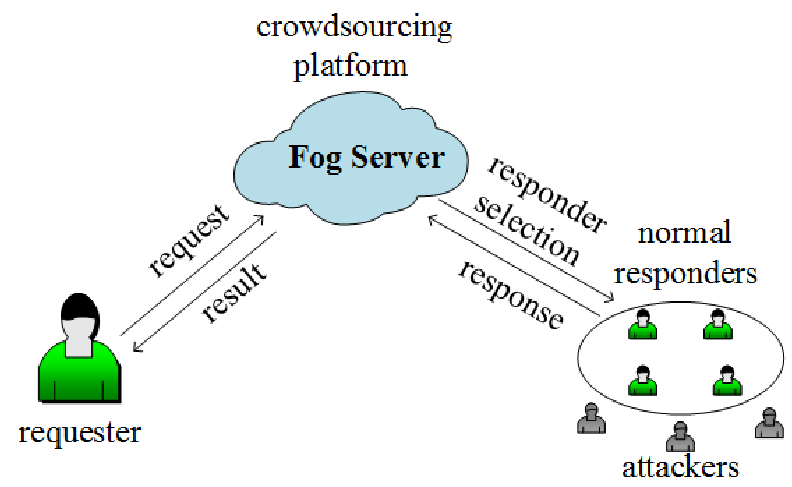 Figure 1: The Fog-based Spatial Crowdsourcing Framework.
Experiments & Results
The researchers simulated a shopping mall environment with varying numbers of attackers.
Performance vs. Baselines
The APD scheme was compared against Long Travelling Distance (LTD) detection. LTD only flags paths that are significantly longer than average.
- Insight: LTD fails when attackers provide "clever" detours that aren't much longer but are strategically diverted.
- Result: APD (via the TS method) maintained significantly lower False Negative Rates (FNR) compared to LTD, meaning it caught more sophisticated attackers.
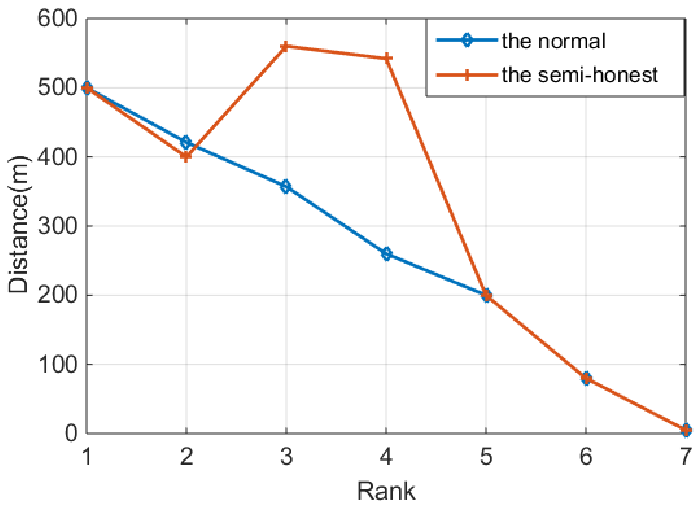 Figure 2: Distance distribution comparison. Note the fluctuation in the semi-honest path (red) compared to the steady decrease in the normal path (blue).
The Reputation Game
Interestingly, the study shows that semi-honest attackers often alternate between being "good" and "bad" to keep their reputation just above the threshold, a phenomenon the APD system tracks over time.
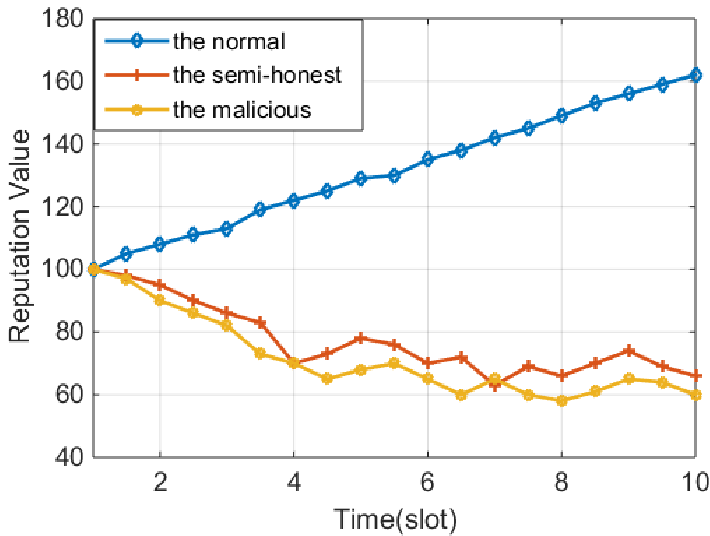 Figure 3: Long-term reputation trends for different responder types.
Critical Analysis & Conclusion
The APD scheme effectively moves beyond simple "binary" security (Is the destination correct?) to "behavioral" security (Is the path logical?).
Takeaways:
- Using Hidden Markov Models allows the system to identify detours without requiring perfectly labeled "attack" data for every possible route.
- The Fog architecture is critical—centralized clouds might be too slow to perform trajectory analysis "on-the-fly" for a user currently walking in a mall.
Limitations: The current model assumes a relatively consistent walking speed. If a user stops to look at a window display, the system might accidentally flag the "normal" responder as "semi-honest" due to the stagnation in the distance sequence. Future iterations will need to incorporate more robust user mobility models to account for natural human behavior in indoor spaces.