
T-GPM: Unmasking Social Network Anomalies through Iterative Subgraph Mining
Anomaly Subgraph Mining in Large-Scale Social Networks
The paper introduces T-GPM (Training-based Graph Pattern Matching), a framework designed to detect anomalous individuals and activities in large-scale Online Social Networks (OSNs). By combining automated frequent subgraph mining with iterative pattern matching, T-GPM identifies suspect subgraphs with over 90% accuracy without heavy reliance on expert-defined rules.
TL;DR
In the evolving landscape of Online Social Networks (OSNs), malicious actors have become experts at "camouflage"—hiding fraudulent activities under the guise of normal behavior. T-GPM (Training-based Graph Pattern Matching) introduces an automated way to mine these hidden "fingerprints" from existing anomaly samples, achieving over 90% detection accuracy on large-scale networks with minimal human intervention.
The Camouflage Crisis: Why Traditional Methods Fail
Graph-based anomaly detection typically falls into two camps:
- Structure-based Detection: Finds nodes that look "weird" (e.g., bridge nodes between communities). The Problem: Clever fraudsters use hijacked accounts to blend in, making their local structure appear perfectly normal.
- Expert-based Detection: Relies on human specialists to write rules. The Problem: It's slow, expensive, and fails to catch new, evolving patterns that experts haven't seen yet.
T-GPM bridges this gap by treating the problem as a subgraph searching task. Instead of asking "Is this node weird?", it asks "Does this local neighborhood match the structural DNA of known fraud?"
Methodology: The T-GPM Architecture
The system is split into two distinct engines: the Training Module and the Prediction Module.
1. Feature Pattern Training
The system starts with a set of known abnormal samples.
- Mining: It uses the gSpan algorithm to find frequent subgraphs—structures that appear repeatedly in fraud cases.
- Merging (The Secret Sauce): The authors developed
FS-JudgeandFS-Merge. These algorithms take those disparate frequent subgraphs and stitch them together into a "Pattern Graph." This graph marks certain nodes/edges as Necessary (must be present) and others as Possible (optional variations).
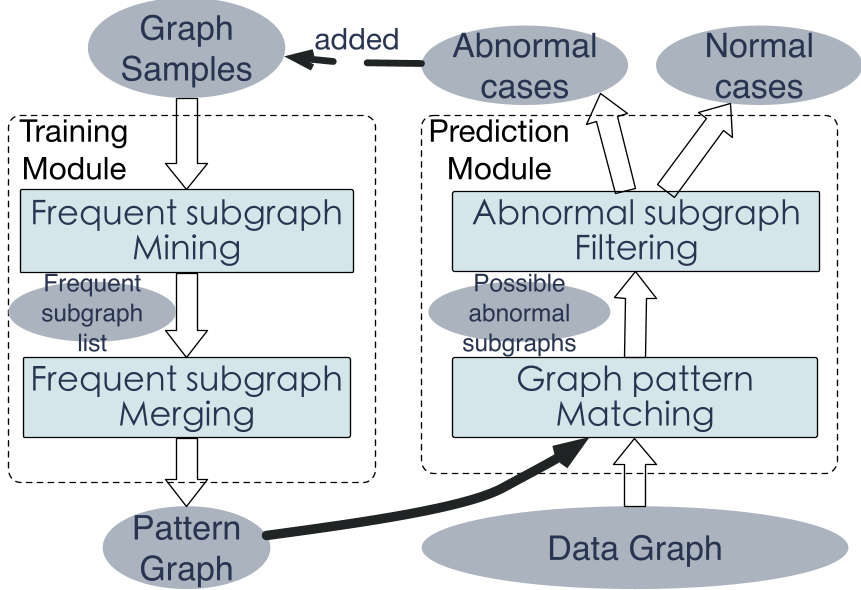 Fig 1: The dual-module architecture of T-GPM.
2. Approximate Subgraph Prediction
Once a pattern is established, the SubGraph-SEARCH algorithm scans the massive data graph. Using a BFS approach, it identifies subgraphs that satisfy the "Necessary" constraints of the pattern. Because it allows for "Possible" edge variations, it can catch variants of known fraud, even if the fraudster tries to hide by adding or removing a few connections.
Experimental Insights: Scaling to Reality
The authors tested T-GPM on massive real-world datasets, including Slashdot Zoo and Epinions (up to 841,372 edges).
The Power of Iteration
A key finding is the Feedback Loop. By manually filtering the results of one run and adding those new samples back into the training set, the system "learns" the nuances of the specific network.
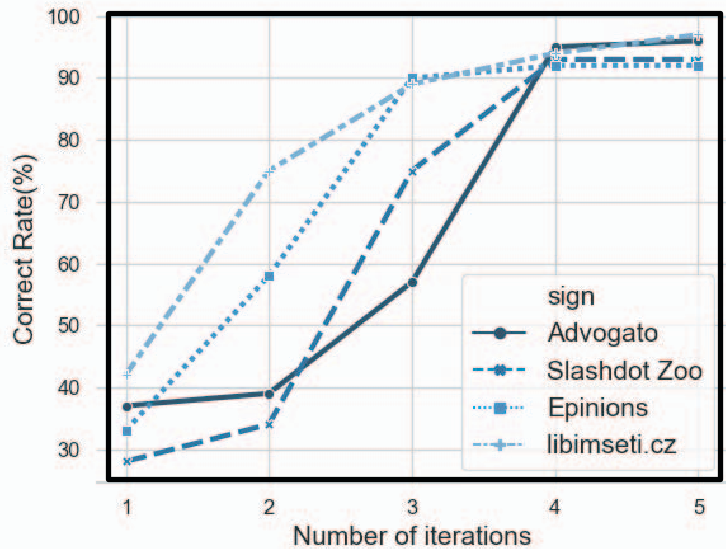 Fig 2: Prediction accuracy climbing above 90% as the number of iterations increases.
The results demonstrated that:
- Label Density Matters: The fewer the types of labels (e.g., node degrees), the easier it is to find long-range patterns, leading to higher accuracy in datasets like MUTAG.
- Iterative Improvement: On all four social network datasets, accuracy crossed the 90% threshold after only 4 or 5 iterations.
Strategic Takeaways and Limitations
Contribution: T-GPM solves the "expert bottleneck" by automating pattern discovery. It treats social relationships not just as links, but as biological-like structures where specific motifs signify malicious intent.
Limitations:
- Real-time Performance: The current BFS search approach is computationally expensive for real-time detection on graphs with billions of edges.
- Manual Filtering: The "prediction filtering" still requires a small amount of labor, meaning it is semi-automated rather than fully autonomous.
Future Outlook: As we move toward more complex multi-modal social networks, incorporating T-GPM's structural matching with deep learning embeddings could provide the next leap in sub-second fraud detection.