
Anonymizing Set-Valued Social Data: Beyond Simple Suppression
Anonymizing Set-Valued Social Data
The paper introduces a specialized k-anonymity algorithm for anonymizing set-valued data within social network nodes. It proposes the "Set_Anonymize" algorithm, which minimizes privacy-preserving costs by calculating the optimal number of item additions and deletions rather than using traditional suppression methods.
TL;DR
As social networks become ubiquitous, protecting the sensitive "set-valued" data associated with nodes (like your interests, purchase history, or check-ins) is critical. This paper moves beyond traditional "suppression" techniques—which simply hide data—and introduces a more surgical approach. By strategically adding or deleting a minimal number of items, the authors achieve k-anonymity with significantly higher data utility than previous state-of-the-art methods.
The Problem: The "Linkage" Trap
When companies release "anonymized" social graphs, they usually just strip names and IDs. However, research has shown that 87% of the US population can be uniquely identified by just three attributes: Zip code, gender, and date of birth.
In the context of social networks, even if your name is gone, an attacker might know that you are the only person in your friend group who bought a specific set of items (Set-valued data). Existing methods often try to fix this by suppression—replacing "Item A" with a "*" (wildcard). This is a "blunt instrument" that destroys the usefulness of the data for researchers.
Methodology: The Metric
The core innovation of this paper is the transition from Minimum Length (Suppression) to Minimum Operations (Addition/Deletion).
The authors argue that the "Minimum Length" metric used in prior work cannot distinguish between a "good" partition and a "great" one. They propose a new measure, :
otin S) \}$$ This formula looks at each item $j$ and decides: is it cheaper to add this item to the records that don't have it, or delete it from the records that do? By minimizing this sum, they ensure the dataset reaches k-anonymity (where every record has $k-1$ identical twins) with the least possible corruption of the original information. 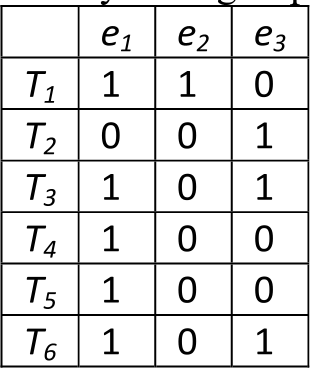 *Figure 1: Comparison between original and naively anonymized graphs where structural attacks (like degree attacks) are still possible.* ### The Set_Anonymize Algorithm 1. **Frequent Itemset Mining**: Identify patterns that already appear frequently (at least $k$ times). 2. **Collection Formation**: Create candidate groups of transactions based on these patterns. 3. **Greedy Selection**: Pick the groups that require the fewest $ad(S)$ operations to become identical. 4. **Transformation**: Apply additions and deletions to finalize the k-anonymous blocks. ## Experimental Insights The researchers tested their approach against the "BMS-WebView-1" dataset (real-world web traffic data). ### 1. Superior Efficiency As $k$ (the level of privacy) increases, the total number of operations required by the proposed method grows much more slowly than the suppression-based baseline. This means the resulting data is "closer" to the truth. 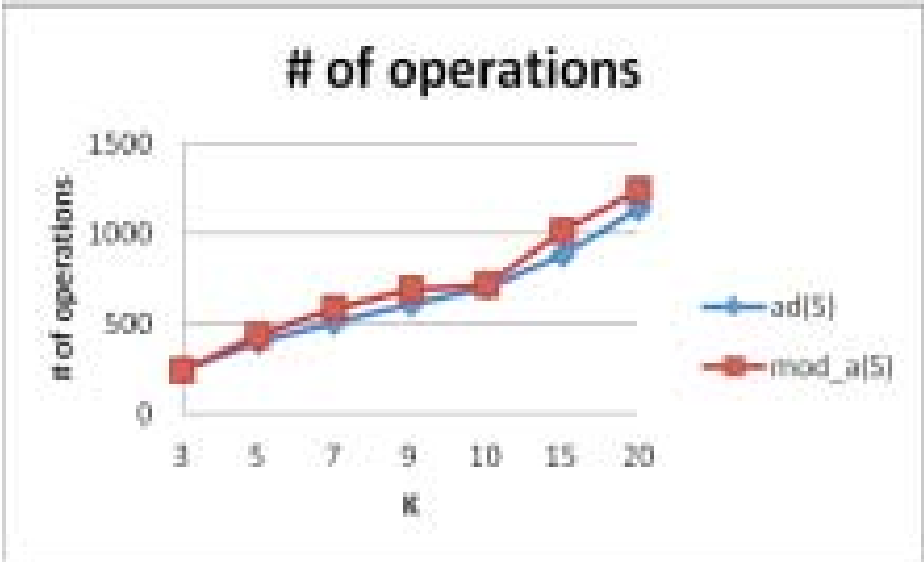 *Figure 2: Operation count vs. Privacy Threshold k. The ad(S) method (proposed) consistently outperforms the suppression-based approach.* ### 2. Computational Overhead There is no free lunch in computation, but this method comes close. Despite being more accurate, the running time remains nearly identical to the faster, less precise suppression methods, making it viable for large-scale social data. ## Critical Analysis & Conclusion The beauty of this work lies in its **Inductive Bias**: it recognizes that in set-valued data, a "deletion" or "addition" is often more informative for a researcher than a "null" value (suppression). **Limitations**: - The current algorithm relies heavily on frequent itemset mining; for extremely high-dimensional, sparse data where no patterns repeat $k$ times, the initial step might struggle. - It focuses on node attributes but does not fully integrate with the anonymization of the edge (link) structure itself. **Future Outlook**: The next frontier is a unified model that handles **structural k-anonymity** (edges) and **attribute k-anonymity** (sets) simultaneously without exploding the computational cost. This paper provides the foundational "operation-based" logic to make that possible.