
PERank: Bridging the Gap Between Patient Queries and Expert Answers in Medical Social Networks
An Answer Ranking Method in Medical Social Networks
This paper introduces PERank, a method and Web application designed to rank answers in medical social networks such as MedHelp. Leveraging classic Vector Space Models (VSM) and NLP techniques, it identifies the most relevant responses to patient queries, specifically targeting domains like Type 1 Diabetes and Pre-eclampsia.
TL;DR
In the vast, unregulated sea of medical social networks, finding the "right" answer is a matter of health and safety. The paper PERank proposes a specialized ranking method that uses classic Vector Space Models and semantic enrichment to prioritize high-quality answers in forums like MedHelp. It proves that while classic IR techniques are effective for top-tier results (k ≤ 6), the medical domain requires specialized "language awareness" to handle technical terminology.
Background & Positioning
Medical social networks have become a primary source of information for up to 94% of internet users in certain regions. Unlike clinical databases, these forums are "peer-to-peer," meaning the signal-to-noise ratio is incredibly low. PERank positions itself as a specialized filter that sits between raw user-generated content and the patient, aiming to bring order to the chaos of community question answering (CQA).
The Core Friction: Why Ranking Health Answers is Hard
- Lack of Control: Anyone can answer, regardless of expertise.
- Sparse Data: Many questions receive only a few votes or interactions, making "popularity-based" ranking (like PageRank) unreliable.
- Term Discrepancy: Patients use "layman's terms," while high-quality answers might use "clinical terms."
Methodology: The PERank Pipeline
The authors didn't just build a model; they built a full-stack pipeline designed to handle the messiness of web-scraped medical data.
1. Semantic Enrichment
Instead of relying on raw text, PERank uses a dictionary of medical terms (e.g., "polydipsia" synonymous with "thirst") to expand the search vector. This addresses the "vocabulary mismatch" problem common in patient-oriented forums.
2. The Ranking Mechanism
The method transforms questions and answers into vectors using TF-IDF (Term Frequency-Inverse Document Frequency). The core of the research involves testing 14 different similarity algorithms to see which "math" best matches "human preference" (voter behavior).
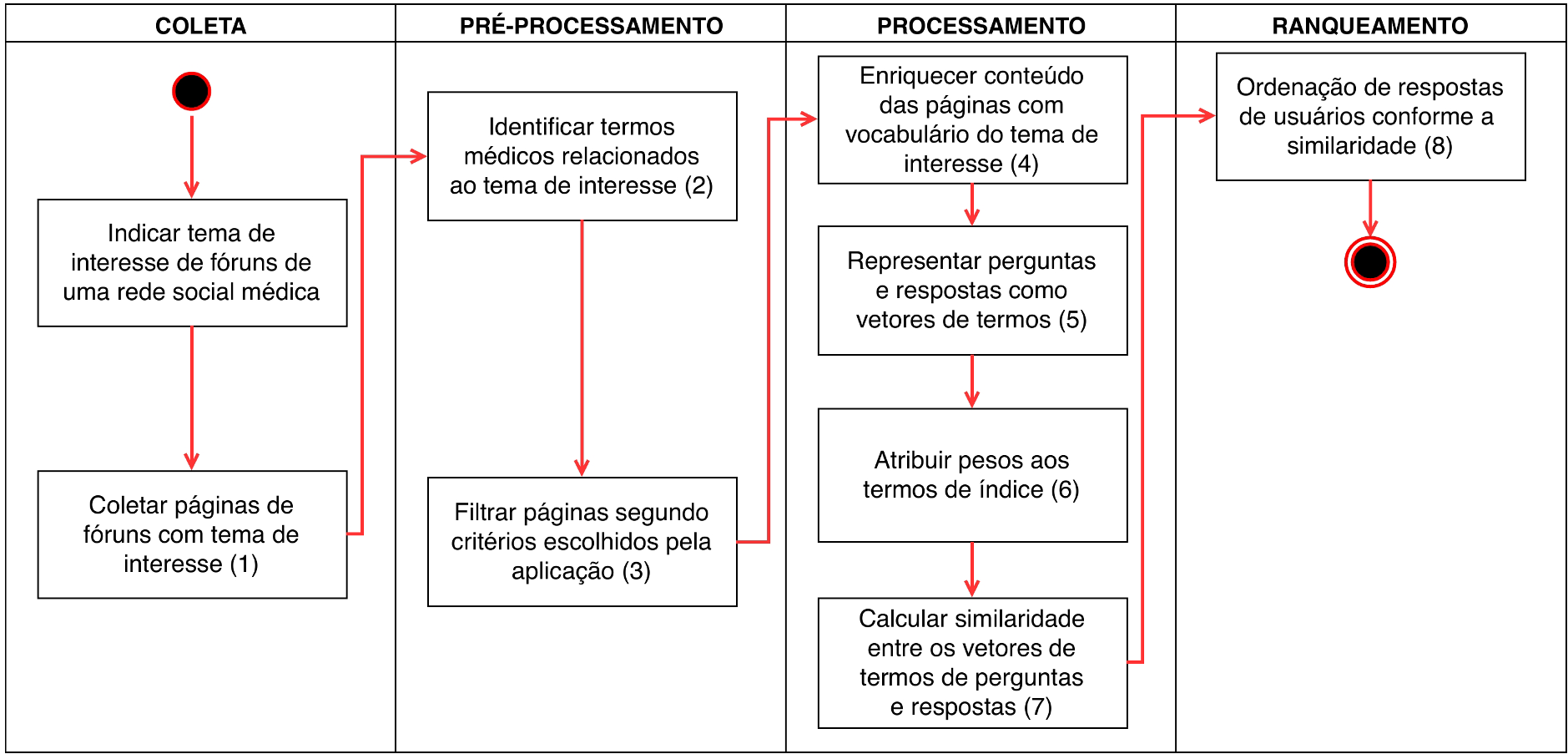 Figure 1: The 8-step pipeline from extraction to final ranking.
Experiments & Critical Results
The study focused on Two Core Corpora: Pre-eclampsia and Type 1 Diabetes. Interestingly, the Pre-eclampsia data was too sparse after filtering, highlighting the difficulty of obtaining high-quality labeled data in niche medical fields.
Performance Highlights:
- The "Top Result" Success: The Jaccard algorithm hit a 100% precision rate for k=1, meaning its #1 ranked answer was often the most-voted answer in the community.
- The Sparsity Problem: Binary similarity measures like Hamming and Sokal-Michener outperformed traditional Euclidean distance. Why? Because medical text vectors are "sparse" (mostly zeros), and Euclidean distance fails to differentiate between documents when they share very few common terms.
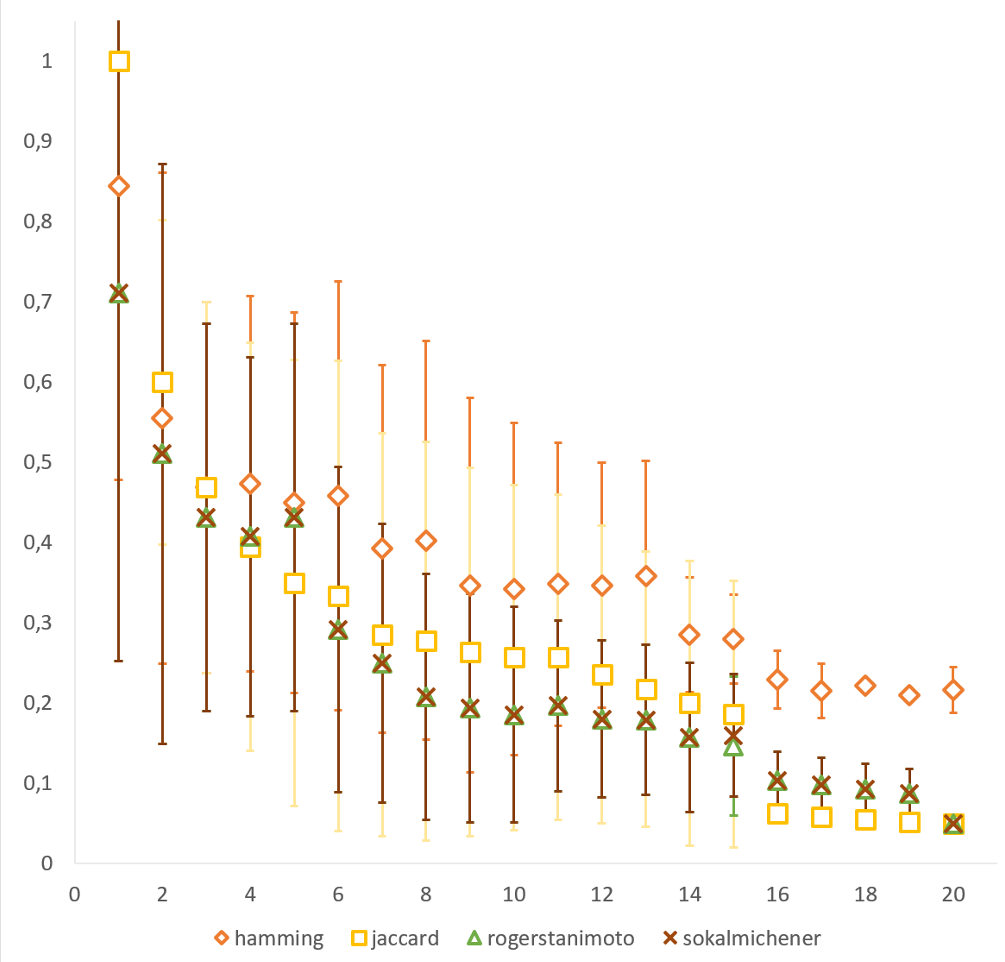 Figure 2: Precision (left) and Recall (right) across different values of k.
Critical Analysis & Professional Insight
From an academic standpoint, PERank is a strong baseline. However, it reveals a significant Limitation: User Engagement. The authors noted that MedHelp users are not very active in voting. This means the "Ground Truth" used to evaluate the AI is itself noisy.
The Takeaway for Developers: If you are building a medical CQA system, don't just rely on text similarity. You must combine NLP-based relevance with user-authority metrics (who is answering?) and semantic expansion (what are they actually talking about?).
Conclusion
PERank demonstrates that even "antique" IR methods—when tuned with domain-specific dictionaries—can provide high value in specialized social networks. While the world moves toward LLMs, the rigorous filtering and semantic structuring proposed here remain essential for ensuring that the advice given to a patient is actually relevant to their condition.
Keywords: Answer Ranking, Medical Social Networks, MedHelp, Information Retrieval, TF-IDF, Vector Space Model.