
Deciphering the Social Fabric of Open Source: The Apache Commit Dataset
Apache commits: Social network dataset
The paper introduces a comprehensive social network dataset representing commit behaviors within the Apache Software Foundation (ASF) from 2010 to 2011. It utilizes a graph-based representation in Neo4J, linking developers, commits, and files with weighted edges based on similarity and collaborative metrics.
TL;DR
Software development is inherently a social activity. This paper presents a high-fidelity graph dataset of the Apache Software Foundation (ASF) commit history (2010–2011). By modeling developers, files, and revisions as a weighted social network, the authors move beyond simple connectivity to reveal the true intensity of collaboration and community structure within one of the world's most influential software ecosystems.
Problem & Motivation: Beyond "Who Touched What"
Traditionally, researchers analyzed developer social networks using binary logic: if Author A and Author B modified the same file, they are connected. This unweighted approach is a blunt instrument; it treats a one-character typo fix the same as a thousand-line architectural overhaul.
The authors argue that to understand the nature and magnitude of development, we need weighted edges. They identify three primary hurdles in classical OSS analysis:
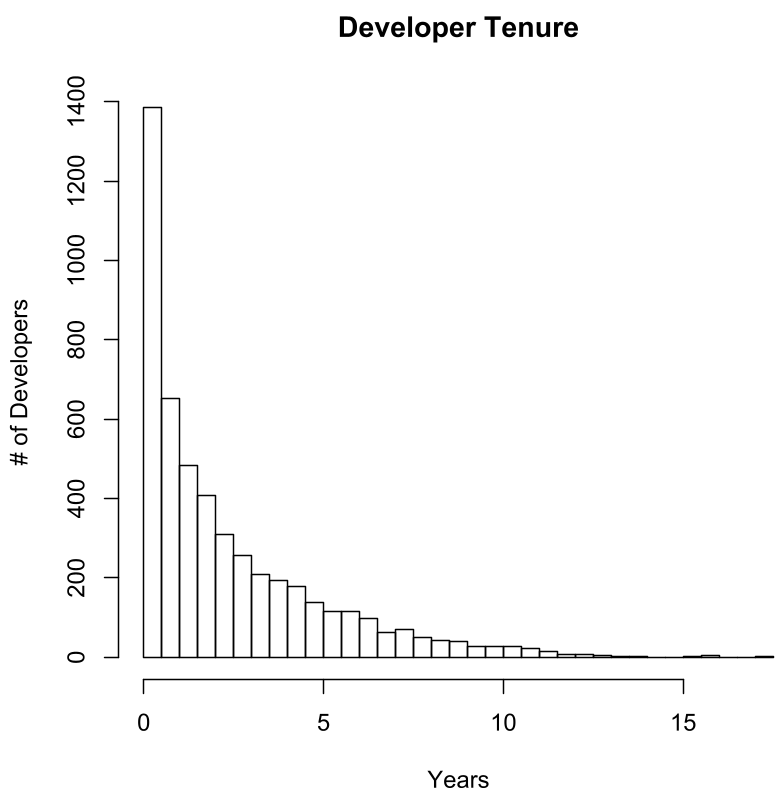
- Developer Tenure: Many contributors are ephemeral (25% stay < 3 months), requiring a time-sensitive analysis.
- Measurement Bias: Broad strokes ignore the specific "Top Projects" a developer might focus on.
- Implicit Collaboration: Traditional models often miss developers who collaborate on logic/APIs but don't touch the exact same physical files.
Methodology: The Graph-Centric Approach
The researchers utilized a Neo4J graph database to store their findings, structured around 22 sliding three-month windows. This temporal granularity allows for capturing "day-to-day" collaboration despite the skewed distribution of developer longevity.
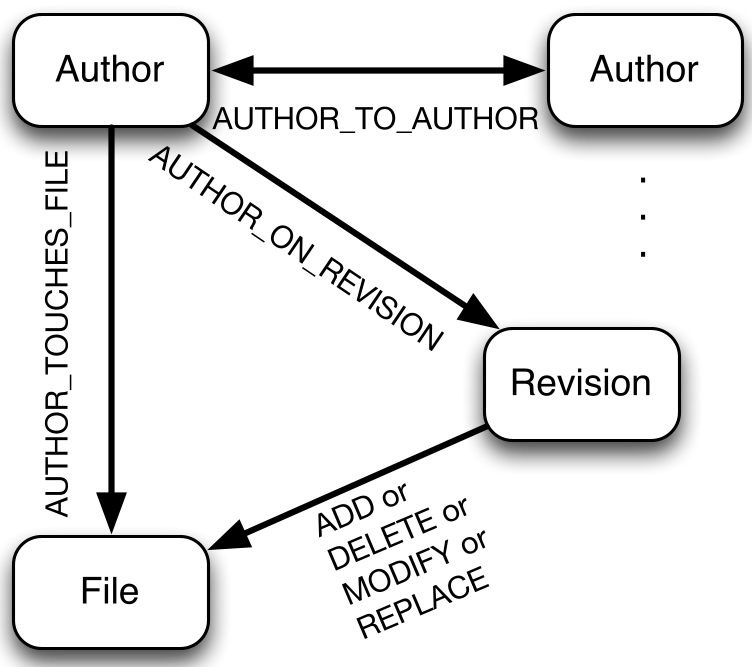
1. The Data Model
The schema is built on three pillars: Author, Revision, and File.
2. Weighting the Social Interaction
Weights are calculated using similarity metrics (Cosine, Pearson, etc.) applied to contribution vectors. If two developers contribute similarly to a specific set of files, their connection strength in the graph increases. This allows for the discovery of "Latent Communities" that unweighted graphs would miss.
3. Community Finding
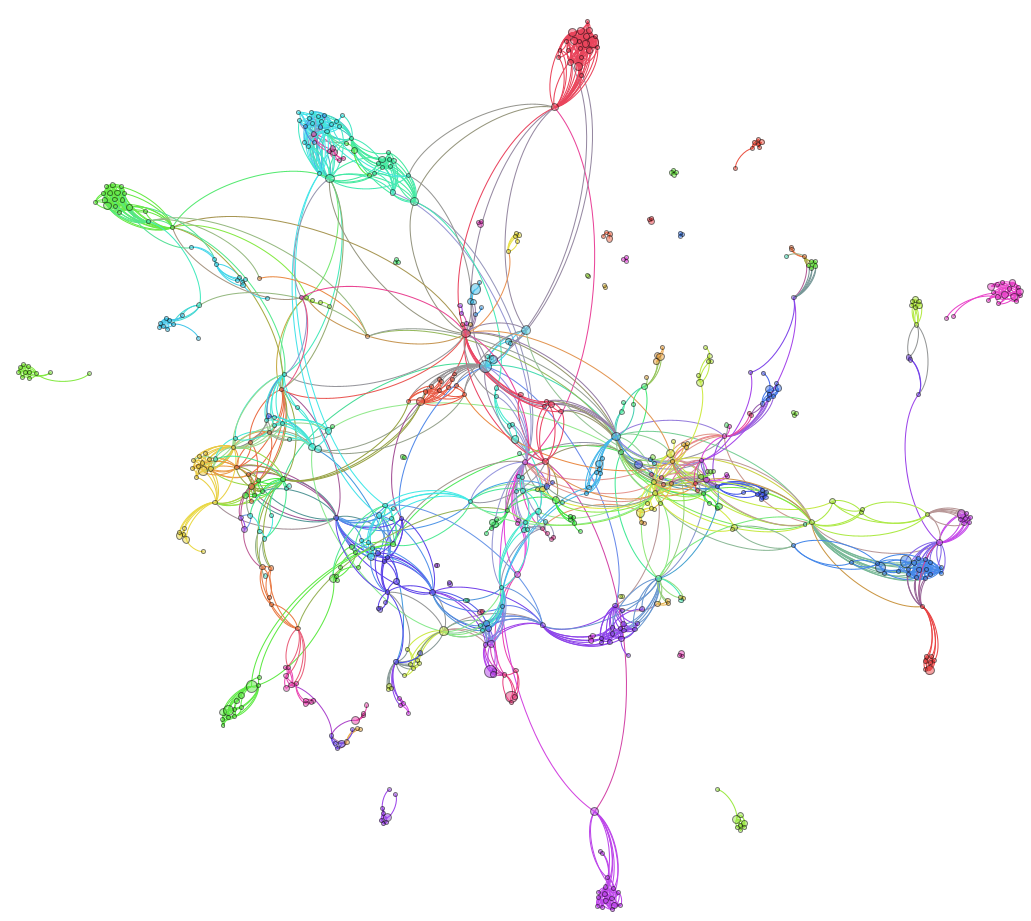
By applying Blondel’s modularity metric, the paper groups developers into clusters. These clusters often align with specific Apache sub-projects, but also reveal cross-pollination between different software stacks.
Experiments & Analysis: What the Data Tells Us
The dataset provides a rich set of pre-calculated metrics, highlighting the diversity of developer behavior:
- Developer Tenure: The median tenure is roughly 1.5 years across the foundation, but significantly longer (3.7 years) for core projects like Apache HTTP Server.
- Commit Intensity: The data tracks "lines added," "lines removed," and "unique file count" per author, providing a multidimensional view of productivity.
Limitations to Consider
The authors are Refreshingly honest about the dataset's constraints:
- Monolithic Commits: Large "mega-commits" involving thousands of lines across many files can artificially inflate a developer's connectivity.
- Language Verbosity: A Perl developer might look "less active" than a Java developer because Perl is more terse, even if they achieve the same logic.
- API-level collaboration: Developers might talk on mailing lists or Slack without ever touching the same file, a social link this dataset cannot inherently capture.
Critical Analysis & Conclusion
This work is a vital contribution to the field of Empirical Software Engineering. By providing the community with a cleaned, weighted graph dataset, the authors enable a shift from "data cleaning" to "insight generation."
Takeaway: If you are studying how open-source communities evolve, the strength and timing of relationships are just as important as the existence of the relationship itself. Future research could enhance this dataset by overlaying mailing list data or Slack archives to bridge the gap between "code collaboration" and "social communication."
For those interested in the raw data or tools, the artifacts are hosted by the Sequoia Lab at BYU.