
APMSID: Decoding Swarm Intelligence and Competition in Social Information Cascades
APMSID: Activated Probability for Multi-Source Information Diffusion in Online Social Networks
The paper introduces APMSID (Activated Probability for Multi-Source Information Diffusion), a novel probabilistic framework for modeling complex information spread in online social networks. It accounts for both cooperative (homologous) and competitive interference among multiple information sources, moving beyond traditional single-source Independent Cascade (IC) models.
TL;DR
Information in Online Social Networks (OSNs) doesn't spread in a vacuum. The APMSID model moves beyond the simplistic "one-link-at-a-time" logic of traditional models by introducing a three-pronged probabilistic framework. It captures the herding effect (strength in numbers), influence energy (cumulative link strength), and competitive interference (the dampening effect of rival news). The result? A 24.87% boost in predicting which users will actually "go viral."
Beyond the Single Source: Why Current Models Fail
Most classic models, such as the Independent Cascade (IC) or Linear Threshold (LT), view social networks as simple pipelines. However, human behavior is strategic, not random. The authors identify a major gap: Herd Behavior. A user is much more likely to adopt a message if a large percentage of their circle adopts it, regardless of the individual link strength. Prior works often ignored how concurrent messages—some helping, some hurting—interact to determine a node's final state.
The APMSID Methodology: Percentage, Energy, and Rivalry
The core of APMSID lies in its granular decomposition of the "Activation Probability." The model calculates the likelihood of a node moving from Susceptible to Infected using three distinct lenses:
1. Influence of Percentage (IOP)
Inspired by the herding effect, this component measures what fraction of a node's neighbors are already infected. If the crowd is moving, the individual is likely to follow.
2. Influence of Energy (IOE)
Instead of treating all links equally, APMSID calculates Positive and Negative Influence Energy. It categorizes influencers into "rich" (high influence) and "poor" (low influence) groups, applying a Pareto-like 80/20 weight () to determine if the collective "energy" is strong enough to trigger activation.
3. Influence of Competition (IOC)
In a "Homologous vs. Competitive" scenario, rival messages act as a negative filter. If a competitor has a strong link to the target node, the activation probability for the original message is significantly reduced.
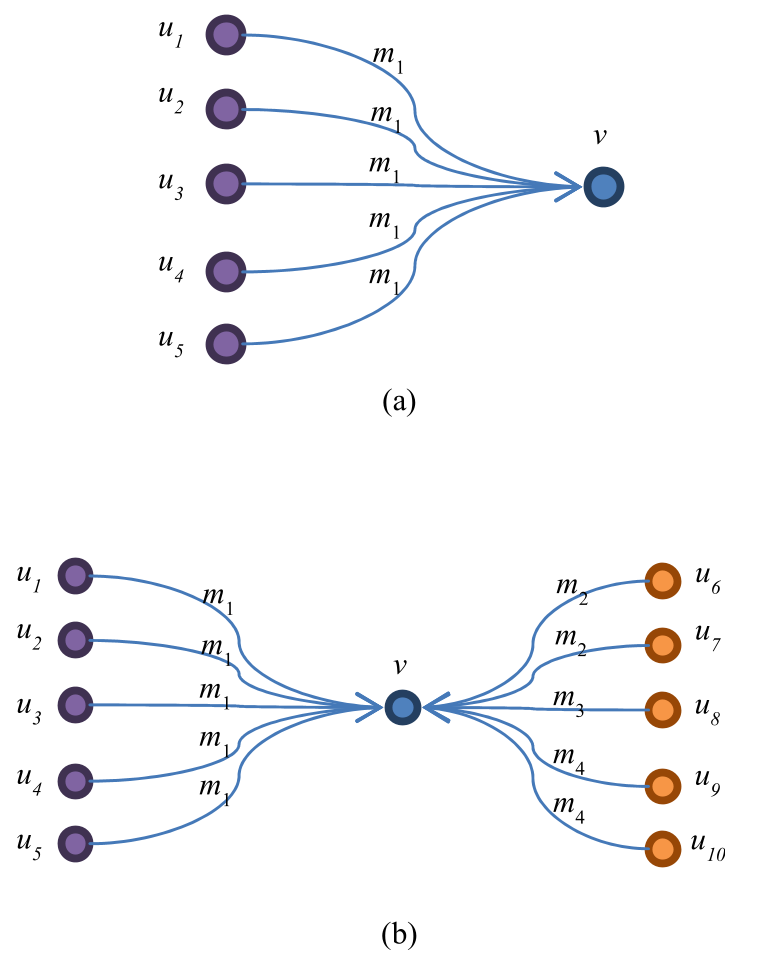 Figure 1: Comparison between Homologous (Cooperative) Diffusion and Competitive Interference.
Proving Stability: The 四-State Model
Unlike the standard SIR model, APMSID utilizes four states: Mute, Susceptible, Infected, and Recovered. The authors provide a rigorous mathematical proof (Proposition 1-4) establishing that for a cascade to survive, the product of the average out-degree and the probability must exceed a specific threshold ().
Experimental Results: SOTA Comparison
The authors tested APMSID against the classic IC model across four massive datasets. The results consistently showed that APMSID produces more "dramatic" and realistic infected densities.
 Figure 2: APMSID showing higher sensitivity and broader reach compared to the IC model in various network topologies.
On the Micro-blog dataset (containing 7.42 million nodes), APMSID achieved an average improvement of 24.87% in F1-score accuracy. This suggests that capturing the "swarm" logic is essential for modeling real-world social platforms like X (Twitter) or Weibo.
Critical Insight & Conclusion
APMSID’s strength is its psychological grounding. By converting the abstract notion of "influence" into "energy" and "percentage," it aligns closer to how humans actually consume information.
Takeaway: If you are building a viral marketing tool or a misinformation tracker, link-level probability is not enough. You must account for the context of the crowd and the noise of the competition.
Limitations: The model assumes a fixed recovery rate and might require heavy parameter tuning () for different types of social media platforms. Future work could benefit from making these parameters adaptive using neural networks.