
OSN Privacy 2.0: Group Decision Making via Trust-Weighted EIOWA
Application of Extended IOWA Operator for Making Group Decision on Co-owned Contents in Online Social Networks (OSNs)
2020-08-01
Summary
Problem
Method
Results
Takeaways
Abstract
This paper introduces a Social Network Group Decision Making (SNGDM) framework designed to manage co-owned data sharing in Online Social Networks (OSNs). It utilizes the Extended Induced Ordered Weighted Average (EIOWA) operator, incorporating dynamic trust values as weight vectors to aggregate multi-user preferences and achieve consensus.
## TL;DR
Managing privacy for co-owned data (like a photo featuring multiple people) is a major pain point in OSNs. This paper proposes a consensus-based framework using the **Extended Induced Ordered Weighted Average (EIOWA)** operator. By leveraging **dynamic trust values** as weights for users' linguistic preferences, the system helps groups reach a collective decision on whether to share sensitive content, effectively reducing privacy leakage.
## The Motivation: When "My" Photo is Also "Yours"
In the current landscape of Online Social Networks (OSNs), data ownership is often treated as a solo act. If you upload a photo, you decide the privacy settings—even if five other friends are tagged in it. This "uploader-takes-all" approach is a breeding ground for privacy disputes and broken friendships.
The authors argue that co-owned data requires a **Group Decision Making (GDM)** approach. However, the challenge lies in how to weight each person's opinion. Should a stranger's vote count as much as a best friend's? Probably not. This is where **Trust-based SNGDM** enters the picture.
## Methodology: EIOWA Meets Interpersonal Trust
The core of the proposed solution is the **EIOWA operator**. Unlike simple averaging, EIOWA allows for an "inducing" variable—in this case, **Trust ($\lambda$)**—to dictate the importance of each user's linguistic preference.
### The Workflow
1. **Preference Collection**: Co-owners provide preferences in linguistic terms (e.g., "Very Worried" to "Extremely Agree").
2. **Trust Weighting**: The system retrieves trust values between the owner and DMs from a dynamic database.
3. **EIOWA Aggregation**: The operator fuses individual preferences into a collective preference degree.
4. **Consensus Check**: If the distance between ranked alternatives is too large or inconsistent, the system triggers a **Consensus Reaching Process (CRP)**, asking users to revise their opinions.
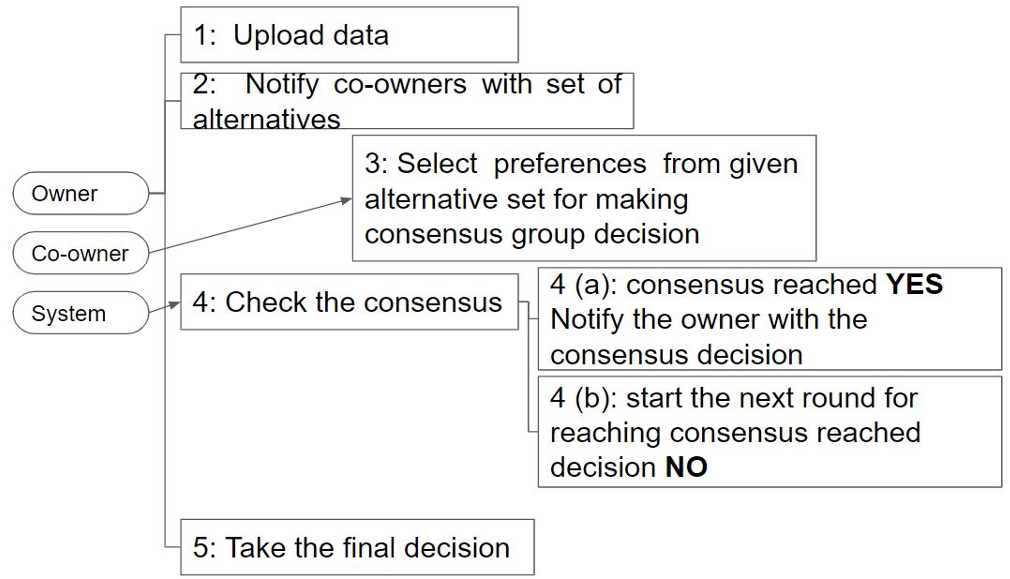
*Fig 1: The iterative loop ensuring all stakeholders reach a stable agreement.*
## Case Study: The "Trusty" Social Network
The authors tested their framework on **Trusty**, a prototype OSN. They modeled a scenario with four sharing alternatives:
- $x_1$: Share with full permission
- $x_2$: Share with restrictions
- $x_3$: Share with no permission
- $x_4$: Do not share
In the first round of the experiment, the results were inconsistent. The distance between "Share with permission" and "Share with restrictions" was high, indicating a lack of consensus.
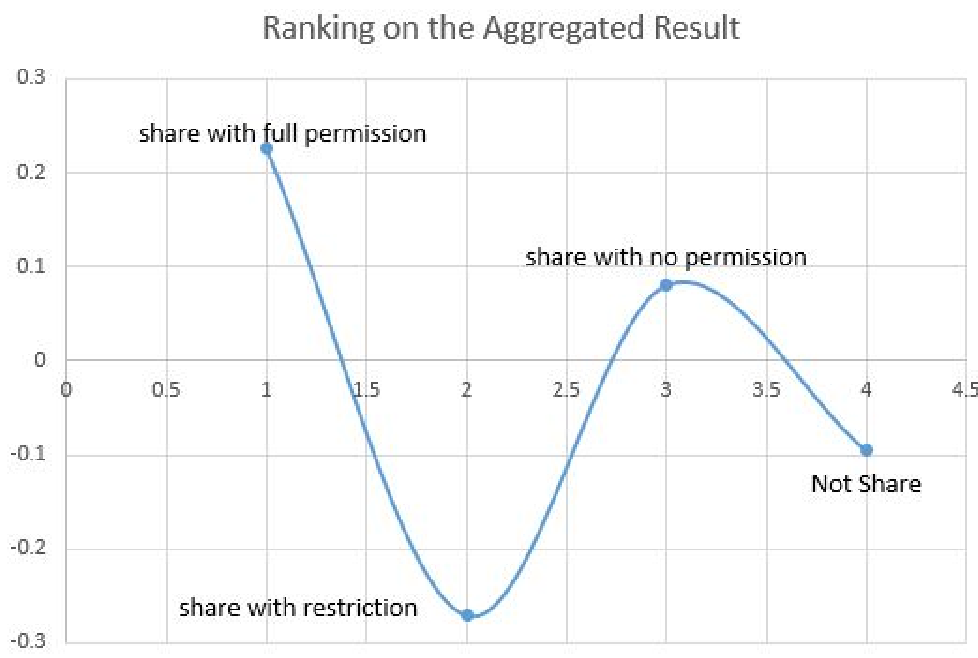
*Fig 2: Initial round results showing a lack of clear group consensus.*
After the system prompted co-owners to reconsider in Round 2, the preference shifted significantly toward **"Do Not Share" ($x_4$)** with a much higher confidence value (1.02), showcasing how the CRP mechanism successfully protects sensitive data when users realize the collective concern.
## Critical Analysis & Conclusion
The brilliance of this work lies in the **dynamic nature of trust**. Trust values are not static; they increase if the data owner respects the group's decision and decrease if they ignore it. This creates a self-regulating ecosystem that incentivizes "good digital citizenship."
### Limitations
- **Scalability**: The paper demonstrates the model with 5-6 users. In a massive group chat/tagging scenario, reaching consensus through multiple rounds might lead to "notification fatigue."
- **Incomplete Information**: The model assumes all co-owners provide feedback. Future work should address how to handle non-responsive users (e.g., through trust-based delegation).
### Final Takeaway
This paper successfully bridges the gap between abstract fuzzy logic (EIOWA) and practical social problems. By making privacy a collaborative, trust-weighted conversation rather than a unilateral checkbox, we can build social platforms that actually respect the complex web of human relationships.