
WeChat-ABA: Digitizing Autism Intervention with Machine Learning and Mobile Cloud Tech
Design an Applied-Behavior-Analysis Learning WeChat Tool to Assess the Learning Capacities for Autistic Children
This paper presents a WeChat-based learning tool designed to digitize and manage Applied Behavior Analysis (ABA) sessions for children with autism. Developed using Vue, Spring Boot, and MySQL, the system transforms traditional paper-based records into structured data, enabling automated performance tracking and visualization with machine learning-supported scoring.
TL;DR
Researchers from Huazhong University of Science and Technology have developed a specialized WeChat-based tool to revolutionize Applied Behavior Analysis (ABA) for children with autism. By replacing messy paper records with a structured digital platform and using Random Forest algorithms to predict learning outcomes with 93% accuracy, this tool bridges the gap between clinical therapy and data science.
Background: The ABA Bottleneck
Applied Behavior Analysis (ABA) is widely recognized as the gold standard for autism intervention. However, a typical session involves intense one-on-one interaction where teachers must issue 15-25 instructions per class. Currently, assistants or parents manually scribe these reactions on paper. This leads to:
- Data Fragmentation: Handwritten notes are prone to loss and lack standardization.
- Time Lag: Analysis usually happens only once a month due to the manual effort involved.
- Subjectivity: Scoring often reflects the observer's bias rather than the child's raw progress.
Methodology: Engineering a Structured Intervention
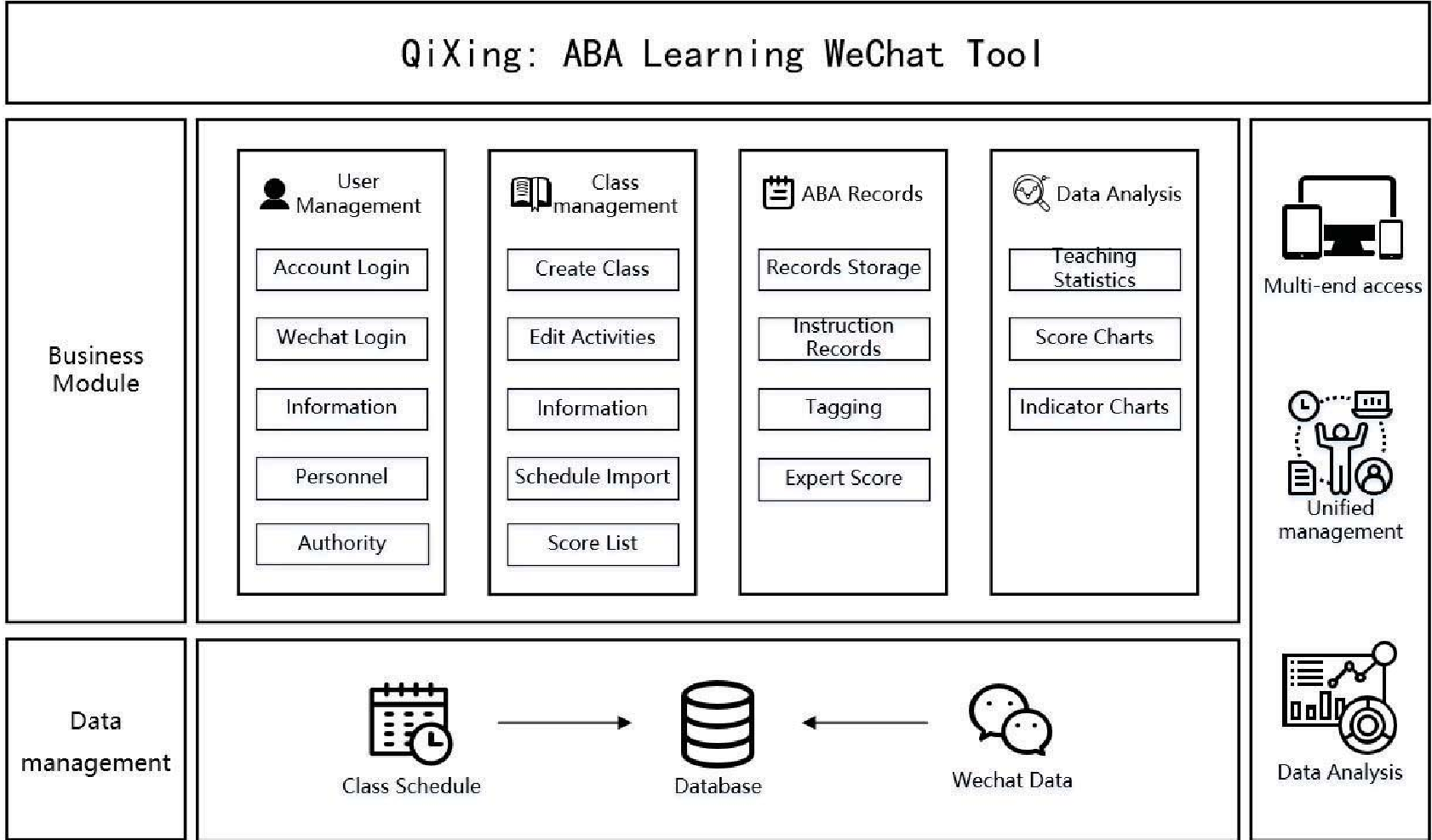
The authors built a full-stack solution using Vue.js (Frontend), Spring Boot (Backend), and MySQL (Database). The core innovation lies in the ABA Record Template, which decomposes every interaction into "PRT Elements": Instruction, Reaction, Result, and Pause.
AI-Assisted Scoring
To reduce the "expert burden," the system doesn't just store data; it interprets it. By feeding features like reinforcement method, auxiliary means, and reaction time into machine learning models, the system can automatically suggest a performance score (1-5 scale).
Experimental Results & Performance
The researchers compared three primary algorithms to see which could best mimic an expert teacher's judgment. The Random Forest model emerged as the winner, specifically due to its ability to handle the non-linear relationships in behavioral data.
| Algorithm | Accuracy | F1 Score | Kappa Ratio |
|---|---|---|---|
| Logistic Regression | 0.836 | 0.8154 | 0.7353 |
| Random Forest | 0.9315 | 0.9131 | 0.8948 |
| SVM | 0.8855 | 0.8548 | 0.8127 |
Beyond accuracy, the system was stress-tested for real-world deployment. In a test with 300 simulated users, the average response time remained under 600ms, proving its readiness for large-scale institutional use.
Critical Insight: Why This Matters
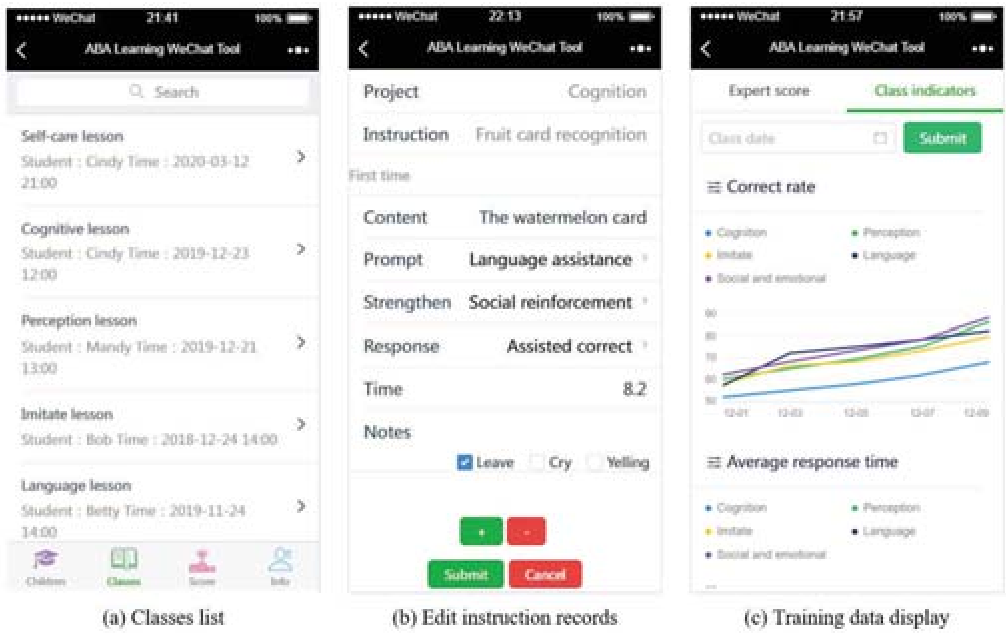
The value of this work isn't just in the app itself, but in the feedback loop it creates. By visualizing "Average Response Time" and "Response Rate" over time, parents can see micro-improvements that are often invisible in daily life. This "Data-as-Hope" approach can significantly sustain parental commitment to long-term therapy.
Limitations & Future Work
While the scoring is automated, the input is still manual (via the WeChat interface). The next logical step, hinted at by the authors, is the integration of intelligent terminals—likely computer vision or IoT wearables—to eliminate manual entry entirely.
Conclusion (Takeaway)
This research demonstrates that even complex, highly qualitative therapies like ABA can be successfully quantified and optimized using standard mobile frameworks and basic machine learning. It provides a blueprint for "Informatized Special Education" that centers on the child’s data rather than the teacher’s intuition.