
Intelligent Agents in Healthcare: Bridging Clinical Guidelines and Web-Scale Knowledge
8737_Applying Agent Technology to Healthcare The GruSMA Experience.
This paper synthesizes the work of the GruSMA research group in Spain, focusing on the Multiagent System for Health Care Services (HeCaSe/HeCaSe2) and an agent-based ontology learning platform. It demonstrates how autonomous, coordinating intelligent agents can manage medical records, clinical guidelines, and automated knowledge acquisition from the web.
TL;DR
Healthcare is inherently distributed, complex, and data-heavy. The GruSMA Research Group presents a robust solution using Multi-Agent Systems (MAS) to handle everything from patient scheduling and medical record privacy to the automated extraction of cancer ontologies from the web. By leveraging the proactivity and mobility of software agents, they bridge the gap between static clinical guidelines and the dynamic daily workflow of medical professionals.
The Motivation: Why Agents?
In the early 2000s, the medical community faced a digital paradox: more data was available than ever before, yet clinical practice remained prone to human error due to the difficulty of accessing the right information at the right time. Clinical Guidelines (CGs) existed but were rarely used because they weren't integrated into the specialized software doctors actually touched.
The GruSMA team recognized that healthcare entities (doctors, departments, labs, patients) are naturally autonomous and distributed. Traditional centralized architectures fail to capture this. Intelligent agents—software entities that are reactive, proactive, and capable of social interaction—offer a perfect architectural mirror for the medical world.
Methodology: The HeCaSe2 Architecture
The core of GruSMA's work lies in the HeCaSe2 (Health Care Services 2) system. Unlike its predecessor which focused on simple service discovery, HeCaSe2 introduces Guideline Agents and Service Agents.
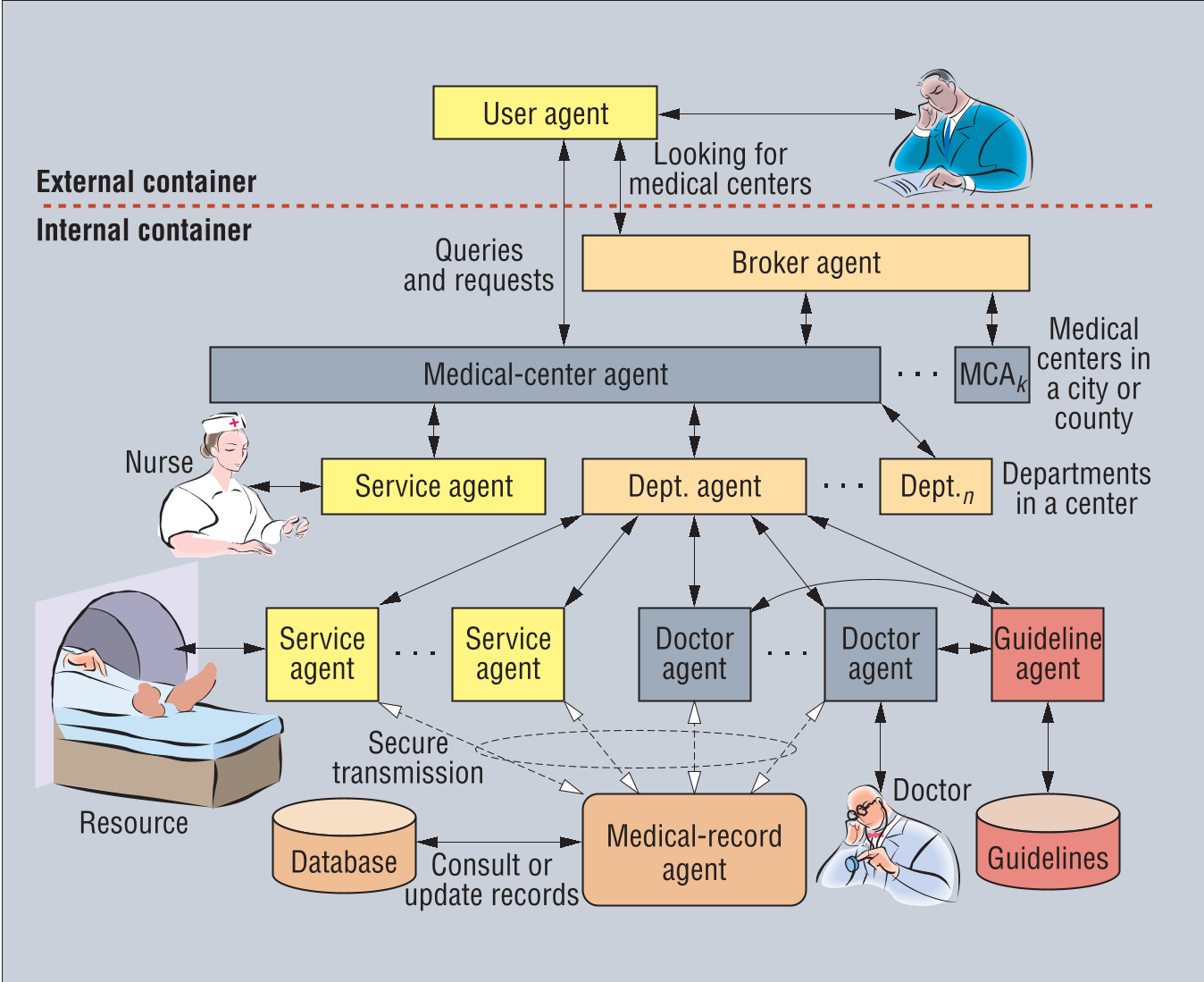
How it Works:
- Doctor-Centric Workflow: When a doctor diagnoses a patient, their "Doctor Agent" consults the "Guideline Agent" for the latest treatment protocols.
- Autonomous Coordination: If the guideline requires a blood test, the Doctor Agent doesn't just notify the doctor; it proactively finds a "Service Agent" (representing the lab), checks schedules, and books the appointment.
- Closed-Loop Data: Once results are in, the Service Agent updates the "Medical-Record Agent" and alerts the doctor.
This removes the administrative burden from the practitioner, allowing them to focus on the human element of care while the agents handle the "plumbing" of the medical system.
Scaling Knowledge: From Web Scraps to Ontologies
A doctor searching for "lung cancer" on Google is met with millions of hits—a classic case of information overload. GruSMA's second major contribution is an Agent-Based Ontology Learning Platform.
Instead of a single crawler, they deploy a fleet of Internet Agents (IAs). These agents are mobile; they move across network nodes to maximize bandwidth and processing power.
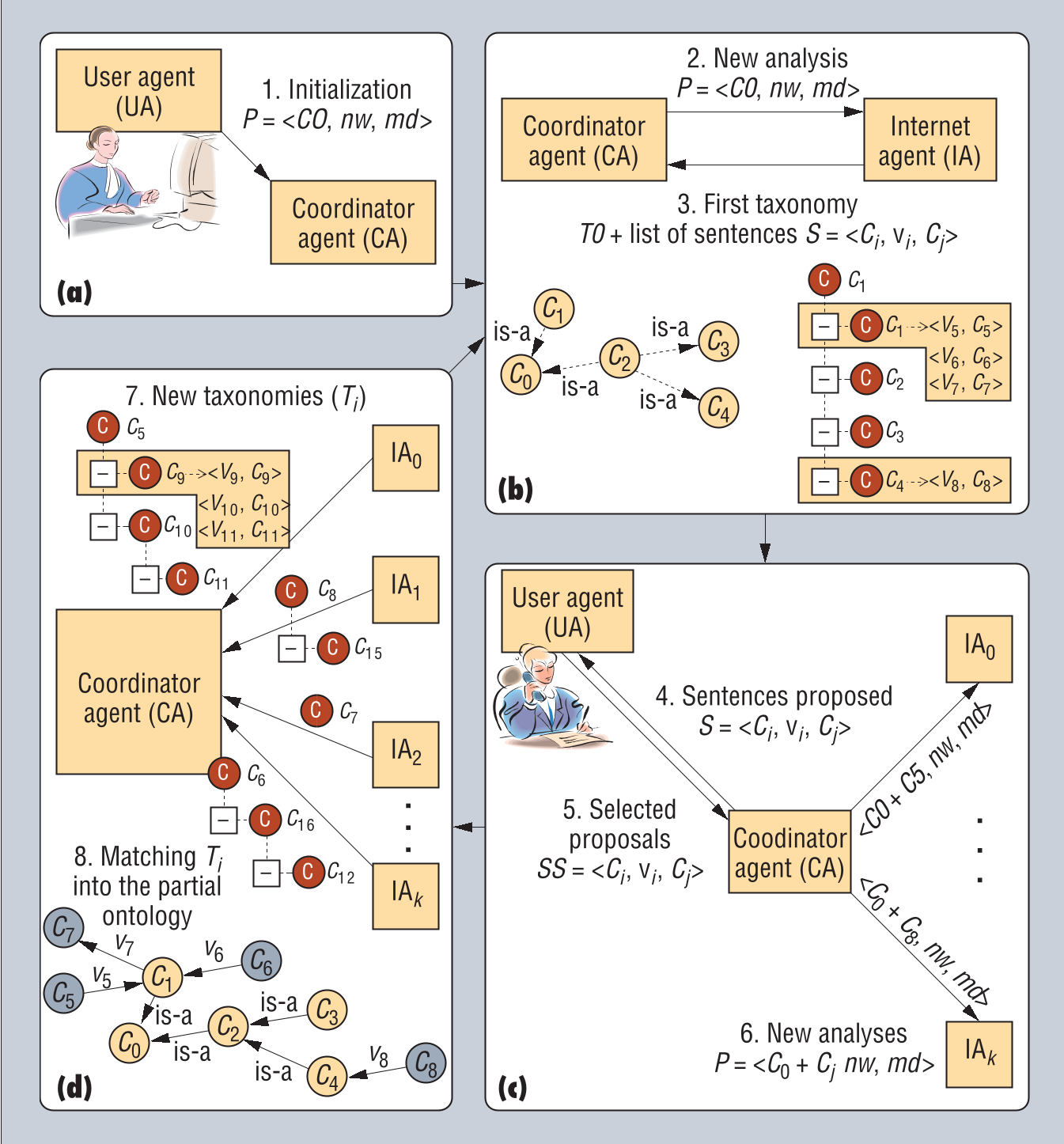
The system performs two sophisticated tasks:
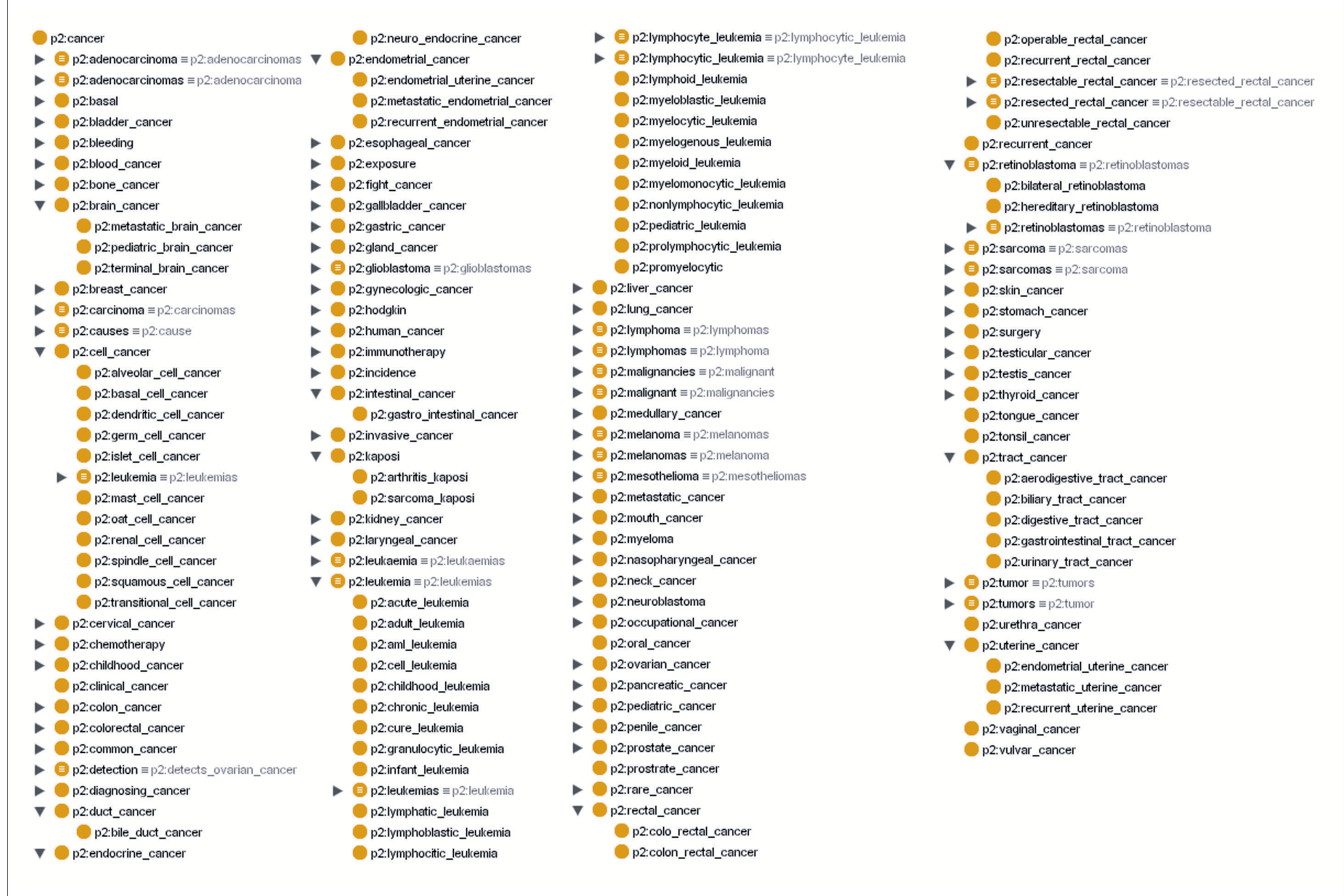
- Taxonomy Learning: Starting from a single keyword (e.g., "cancer"), agents derive a hierarchy of concepts (e.g., "Lung Cancer" -> "Small Cell Lung Cancer").
- Non-Taxonomic Relation Discovery: They analyze sentence structures to find deeper links, such as "Colon cancer starts as polyps," effectively building a semantic web of medical knowledge.
Experiments & Results
The GruSMA group demonstrated the impact of their systems across several specific medical domains:
- Organ Transplant Management: Using multicriteria decision-making agents to match organs to recipients and coordinate high-stakes transport logistics.
- Palliative Care: The PalliaSys system used machine learning agents to monitor patient data and trigger personalized alarms based on specific clinical thresholds.
- Efficiency: The ontology learning platform notably turned millions of disorganized search results into structured knowledge graphs, a task that would be impossible for human researchers to perform manually.
Critical Analysis & Takeaways
The primary success of the GruSMA experience is proof that agent technology is not just for academic simulation; it is a viable framework for interoperability in healthcare.
Limitations
While the system is powerful, its reliance on specific medical ontologies means it requires high-quality "seed" data to begin the learning process. Furthermore, the 2003-2006 era technology lacked the modern natural language understanding (NLU) capabilities of today's Transformer models, meaning some of the linguistic analysis might be brittle compared to contemporary standards.
Summary
The work of Moreno et al. remains a cornerstone in medical informatics because it emphasizes proactivity. In a field where seconds count and errors are fatal, software that doesn't just store data but acts on it—scheduling tests, checking guidelines, and refining knowledge—is the only way forward.