
GELM: Rethinking Extreme Learning Machines through the Lens of Exponential Family Distributions
3413_Applying Exponential Family Distribution to Generalized Extreme Learning Machine.
This paper introduces the Generalized Extreme Learning Machine (GELM), a framework that integrates Exponential Family Distributions (EFDs) into the output layer of the standard Extreme Learning Machine. It enables the design of task-specific ELM models (e.g., Bernoulli for classification, Poisson for count data) and achieves SOTA results on non-Gaussian data types while proving that traditional ELM is merely a special Gaussian case of this unified paradigm.
TL;DR
The Extreme Learning Machine (ELM) is famous for its "blazing fast" training speed, but it has historically been shackled by a hidden assumption: that all data is Gaussian. This paper breaks those chains by introducing Generalized Extreme Learning Machine (GELM). By incorporating the Exponential Family Distribution (EFD), GELM can now handle binary labels, count data, and ordinal data with the mathematical precision of a statistician and the speed of an ELM.
Back to Basics: The Gaussian Trap
Traditional ELM operates in two stages: random feature transformation and least squares minimization. While efficient, the "Least Squares" part is statistically equivalent to Maximum Likelihood Estimation (MLE) under a Gaussian assumption.
If you are predicting whether a patient has a disease (0 or 1), a Gaussian curve—which assumes values can be any real number from negative to positive infinity—is a poor fit. Similarly, for count data (like the number of cars passing a gate), standard ELM might predict a nonsensical value like -1.5.
Methodology: The GELM Framework
The authors propose a "Generalized" architecture that replaces the rigid output layer with three flexible components:
- Random Component: Assumes the output belongs to an EFD (e.g., Poisson, Bernoulli, Gamma).
- Latent Variable (): A linear combination of hidden nodes, .
- Link Function: Connects the mean of the output () to the latent variable ().
A Unified Learning Paradigm
Instead of a simple matrix inverse, GELM uses the Newton-Raphson method to minimize the negative log-likelihood.
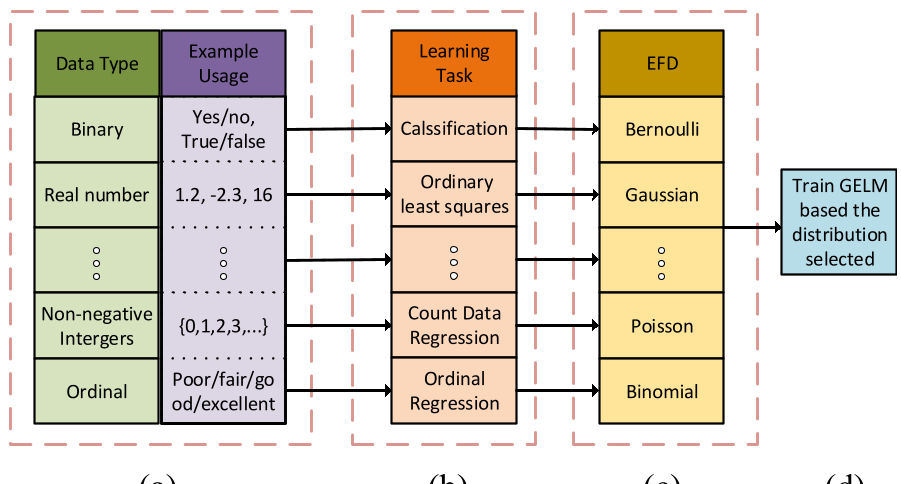 Fig 1: The framework maps specific data types to corresponding distributions within the EFD.
The beauty of this approach is that Traditional ELM is a special case. If you set the distribution to Gaussian, the iterative Newton-Raphson process converges in exactly one iteration, resulting in the standard Moore-Penrose inverse formula we all know.
Key Specific Models
1. GELM-Bernoulli (For Classification)
By using a Bernoulli distribution, the output is restricted to [0, 1]. This allows the model to produce accurate "probabilities" rather than just arbitrary scores.
2. GELM-Poisson (For Count Data)
This is the first ELM-based model designed specifically for non-negative integers. It uses the Poisson distribution to model data like "number of credit cards" or "number of children," where traditional regression fails.
Experimental Proof
The authors tested GELM against standard ELM on several fronts:
- Probability Estimation: In binary tasks, GELM-Bernoulli's probability curve (red) matched the ground truth far better than the unstable Gaussian curve of standard ELM.
- Count Regression: On non-linear count datasets, GELM-Poisson achieved a Root Mean Square Error (RMSE) of 13.01, compared to 31.94 for traditional Poisson Regression.
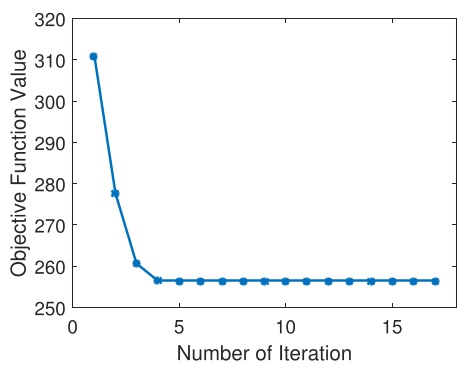 Fig 2: Convergence analysis shows that GELM typically converges in fewer than 10 iterations, maintaining high speed.
Critical Insight & Conclusion
GELM represents a significant step forward in making randomized neural networks "statistically aware." While it is slightly slower than traditional ELM due to its iterative nature (C iterations vs 1), the gain in probabilistic accuracy and distributional flexibility is a worthy trade-off.
Takeaway: If your data isn't a "bell curve," your model shouldn't assume it is. GELM provides the tools to match your model's architecture to your data's DNA.
Future Directions: The authors suggest exploring non-canonical links and expanding the framework to handle multiple output nodes for complex multi-class scenarios.