
Apriori-TIDS: Accelerating Association Mining for Educational Intelligence
The Design of Apriori-TIDS Algorithm Based on Big Data and Its Application in the Information Mining of College Counselors' Educational Decision-making
The paper introduces the Apriori-TIDS (AT) algorithm, an optimized association rule mining method tailored for educational big data. It significantly improves upon the classic Apriori algorithm by utilizing transaction identifier (TID) lists to reduce database scans, ultimately applied to enhance counselors' decision-making in higher education.
TL;DR
The paper presents the Apriori-TIDS (AT) Algorithm, a high-efficiency data mining approach designed to overcome the performance bottlenecks of the classic Apriori method. By utilizing a one-time database scan and a Transaction ID (TID) list structure, it achieves over a 25x speedup in processing. The author demonstrates its practical value in analyzing student performance and counselor decision-making in Chinese universities.
Problem & Motivation: The "Repeated Scan" Bottleneck
In the realm of Big Data, identifying relationships between different data points (e.g., "Students who excel in Advanced Mathematics are 80% likely to succeed in C++ Programming") is crucial. This is known as Association Rule Mining.
However, the industry-standard Apriori Algorithm has two fatal flaws:
- I/O Overhead: It must scan the entire database every time it looks for a new set of frequent items.
- Candidate Explosion: It generates an enormous number of candidate itemsets, most of which are eventually discarded.
In a college setting, where a counselor needs to correlate grades, gender, parental education, and career paths, these inefficiencies make traditional mining too slow for responsive educational decision-making.
Methodology: The Power of TID-Lists
The core innovation of the Apriori-TIDS (AT) algorithm lies in its move from a horizontal data format to a vertical structural tracking format.
1. The Single Scan Strategy
Instead of checking the database for every frequency count, AT scans the database exactly once at the beginning. It creates a structure containing:
- Item_set: The unique data point.
- Support: The frequency count.
- Tid_list: A list of every transaction ID where that item appears.
2. Fast Intersection
When the algorithm needs to find the frequency of a combined itemset (e.g., {Math, Programming}), it doesn't look at the database. It simply finds the intersection of the Tid_list for "Math" and the Tid_list for "Programming." The length of that intersection is the support count. This is a memory-resident operation that is orders of magnitude faster than disk I/O.

Experiments & Results: Efficiency and Satisfaction
Performance Benchmark
The author tested AT against the standard Apriori algorithm in the same environment. As the support threshold decreases (making the task more complex), the gap widens significantly.
| Support Threshold | AT Runtime | Apriori Runtime |
|---|---|---|
| 0.10 | 95 | 2475 |
| 0.16 | 75 | 1880 |
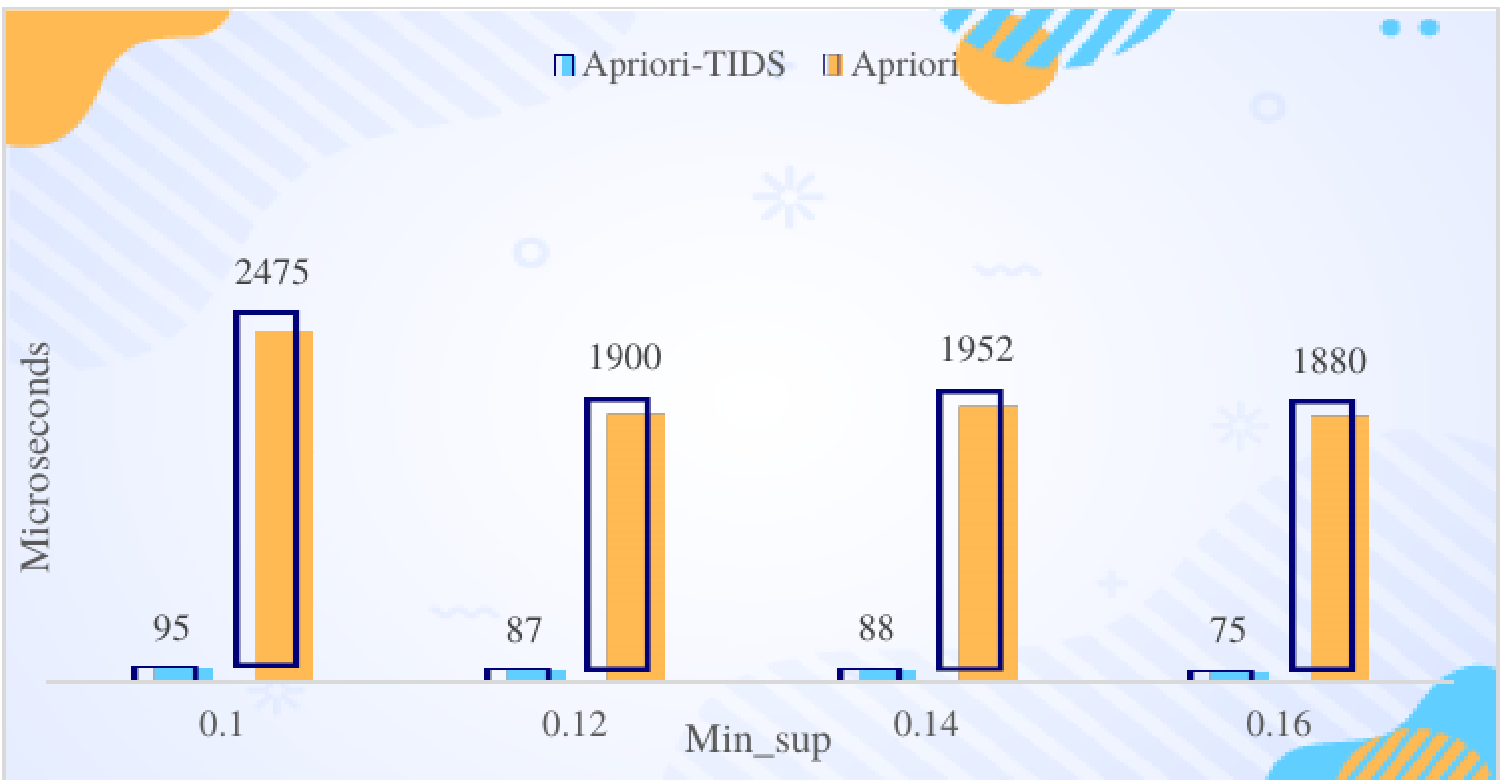 Figure 1: Comparison showing the sheer speed advantage of AT over traditional Apriori.
Real-World Application
The algorithm was applied to a survey of 50 college counselors to mine four specific modules:
- Course Association: Linking prerequisite success to advanced course performance.
- Course Category Mining: Analyzing elective patterns.
- Student Basic Info: Linking demographics and moral education to academic outcomes.
- Career Correlation: Predicting job suitability based on academic background.
The counselors reported the highest satisfaction with the Student Basic Information Mining module (scoring 8-9/10), indicating that the algorithm's ability to find hidden correlations in student backgrounds is its most valuable feature.
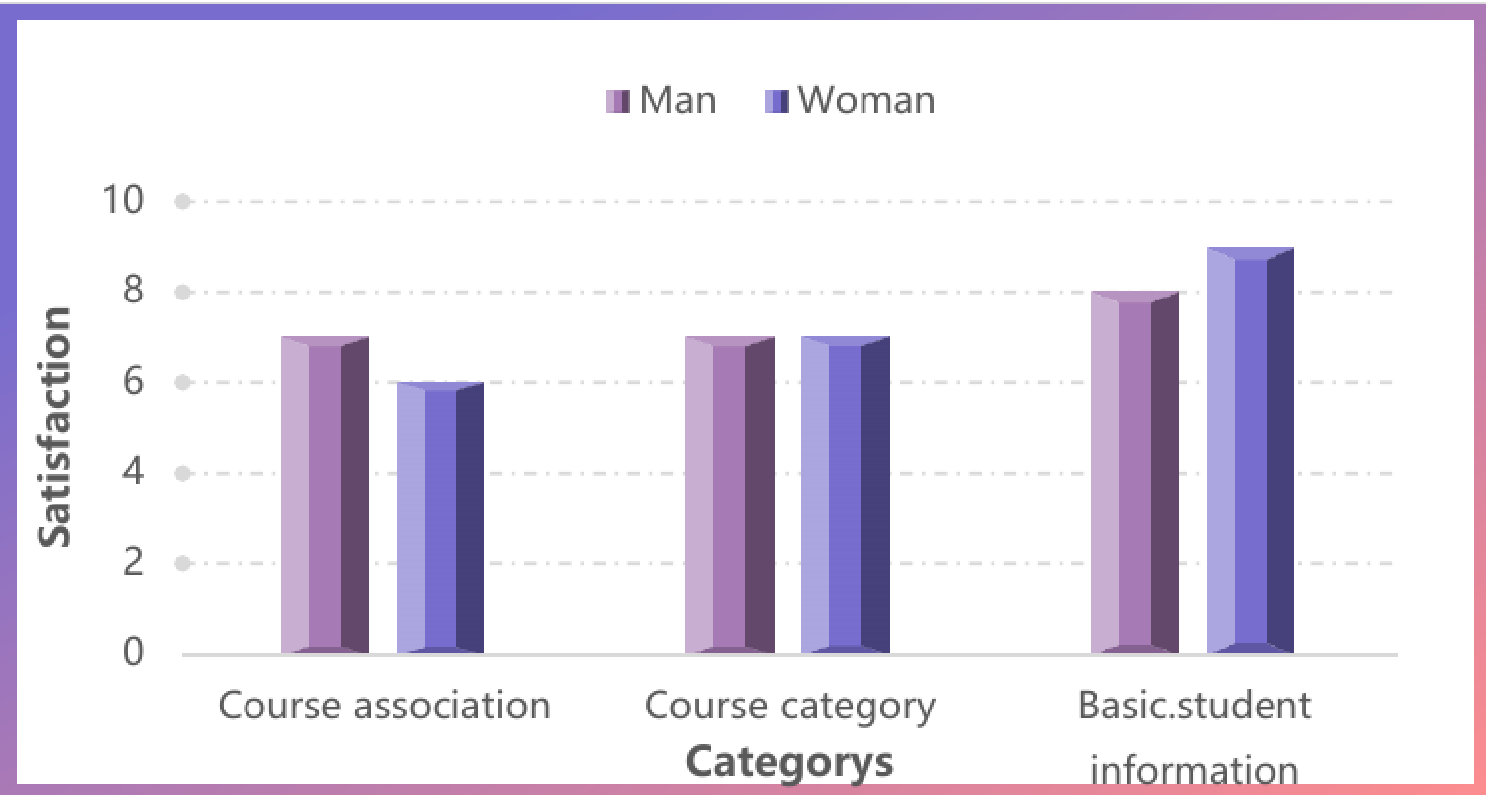 Figure 2: Satisfaction levels across different mining modules.
Critical Analysis & Conclusion
The Apriori-TIDS algorithm successfully transitions association mining from a disk-bound problem to a memory-bound computation. By leveraging TID lists, it makes big data mining a feasible tool for educational administrators rather than just a theoretical exercise.
Limitations: While AT reduces I/O, the TID lists themselves can become very large in memory if the dataset is extremely sparse or the number of transactions is in the billions. Future work should look into TID compression or distributed TID storage to scale this even further.
Takeaway: For educational institutions looking to move beyond simple spreadsheets, the AT algorithm provides a robust engine for "Instructional Intelligence," helping counselors provide targeted support based on data-driven insights rather than intuition alone.