
PHCI: Mining the Latent Wisdom of the Digital Crowd
An Argument for Post-Hoc Collective Intelligence
This paper introduces Post-Hoc Collective Intelligence (PHCI), a novel framework designed to extract intelligent insights from existing, unstructured human-generated data (e.g., tweets, reports, comments) produced outside of curated platforms. It distinguishes PHCI from traditional Crowdsourcing and Human Computation by highlighting its ability to aggregate "Knowledge Nuggets" without active task coordination or participant awareness.
TL;DR
While we traditionally think of "Collective Intelligence" (CI) as something we must build a platform for (like Wikipedia), a new paper from the University of the West Indies argues for Post-Hoc Collective Intelligence (PHCI). PHCI is the art of extracting intelligence from data that already exists—tweets, comments, and reports—without the original authors ever knowing they were part of a "crowd."
The "Platform" Bottleneck
For decades, researchers have obsessed over how to incentivize and organize people. We built Amazon Mechanical Turk for micro-tasks and Stack Overflow for Q&A. But there is a massive problem: Most human intellect is recorded outside these systems.
The authors argue that current CI theories fail to exploit "digital exhaust"—the thousands of independent reports and comments created without a central goal. These sources are messy, biased, and uncoordinated. Until now, we lacked a rigorous framework to turn this "noise" into "intelligence."
Methodology: The PHCI Framework
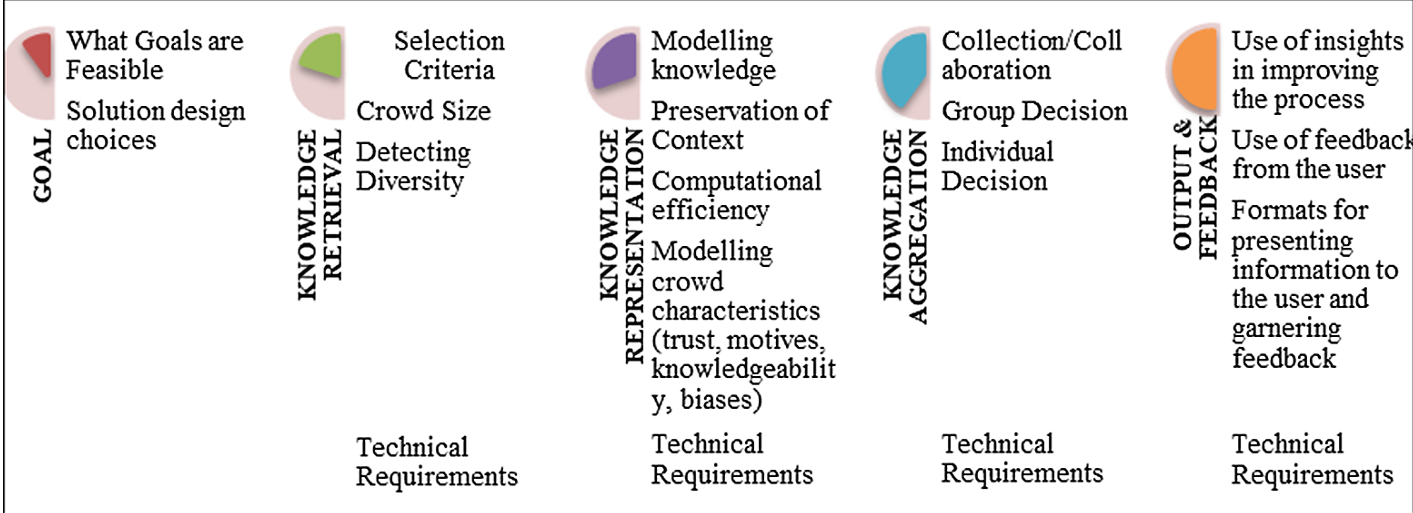
The researchers developed a five-stage framework to handle the inherent chaos of post-hoc data.
1. The Shifting Nature of Control
In traditional Human Computation, we control the task. In PHCI, we have zero control over the "workers." Therefore, control must happen during Knowledge Retrieval. We must use metadata (temporal data, author characteristics) to ensure we are sampling a diverse crowd, not just an echo chamber.
2. Knowledge Nuggets (KN)
The paper introduces the concept of the Knowledge Nugget. A KN is the smallest unit of human intellect—a single assertion in a witness report or a specific line of code in a GitHub repo.
3. Aggregation Without Interaction
This is the "secret sauce." In PHCI, humans don't talk to each other (preventing Groupthink). Instead, the system aggregates their ideas using:
- Local Decomposition Aggregation (LDA): Breaking down complex ideas.
- Global Similarity Aggregation (GSA): Comparing holistic viewpoints.
Distinguishing PHCI from the Crowd
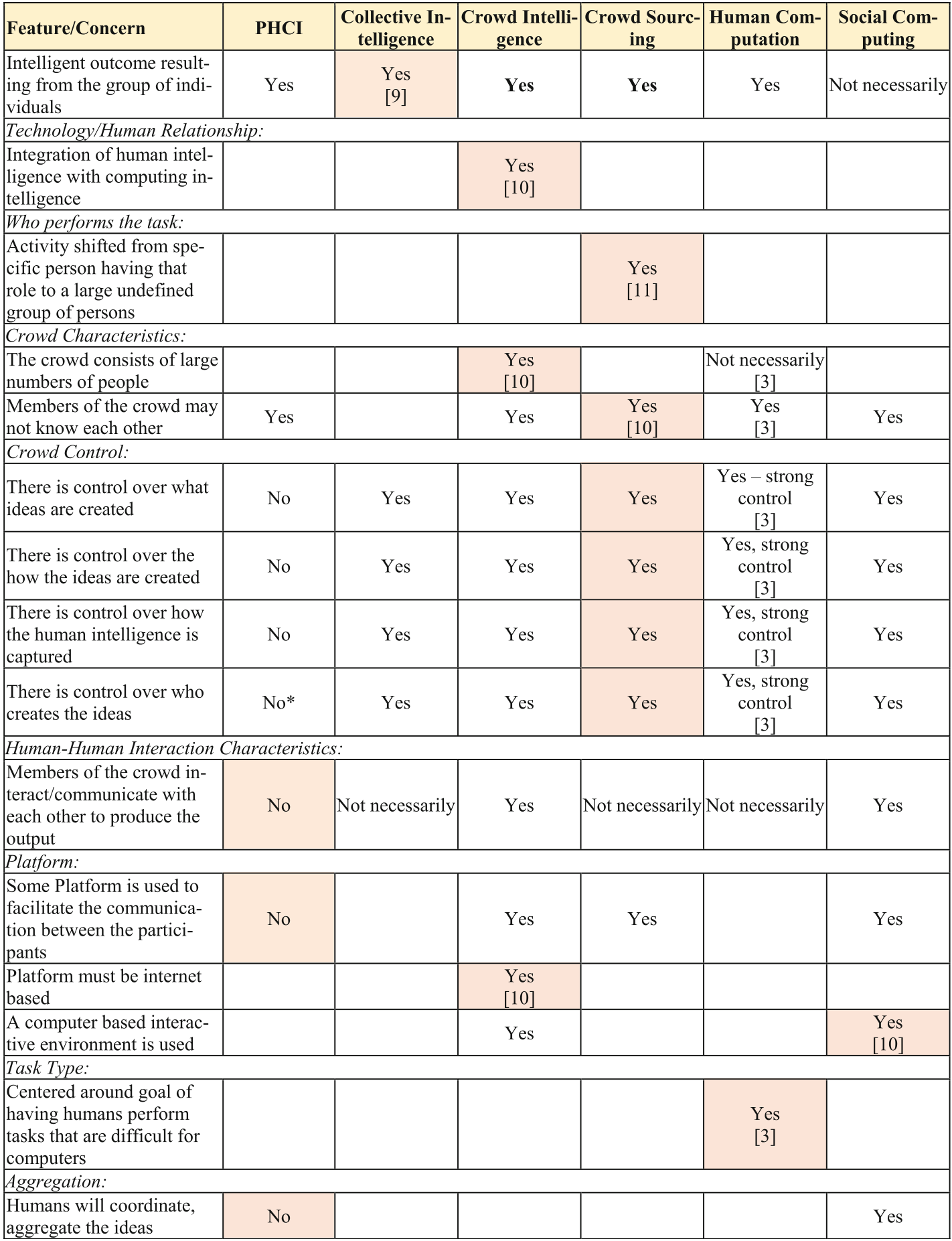
The paper provides a crucial taxonomy (Table 1) that defines PHCI against its siblings. The defining trait? Zero platform dependency and zero crowd control.
Real-World Application: The Witness Problem
The authors are testing this framework on witness statements. Imagine 50 people witness a crime. Individually, their memories are flawed (cognitive bias). However, by treating each statement as a post-hoc data source, the PHCI system can filter out unique lies and identify the "Surprisingly Popular" truths that converge across diverse perspectives.
Critical Analysis & The Future
The Strength: PHCI moves us away from expensive, "engineered" crowds and toward a more ecological view of data. It treats the internet as a massive, ongoing experiment in human thought.
The Limitation: The paper acknowledges that "Collective Stupidity" is a risk. If the source data is 100% ignorant, the output will be too. The framework relies heavily on the assumption that diversity can cancel out bias—a theory that is still being tested in the age of algorithmic radicalization.
Future Outlook: With the rise of LLMs, PHCI is more relevant than ever. LLMs can act as the "Aggregation" engine the authors envisioned, finally providing the technical means to turn scattered "Knowledge Nuggets" into actionable wisdom.