
Carrel+: Saving Lives Through Argumentation-Based Agent Deliberation
Argumentation-Based Agent Deliberation
This paper introduces Carrel+, a multi-agent system extension that utilizes argumentation-based deliberation to increase organ transplant availability. By enabling structured dialogue between donor and recipient agents via the ProCLAIM framework, the system provides a decision-support mechanism to reassess discarded organs.
TL;DR
Human organ transplantation faces a critical supply-demand gap, exacerbated by high discard rates of potentially viable organs. Carrel+ is a revolutionary multi-agent system that uses formal argumentation to allow surgeons and automated agents to "deliberate" over organ viability. By challenging the unilateral rejection of organs at the donor site, this system provides a structured framework to increase the pool of available organs using clinical reasoning and case-based evidence.
The "Binary" Trap in Medical Selection
Historically, organ selection has been a top-down, one-way street. If a donor-site coordinator deems an organ non-viable based on general guidelines, it is discarded immediately. However, medical reality is rarely black and white. For instance, a lung from a donor with a smoking history might be rejected by one hospital’s protocol but welcomed by another that utilizes specific recipient treatments. The current system lacks a mechanism for "rebuttal" or "counter-argument," leading to discard rates as high as 95% for pancreases and 85% for lungs.
Methodology: The ProCLAIM Architecture
Carrel+ addresses this by introducing a Mediator Agent (MA) based on the ProCLAIM model. This agent acts as a digital arbitrator between the Donor Agent (DA) and the Recipient Agent (RA).
The deliberation happens in structured "Evaluation Rooms" where agents don't just send data, but exchange arguments.
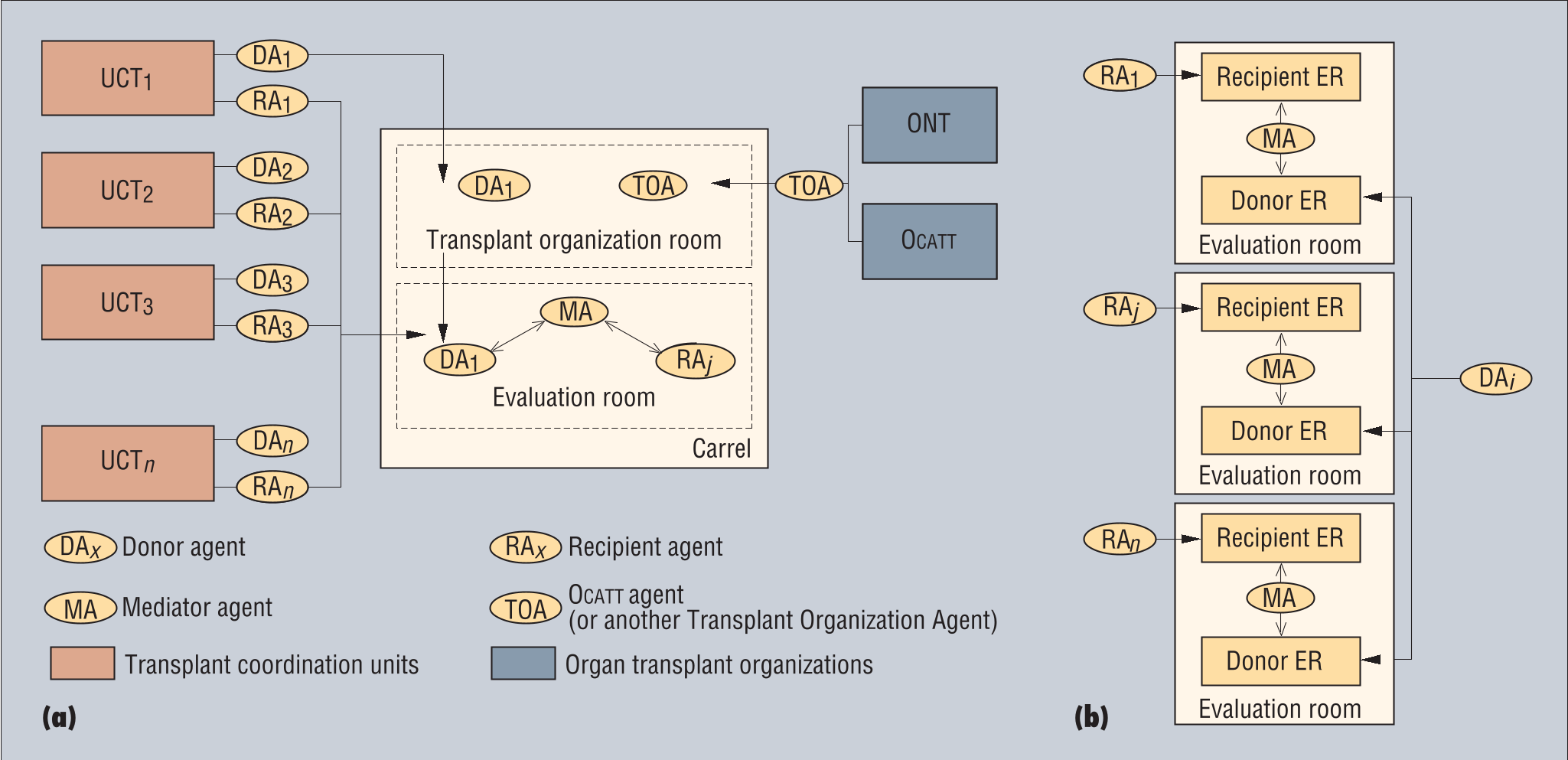 Figure 1: Carrel+ architecture showing the Evaluation Rooms and the Mediator Agent (MA).
The Core Components:
- Argument Scheme Repository: A library of "Reasoning Patterns" (e.g., "If condition X exists, then the organ is non-viable").
- Critical Questions (CQs): These allow recipient agents to challenge a donor’s claim (e.g., "Is smoking history really a contraindication if the donor doesn't have COPD?").
- Case-Based Reasoning (CBR): The system looks at historical successful transplants to determine the "strength" of an argument.
- Reputation Management: If a world-renowned transplant unit argues for an organ's viability, their argument is weighted more heavily than a less experienced unit.
The Logic of Disagreement
The beauty of Carrel+ lies in its use of Dung's Calculus of Opposition. When a DA claims an organ is non-viable, the RA can strike back with a "reinstatement" argument.
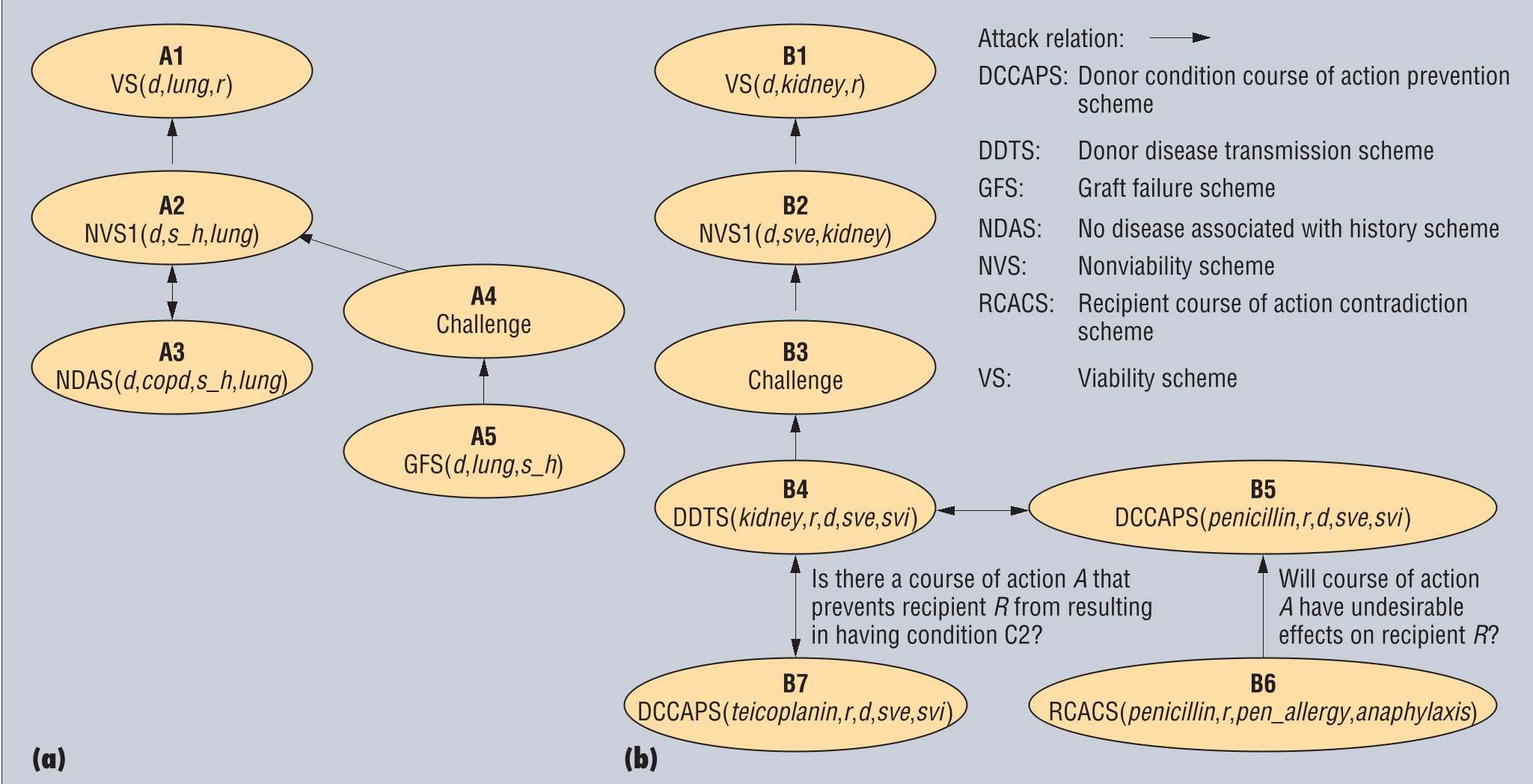 Figure 2: An argument graph showing the conflict between smoking history (non-viability) vs. lack of COPD (viability).
For example:
- DA: "The donor had streptococcus endocarditis, so the kidney is non-viable."
- RA: "But we can administer penicillin or teicoplanin to the recipient to prevent infection."
- Mediator: Evaluates these based on guidelines and historical success rates.
By formalizing this "back-and-forth," the system shifts the burden of proof. It ensures that organs are not discarded until all potential "arguments for life" have been exhausted.
Results and Impact
Initial evaluations of the Carrel+ prototype indicate that this deliberative approach can successfully salvage "extended criteria" organs—those that don't satisfy perfect donor profiles but are still clinically beneficial for specific patients. By moving from a rigid, rule-based system to a flexible, logic-based deliberation, Carrel+ bridges the gap between different hospital protocols and enhances the "Inductive Bias" of the allocation process toward life-saving outcomes.
Critical Insight & Future Outlook
The implementation of Carrel+ proves that social intelligence (the ability to argue and deliberate) is just as critical as computational intelligence in medical software. While the system currently acts as a decision-support tool, the integration of autonomous AI agents capable of navigating clinical guidelines could significantly speed up the organ allocation process, where every minute counts.
Limitations: The system's success depends heavily on the "completeness" of the Argument Scheme Repository. If a novel medical treatment is not encoded, the system cannot argue for its use. Future work must focus on more dynamic knowledge acquisition to keep pace with rapid medical advancements.
Conclusion
Carrel+ represents a pinnacle of applied AI—using dry mathematical logic and multi-agent theory to solve the profoundly human problem of organ scarcity. It moves us toward a future where "non-viability" is not a final verdict, but the start of a life-saving conversation.