
DILIGENT: Structuring the Social Logic of Ontology Engineering
Argumentation-Based Ontology Engineering
The paper introduces the DILIGENT argumentation framework, a collaborative ontology-engineering methodology and formal model designed to capture design deliberations. It leverages a wiki-based tool, coefficientMakna, to facilitate consensus-building among geographically dispersed experts and non-experts in the Semantic Web domain.
TL;DR
The DILIGENT framework transforms ontology engineering from a technical implementation task into a structured social deliberation process. By combining an argumentation-based methodology with a semantic wiki (coefficientMakna), the authors provide a way to build consensus, trace design rationales, and detect modeling conflicts in real-time, even when involving non-expert domain specialists.
Problem & Motivation: The Hidden Logic of Design
One of the greatest hurdles in the Semantic Web is not just the formalization of knowledge, but the agreement on that knowledge. Traditional methodologies often see a core team of developers acting as "black box" mediators; they take feedback from domain experts and output an ontology, but the "Why" behind specific modeling choices (e.g., why model an ingredient as a class instead of an attribute?) is often lost.
This lack of transparency leads to:
- Information Loss: The rationale behind decisions disappears once the project ends.
- Inertia for Newcomers: Geographically dispersed contributors cannot catch up with the project's history.
- Conflict Stagnation: Without a structured way to argue, discussions become circular and fail to reach consensus.
Methodology: Formalizing the Argument
The core of DILIGENT (distributed, loosely controlled, and evolving engineering of ontologies) is the integration of Argumentation Theory into the engineering lifecycle.
1. The Argumentation Ontology
Building on the IBIS (Issue-Based Information System) model, the authors developed a specialized ontology that classifies the components of a discussion:
- Issues: Requirements or conceptual problems.
- Ideas: Potential formal solutions or ways to implement a requirement.
- Arguments: Pros (Justifications) and Cons (Challenges/CounterExamples) that influence the decision on an idea.
2. Restricting the "Search Space" of Discussion
A key insight from the paper is that unrestricted discussion is inefficient. Using Rhetorical Structure Theory (RST), the authors narrowed the legal argument types to those that actually drive ontologies forward: Elaboration, Evaluation, Alternative, Example, and CounterExample. This constraint paradoxically increases both user satisfaction and the speed of agreement.
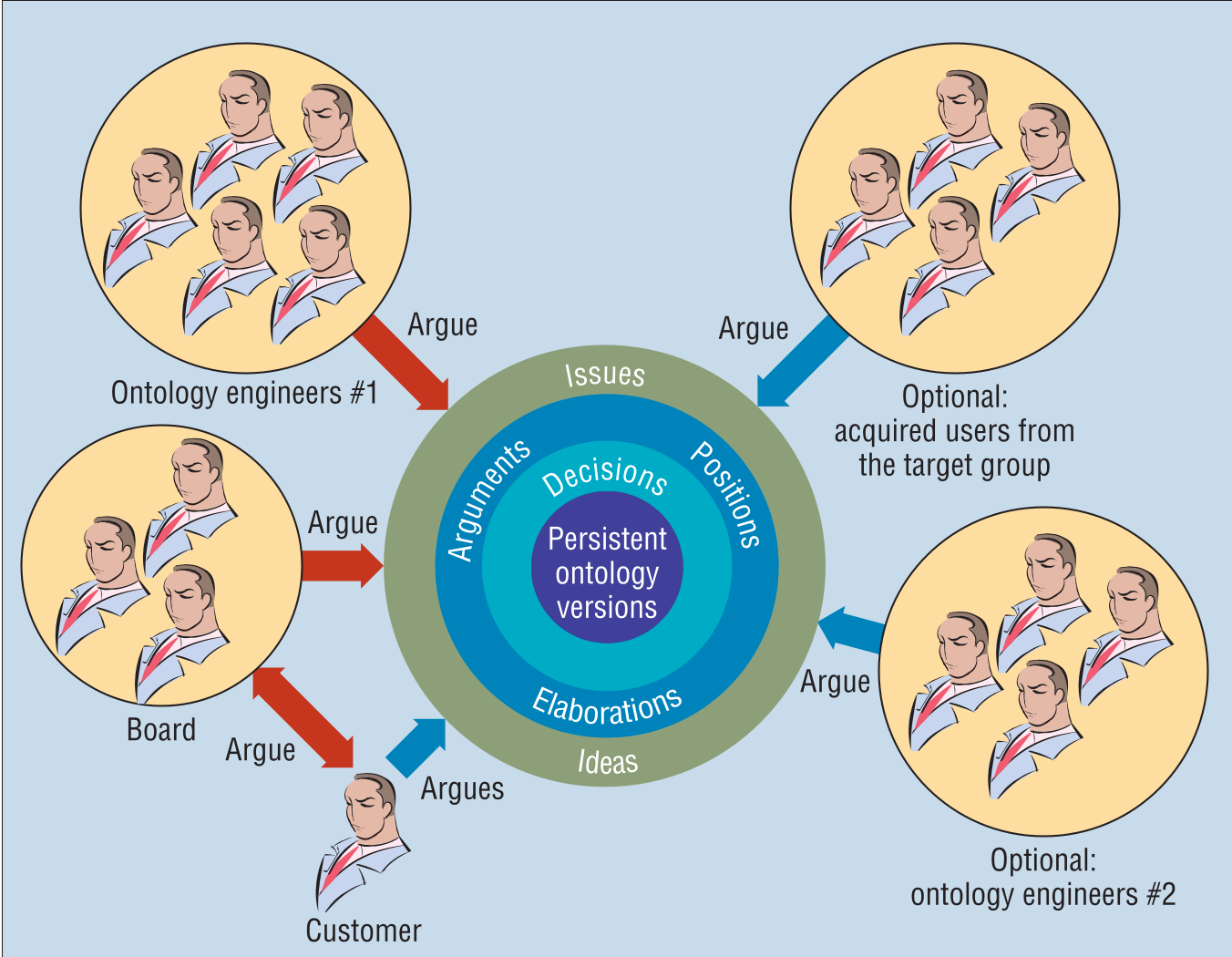 Figure 1: The DILIGENT collaborative scenario involving domain experts, engineers, and users.
3. Tool Support: coefficientMakna
To operationalize this, the authors extended a semantic wiki. This allows users to:
- Edit ontology entities like standard wiki pages.
- Use "discussion pages" that are not just text blocks but are structured by the argumentation ontology.
- Use external reasoning services to detect if participants are making contradictory arguments (e.g., agreeing on a concept in one thread but rejecting its parent property in another).
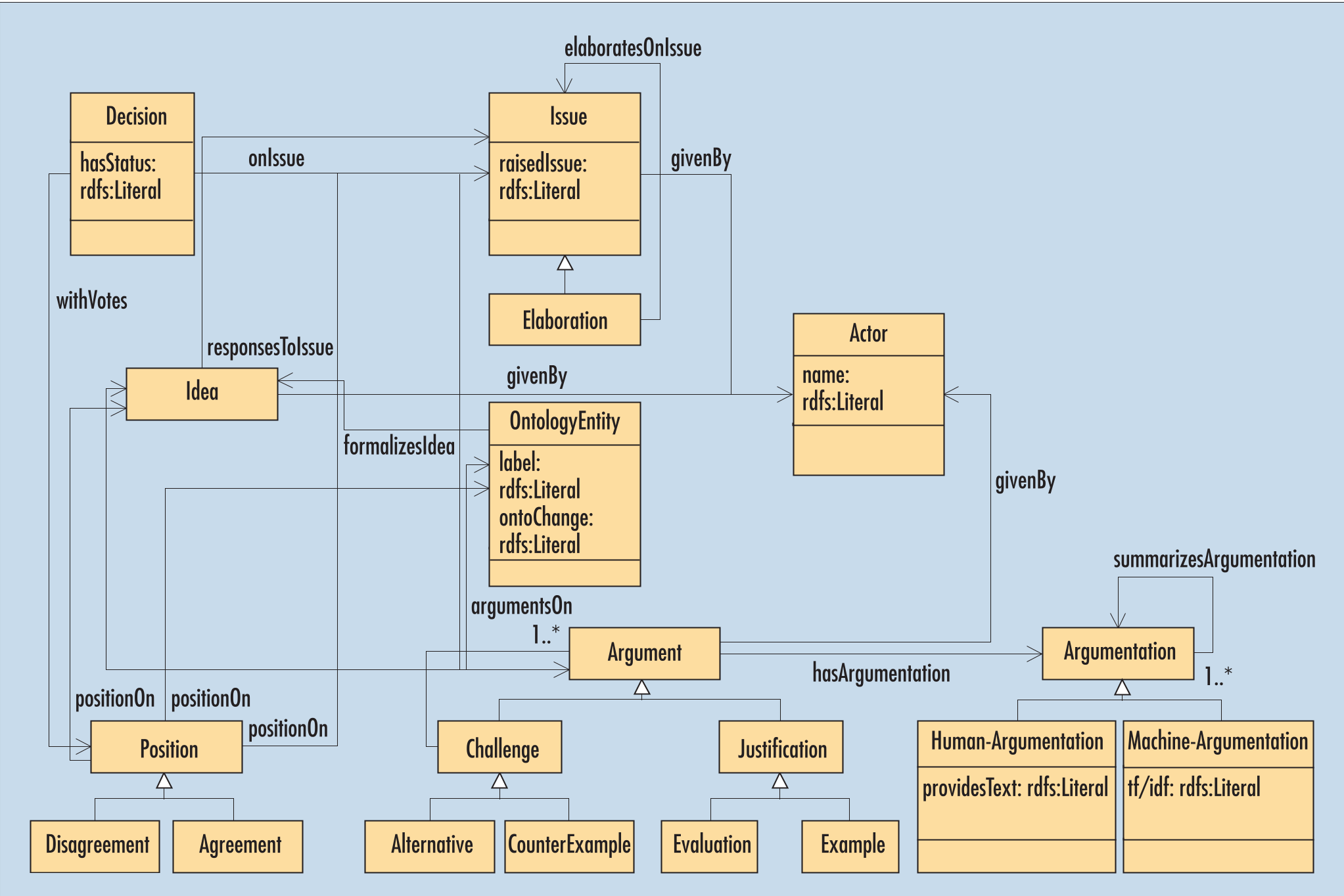 Figure 2: The core classes and properties of the DILIGENT argumentation ontology.
Experiments & Results: The Cooking Ontology Proof-of-Concept
The framework was tested through a case study where 15 students (many with minimal ontology experience) built a "cooking/dessert" ontology.
Key findings included:
- Consensus Building: The team successfully integrated 500 recipes and multiple external classifications (like ISO 3166) after debating the "cost-benefit" of reuse.
- Traceability: Decisions like not reusing certain complex unit-of-measurement ontologies were documented with clear "pro" and "con" arguments, allowing future auditors to understand the trade-offs.
- Ease of Use: Because the system was wiki-based, the learning curve was significantly lower than traditional editors like Protégé.
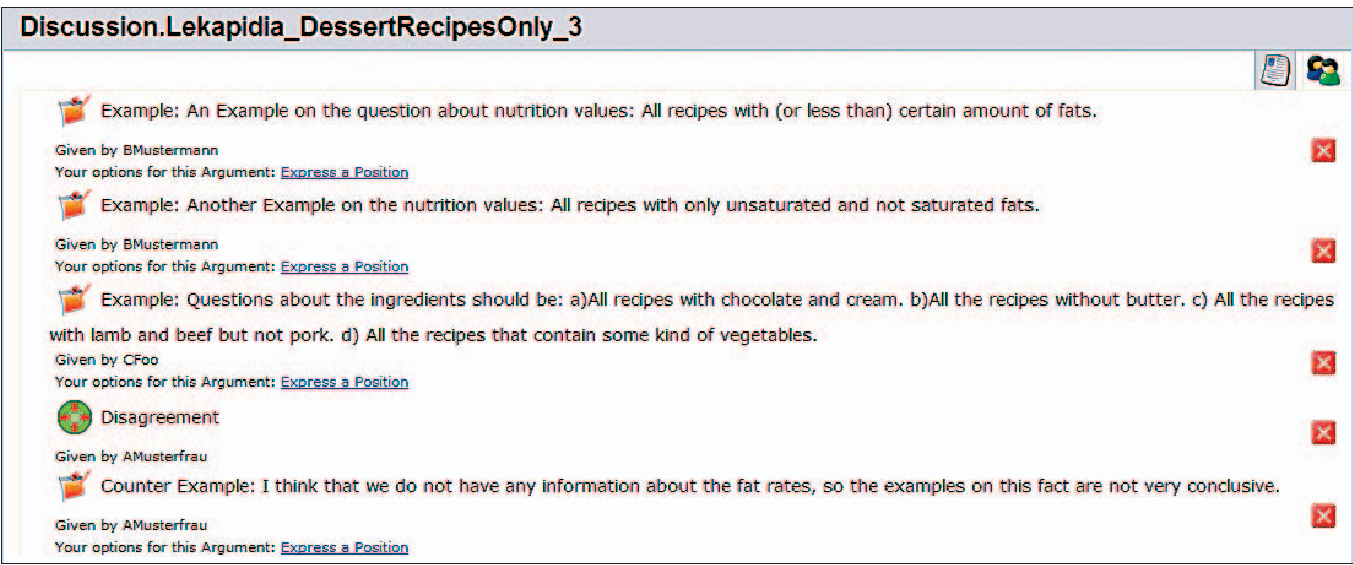 Figure 3: Discussion page in coefficientMakna showing structured issues and ideas.
Critical Analysis & Conclusion
Takeaway
The DILIGENT framework proves that Social Scalability is just as important as technical scalability in the Semantic Web. By treating arguments as "first-class citizens" in the engineering process, we move from creating static files to creating living, documented knowledge bases.
Limitations
- Modeling Complexity: While the wiki is excellent for simple class hierarchies, it struggles with complex axioms and cardinality constraints, which still require heavy-duty editors like Protégé.
- Quantitative Data: The current study provides strong qualitative evidence but lacks a direct quantitative comparison of "Time-to-Consensus" against unstructured methods.
Future Outlook
As AI and Large Language Models (LLMs) begin to assist in ontology engineering, the DILIGENT framework provides a perfect template for Human-AI collaboration. Imagine an agent that can analyze a thread of human arguments to suggest the most "consensual" modeling pattern.