
Beyond Words: A Temporal Approach to Artificial Emotional Intelligence in HRI
Toward Artificial Emotional Intelligence for Cooperative Social Human–Machine Interaction
2019-06-25
Summary
Problem
Method
Results
Takeaways
Abstract
This paper presents a novel affection-based perception architecture for cooperative Human-Robot Interaction (HRI) that utilizes a CNN-LSTM hybrid network. The core method leverages "macro-emotions"—temporal sequences of facial expressions—to adaptively adjust a humanoid robot's behavior based on user satisfaction levels, achieving superior accuracy over commercial alternatives like Microsoft Emotion API.
## TL;DR
Researchers have developed a closed-loop perception system for social robots that doesn't just "read" your face—it understands your emotional trajectory. By shifting from static image analysis to a CNN-LSTM temporal framework, this system overcomes the inherent biases and inaccuracies of commercial APIs, allowing robots to adjust their behavior based on a user's satisfaction "flow."
## The Problem: The Bias and Myopia of Static Vision
In the realm of Human-Robot Interaction (HRI), the biggest bottleneck isn't the robot's ability to follow a command, but its inability to handle *ambiguity*. When a smart assistant fails to understand a request, the user's immediate response is often a facial expression of frustration or anger.
However, current SOTA (State Of The Art) tools like the Microsoft Emotion API face two critical failures:
1. **Micro-expression Noise**: Static frames often flicker between emotions at high frequencies, leading to "jittery" robot responses.
2. **Racial Bias**: The paper highlights a startling reality—commercial APIs are often biased, frequently mapping dark-skinned users to "Happiness" or "Neutral" even when they express "Sadness" or "Anger."
## Methodology: Capturing the "Macro-Emotion"
The authors argue that human emotions are subjective and temporal. A "Neutral" state for one person might look like "Sadness" to a generalized model. To solve this, they propose a two-stage architecture.
### 1. The Architecture
The system uses a **CNN-LSTM** hybrid. The CNN acts as a feature extractor, outputting a vector of 8 emotion probabilities. These vectors are then fed into an LSTM (Long Short-Term Memory) layer.
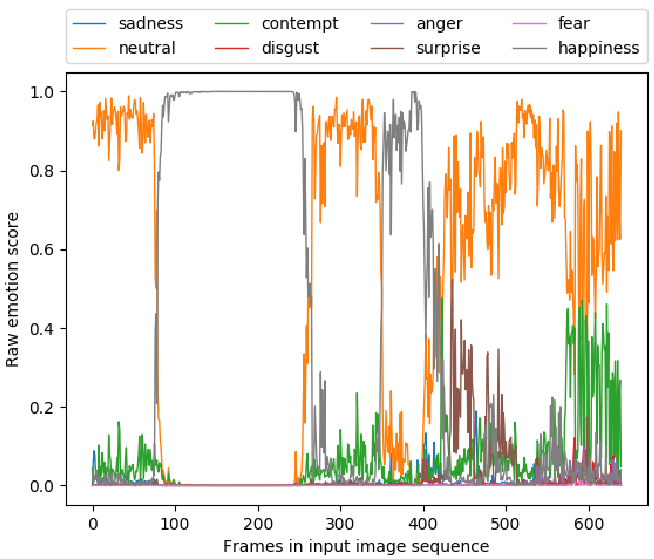
*Figure 1: The hybrid CNN-LSTM framework designed to capture temporal emotion transitions.*
### 2. Temporal Logic
By analyzing 48 consecutive frames (forming a "macro-expression"), the LSTM identifies *transitions*:
* **Neutral → Happy**: Approval
* **Neutral → Sad**: Disapproval
This "Toward" logic allows the robot to learn the specific nuances of an individual user via Transfer Learning, effectively "personalizing" the robot to its owner’s unique facial baseline.
## Experimental Results: Closing the Loop
The researchers tested their system against five individuals of various ethnicities. The results were telling: while the commercial baseline struggled with face detection and biased scoring (particularly for darker skin tones), the proposed LSTM-based system maintained higher consistency.
| Metric | Microsoft Emotion API | Proposed CNN-LSTM |
| :--- | :--- | :--- |
| **Avg. Accuracy** | 50.68% | **67.36%** |
| **Bias Resistance** | Poor (Skin color dependent) | **High** (User-Specific Training) |
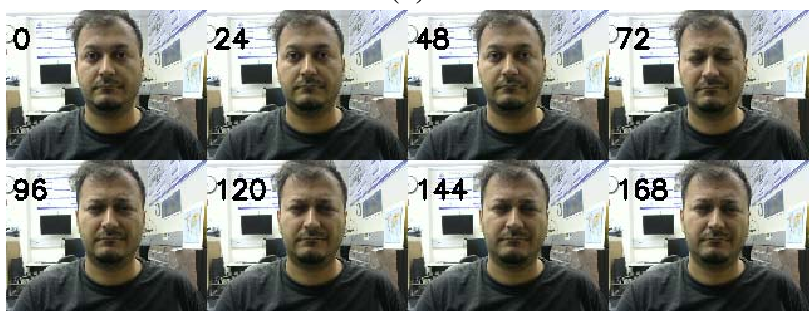
*Figure 2: Accuracy of face detection and emotion recognition across different skin tones (User #2 to User #5).*
As seen in the experiments, the proposed system was able to identify sadness in "typically happy" individuals by focusing on the *change* in the sadness score, even if that score never became the dominant probability in a single frame.
## Critical Insights & Future Outlook
The real value of this work lies in the **Reward Mechanism**. In a "System of Systems" (SoS) environment, the detected emotion serves as a feedback loop. If the robot detects a transition toward sadness, it inherently views its previous action as a failure and adjusts its strategy.
### Limitations
* **Subjectivity**: Transition analysis still requires an initial "neutral" anchor, which can be hard to define in highly dynamic environments.
* **Data Scarcity**: LSTM networks require significant labeled sequential data, which is currently harder to obtain than static datasets.
## Conclusion
The path toward true "Artificial Emotional Intelligence" isn't found in better static classifiers, but in understanding human behavior as a continuous, temporal stream. By training robots to recognize how we *change* our expressions, we move closer to robotic companions that can truly "bond" with their human partners in a social context.