
Precise Speech Biomarkers: A Hierarchical AI Approach to Ataxia in Children
Artificial Intelligence for Dysarthria Assessment in Children With Ataxia: A Hierarchical Approach
This paper introduces a Hierarchical Machine Learning Model (HMLM) for the automated assessment of dysarthria in children with ataxia using the standardized "PATA" speech test. The system utilizes a two-tier approach—fusing conventional acoustic features with deep learning-based VGGish feature extraction—to achieve high-accuracy diagnosis and severity stratification.
TL;DR
Researchers have developed a novel Hierarchical Machine Learning Model (HMLM) that transforms the clinical "PATA" speech test into a digital biomarker for ataxia. By splitting the task into two specialized levels—detection and stratification—the system achieves up to 90% accuracy, providing a scalable and objective tool for pediatric neurorehabilitation and telemedicine.
Problem & Motivation: The Subjectivity Gap
Early Onset Ataxia (EOA) is a complex group of neurological disorders where motor coordination is impaired. Speech, a finely tuned motor activity, is often the first "canary in the coal mine." However, current clinical ratings (like the SARA scale) are subjective and prone to inter-rater variability, especially in children where developmental stages can mask or mimic disease symptoms.
The technical challenge lies in the Data Scarcity: Ataxia is rare, and existing dysarthria datasets like TORGO are too small to train deep neural networks from scratch. The authors realized that a "one-size-fits-all" flat classifier fails because the features required to detect a disease are fundamentally different from those required to measure its severity.
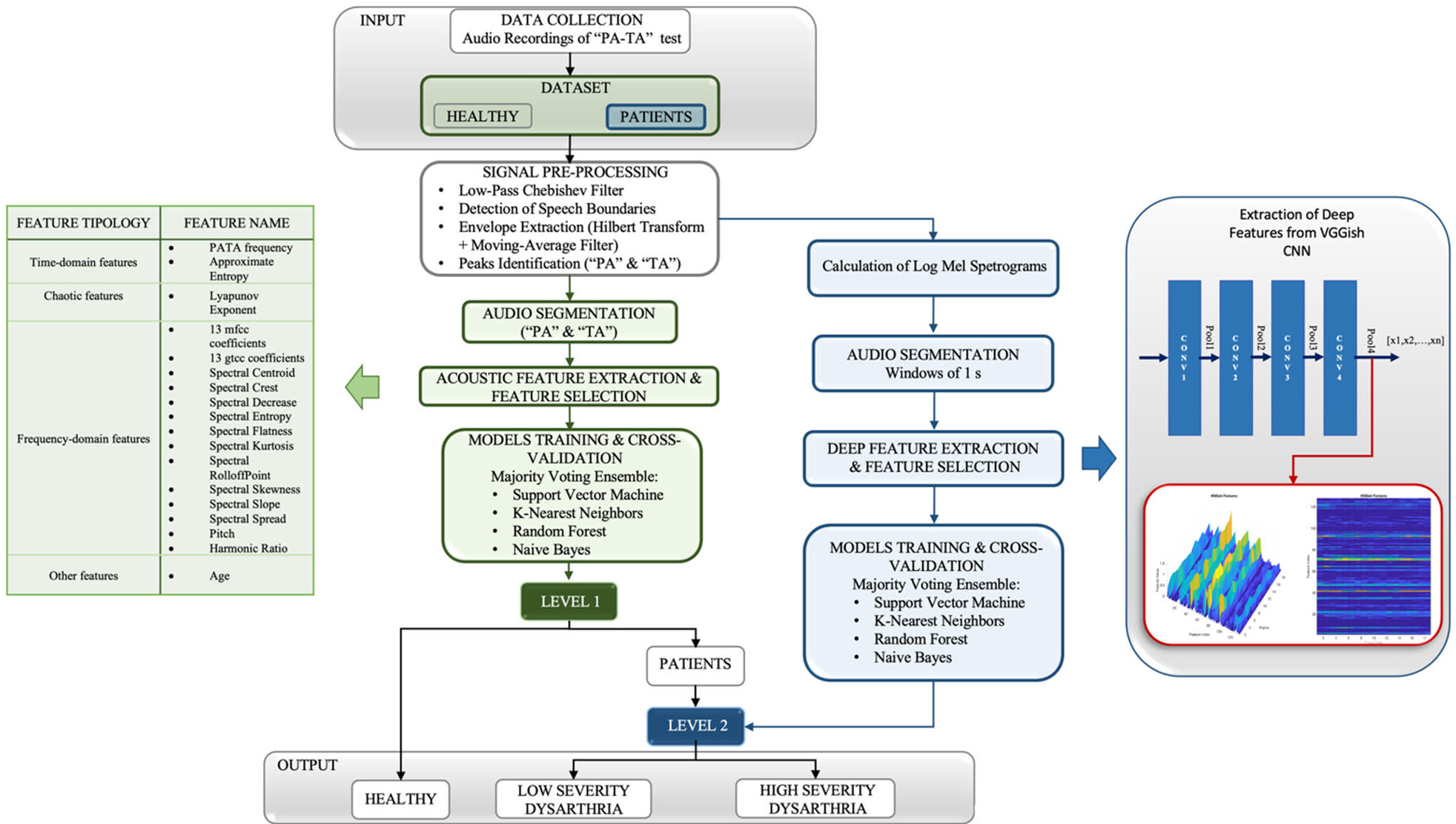
Methodology: The HMLM Architecture
The core innovation is the Hierarchical Approach, which mimics a clinical diagnostic workflow:
1. Level 1: Detection (Healthy vs. Patient)
At this stage, the model focuses on Conventional Features. By extracting 6 key parameters—including MFCCs, Spectral Centroid, and PATA frequency—the model focuses on the "physical intuition" of speech. For instance, the regularity of the "PATA" repetition is a strong indicator of cerebellar health.
2. Level 2: Stratification (Low vs. High Severity)
Once the system identifies a patient, it switches to a Deep Learning mode. Using Google's VGGish network via Transfer Learning, the model extracts high-dimensional patterns from Mel spectrograms that are invisible to the human ear but indicate subtle neuro-motor degradation.
Insights into Signal Processing
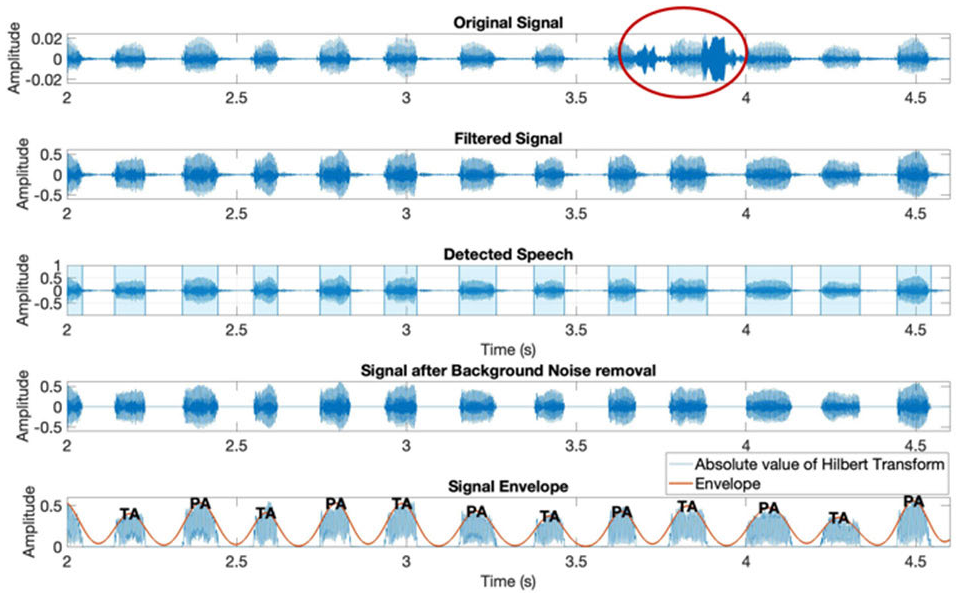
The authors employed a sophisticated pre-processing pipeline involving Hilbert Transforms for envelope extraction and Chebyshev filters to eliminate background noise. By segmenting the audio into individual "PA-TA" cycles, they increased the statistical significance of their limited dataset.
Experiments & Results: Accuracy over "Flat" Models
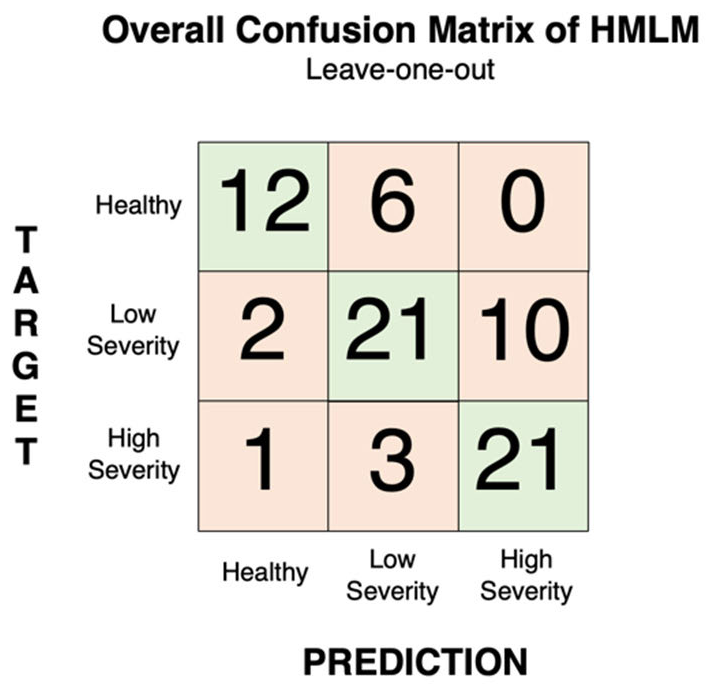
The results confirm that hierarchy breeds precision. While a standard multi-class model struggled to exceed 65% accuracy, the HMLM's cascading logic achieved:
- 90% Level 1 Accuracy using an optimal subset of traditional features.
- 80% Level 2 Accuracy through VGGish deep feature extraction.
- Robustness: Performance remained stable across 5-fold, 10-fold, and Leave-one-out cross-validation.
Deep Insight: Why Bio-Inspiration Matters
A key find was the utility of Gammatone Cepstral Coefficients (GTCCs) and Chaos Domain Features (Lyapunov Exponent). Speech isn't just a wave; it’s a non-linear dynamical system. By capturing the "chaoticity" of vocal vibrations, the model gains an Inductive Bias that specifically targets the motoric instability characteristic of Ataxia.
Conclusion & Future Outlook
This study provides clear evidence that AI-based digital biomarkers can surpass traditional clinical scores in reliability.
- Telemedicine Potential: Since the system only requires 10 seconds of "PATA" audio recorded via a simple microphone, it is ideal for remote monitoring.
- Limitations: The dataset, while the largest of its kind, still needs expansion to cover the full [0-6] range of the SARA scale.
Ultimately, this HMLM framework offers a blueprint for how AI can support clinicians in optimizing screening and personalized treatments for rare pediatric conditions.