
AI in Enterprise Management: Breaking the Efficiency Ceiling in Financial Operations
Artificial Intelligence Technology in Enterprise Economic Management
This paper explores the integration of Artificial Intelligence (AI) and Robotic Process Automation (RPA) within enterprise economic management, specifically focusing on "Company A." It proposes an AI-driven framework for investment research, risk assessment, and tax management, achieving significant efficiency gains in financial workflows.
TL;DR
This research investigates how Artificial Intelligence (AI) can revolutionize enterprise economic management by transitioning from "weak AI" (mere automation) to "intelligent decision-making." By implementing an AI-driven framework in a case study of "Company A," the study demonstrates a 97.6% efficiency increase in tax management and provides a mathematical model for real-time risk assessment and investment research.
Deep Dive into the Motivation
Traditional financial management is plagued by "mechanical repetitive labor." Human analysts, while capable, are limited by cognitive bandwidth—remembering at most a few hundred stock trading rules or price trends. As enterprises grow cross-regionally, geographical differences and the sheer volume of financial data lead to increased error rates and high travel costs for due diligence. The author argues that the current "weak AI" era must evolve into a strategic, data-driven management style to handle the complexities of modern digital economies.
Methodology: The Math Behind the Management
The paper doesn't just suggest using "more AI"; it provides a mathematical basis for how data signals should be interpreted during dynamic collection.
1. Dynamic Signal Monitoring
To monitor data changes in smart IoT environments, the following formula is used: This allows the system to detect discrete signal distributions over time, providing a scientific basis for triggering risk warnings.
2. Efficiency in Economic Management
The value of technology application () is modeled through a trigonometric distribution: This model underpins the intelligent decision-making process, allowing the system to handle simulated transactions and data analysis 24/7 with a significantly reduced error rate compared to human counterparts.
 Figure 1: Conceptual framework of AI integration in enterprise systems.
Experimental Results: The 97.6% Leap
The most striking evidence of the paper’s methodology is found in the optimization of the tax management business process. By introducing Robot Process Automation (RPA) based on an AI platform, the company achieved the following:
| Metric | Before Optimization | After Optimization | Efficiency Gain |
|---|---|---|---|
| Average Process Time | 11,820s | 272s | 97.6% |
 Table 1: Quantifiable impact of AI on tax management workflows.
The study further identifies that the reduction in "transition time" between processes (from 1,800s down to 10s in some steps) is where the majority of cost savings occur.
Critical Insight: The "Talent Gap"
A significant portion of the research is dedicated to the human element of digital transformation. The author highlights a paradox: while technology is available, strategic leadership is missing.
- 33% of managers believe there is an urgent need for "Financial AI Strategy Leaders."
- 52% of managers identify AI management as the primary direction for future growth.
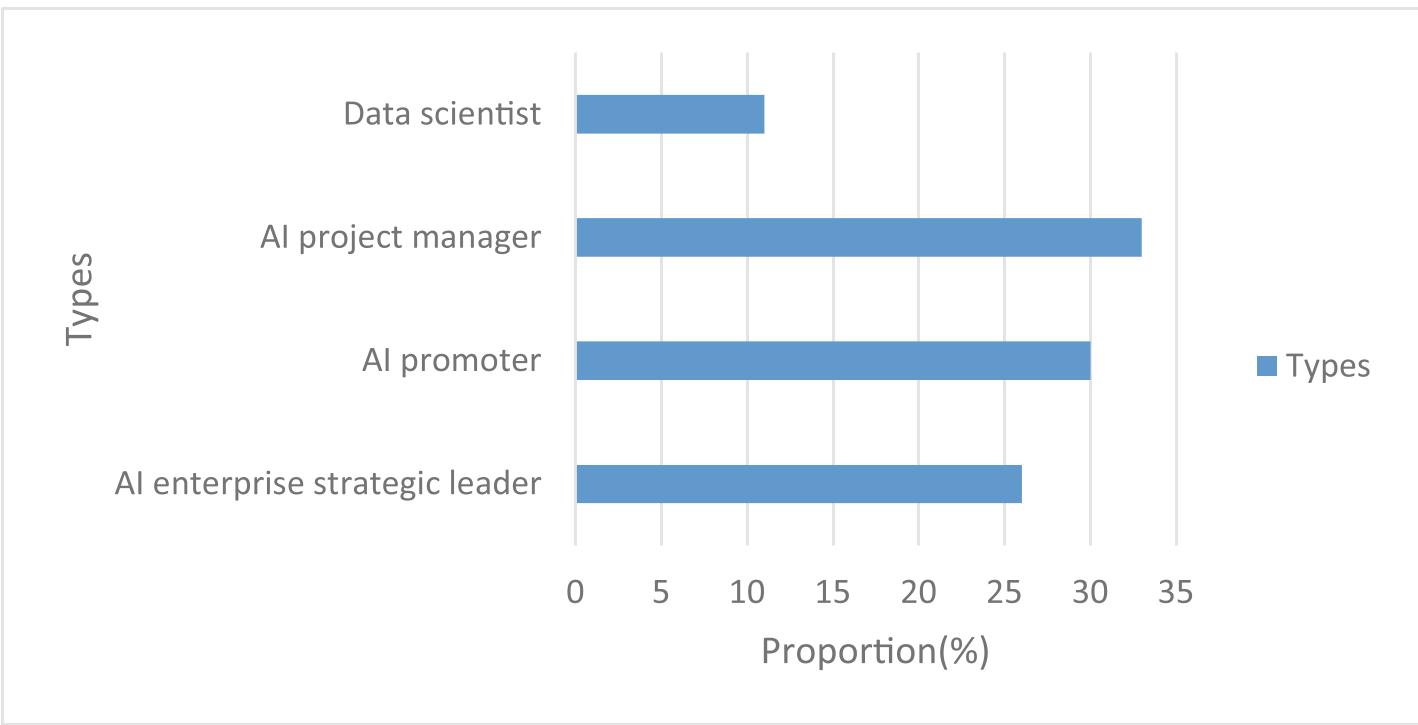 Figure 2: Analysis of specialized talent requirements for AI transformation.
Conclusion & Future Outlook
The paper successfully demonstrates that AI is no longer a luxury but a necessity for enterprise economic management. By moving beyond simple automation to intelligent risk assessment and dynamic investment research, companies can save millions in operational costs and travel expenses.
Takeaway: The bottleneck for AI in finance is no longer just the hardware or software, but the lack of "Strategic Leaders" who can bridge the gap between technical AI potential and enterprise-level financial planning. Future research should look into multi-functional shared services that integrate procurement, sales, and human resources into a single AI-driven ecosystem.