
Futuristic Banking: How AI is Redefining Trust and Security in Finance
Artificial Intelligence for Futuristic Banking
The paper "Artificial Intelligence for Futuristic Banking" explores the systemic integration of AI and Blockchain in financial services. It categorizes advancements into Front-Office (biometrics, chatbots) and Back-Office (AML, fraud detection) operations to address cybersecurity and privacy challenges.
TL;DR
The banking sector is undergoing a massive paradigm shift from traditional rule-based security to AI-driven cognitive operations. This paper reviews how deep learning, biometrics, and blockchain are moving from theoretical research to critical infrastructure, tackling everything from identity theft to multi-million dollar money laundering schemes.
Problem & Motivation: The Failure of Legacy Systems
As banking moves from brick-and-mortar to virtual platforms, the surface area for cyber-attacks has expanded exponentially. Traditional "Rule-Based" systems are brittle; they flag too many legitimate transactions as fraud (False Positives) while missing sophisticated, evolving criminal patterns.
The Motivation: Banks need to handle massive data record volumes and gain real-time insights—tasks that human staff alone can no longer perform efficiently.
Methodology: The Core Pillars of AI Banking
The paper divides AI application into two critical domains: Front Office (Customer Experience) and Back Office (Operational Integrity).
1. Front Office: Beyond the Password
The move toward biometric authentication uses Artificial Neural Networks (ANN) to process physical and behavioral traits.
- Fingerprint Recognition: Utilizes a five-phase pre-processing pipeline (normalization, enhancement, binarization, filtering, and thinning) before training a feedforward backpropagation ANN.
- NLP & Chatbots: Systems like Bank of America’s Erica utilize Convolutional Neural Networks (CNN) and Word Embeddings to understand intent and context, rather than just matching keywords.
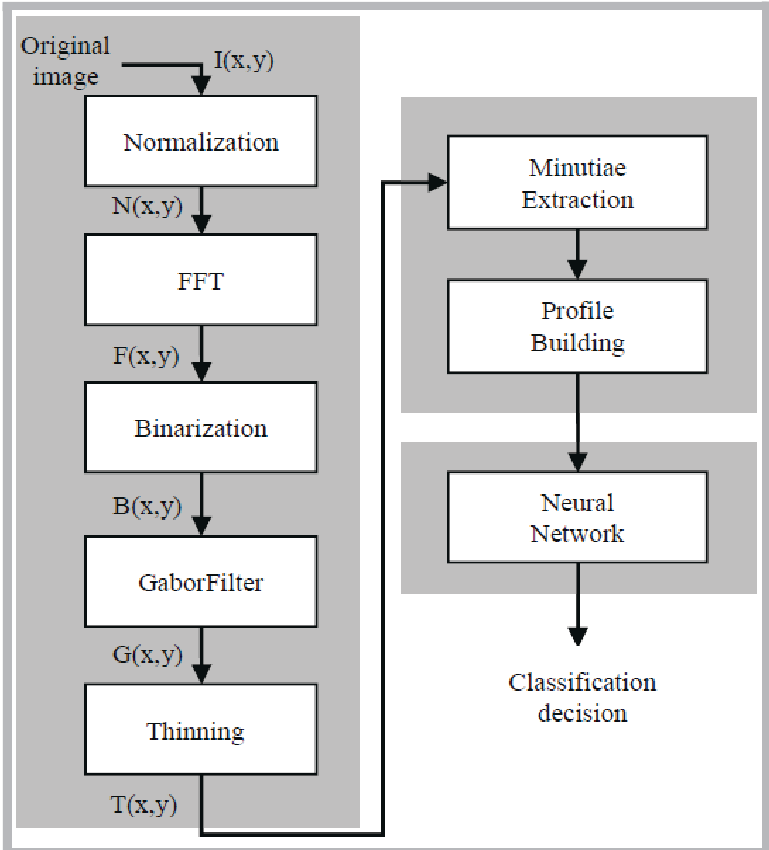 Fig.1: The journey from a noisy fingerprint image to a high-accuracy biometric template.
2. Back Office: The Anti-Fraud Engine
For internal operations, the paper highlights Data Mining and Intelligent Agents.
- Fraud Risk Monitoring: Implements a dual-layer system—an Online Scoring Subsystem for immediate risk assessment and an Offline Big Data Subsystem using Parallel Random Forest algorithms to analyze historical patterns.
- Blockchain Integration: Banks like Westpac and Barclays are utilizing distributed ledgers to bypass intermediaries in cross-border payments, reducing costs and latency.
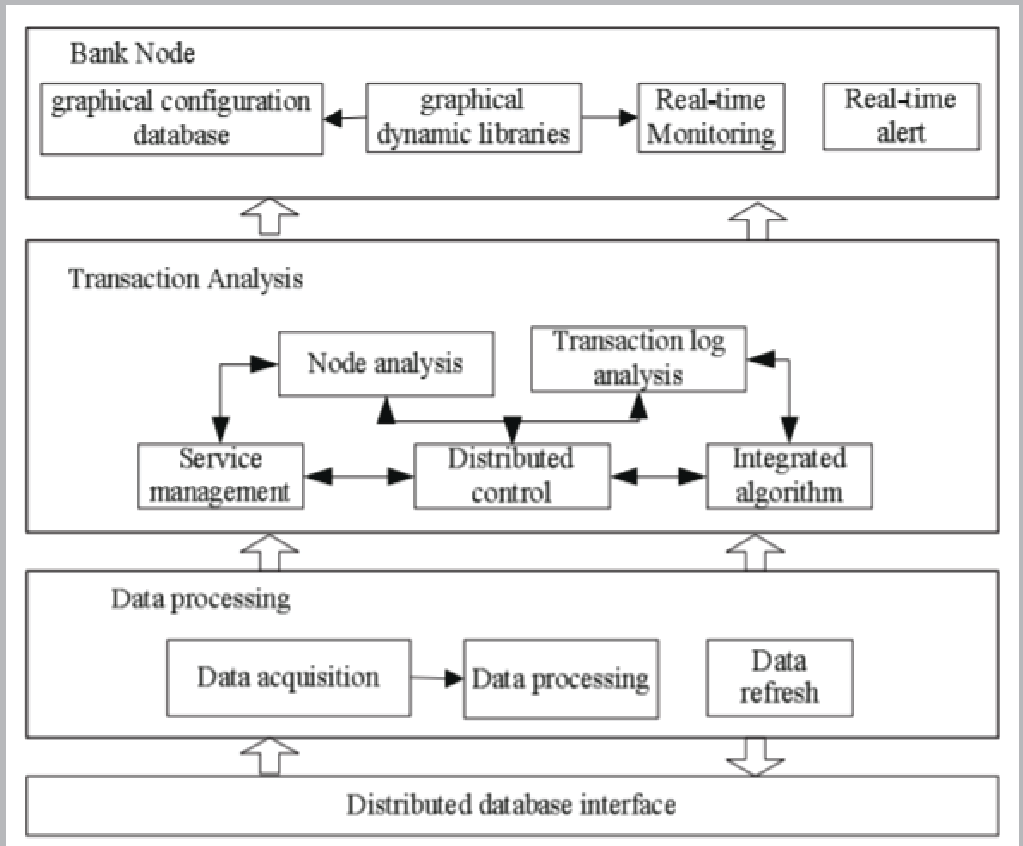 Fig.2: Integrated framework for real-time E-banking transaction monitoring.
Experiments & Results: Quantitative Impact
The paper cites real-world performance metrics from leading institutions:
- Danske Bank (Teradata AI): Achieved a 60% reduction in false positives, saving significant manual review time, while simultaneously increasing real fraud detection by 50%.
- HSBC (Ayasdi AI): Successfully used machine learning to distinguish complex criminal activities across diverse business lines that were previously invisible to rule-based systems.
- CitiBank: Deployed voice biometrics to over 1 million customers, reducing authentication time and friction in call centers.
Critical Analysis & Conclusion: The "Black Box" Challenge
Despite the SOTA (State-of-the-Art) performance, the paper identifies critical roadblocks:
- The Black Box Problem: Decisions made by deep neural networks are often difficult to explain, posing a challenge for regulatory compliance (GDPR).
- Scarcity of Quality Data: AI is only as good as its training set. Biased or poor-quality data leads to biased financial suggestions.
- Human-Centered AI (HCAI): The author argues that the solution isn't total automation, but a collaborative model where AI enhances human decision-making and humans provide the "ground truth" to correct algorithmic bias.
Final Takeaway: The transition to AI in banking is no longer an "innovation project"—it is the baseline for survival in a digital-first economy.