The In-credible AI Effect: Why Framing Knowledge as "AI" Might Hurt Its Credibility
Impact of an Artificial Intelligence Research Frame on the Perceived Credibility of Educational Research Evidence
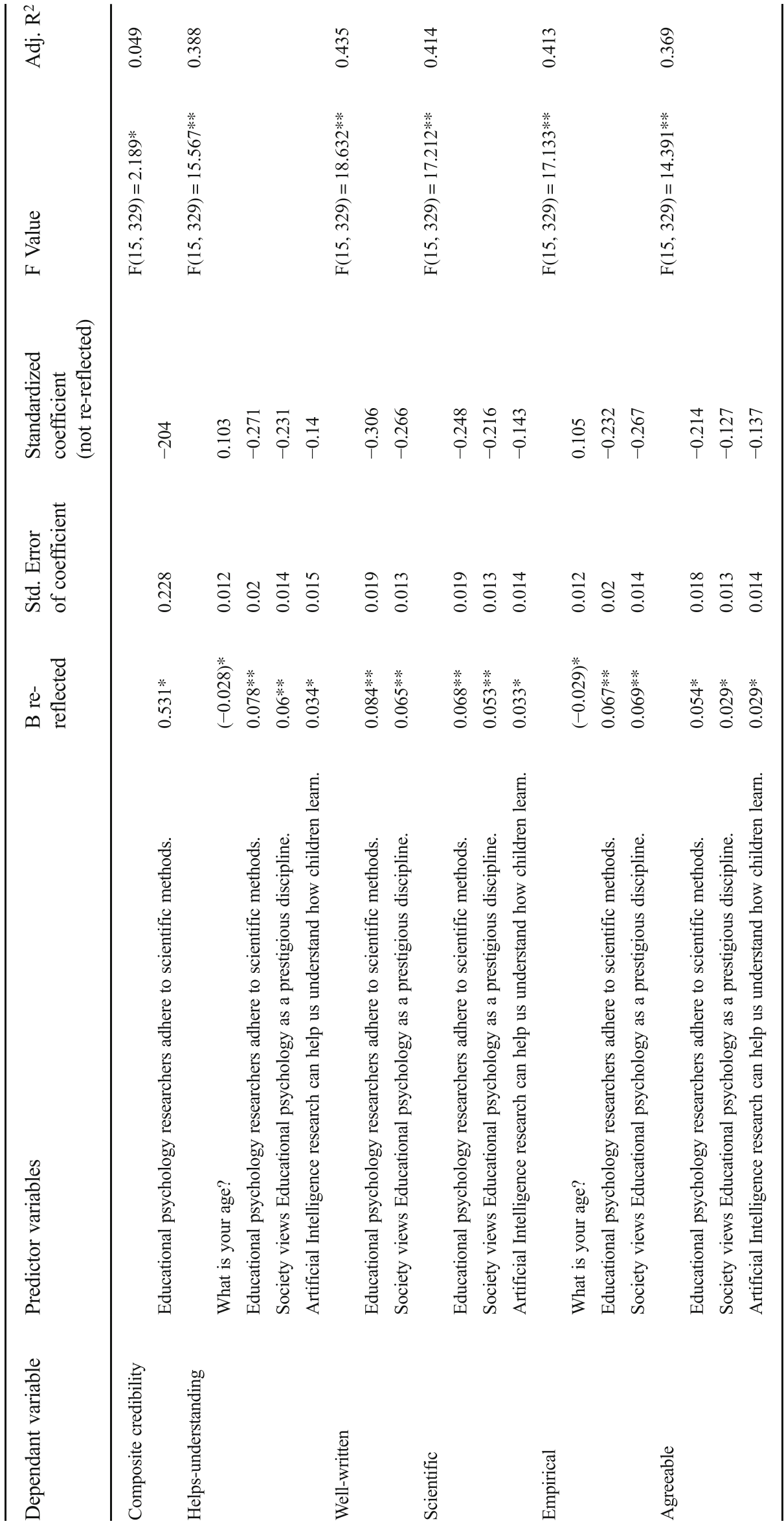
This study investigates the "In-credible AI effect," exploring how framing educational research evidence as Artificial Intelligence (AI) impacts its perceived credibility. Through an experimental study with 605 participants, the researchers demonstrate that AI-framed evidence is viewed as significantly less credible than the same evidence framed within Neuroscience or Educational Psychology.
TL;DR
A new study reveals a surprising phenomenon: the "In-credible AI effect." When the same educational research is presented as a finding from Artificial Intelligence, the public—including educators—finds it significantly less credible than if it were presented as Neuroscience or Psychology. This suggests that the current "AI hype" in media may actually be generating a scientific "credibility tax" for researchers in the field.
Problem & Motivation: The Seduction vs. The Skepticism
For years, the "seductive allure of neuroscience" has been a known bias; add a brain scan or a neuro-term to an article, and people suddenly find the logic more sound. However, AI is currently experiencing a bifurcated reputation. While it promises efficiency, it is simultaneously plagued by dystopian rhetoric from public figures and fears of job displacement.
The authors, Cukurova et al., noticed a gap: How does the public view the scientific rigor of AI compared to established fields like Educational Psychology and the "hard-science" prestige of Neuroscience? If stakeholders (teachers, parents, policymakers) don't believe the research coming out of AIED (AI in Education), they won't adopt the technologies, no matter how effective they are.
Methodology: The Framing Experiment
The researchers recruited 605 participants (345 remained after rigorous attention checks) and split them into three groups. Each group read the same findings on topics like the "Spacing Effect" or "Multitasking," but the "flavor" of the extraneous information changed:
- AI Group: Findings supported by machine learning algorithms and AIED studies.
- Neuroscience Group: Findings supported by fMRI-style brain activation data.
- Educational Psychology Group: Findings supported by traditional psychological constructs.
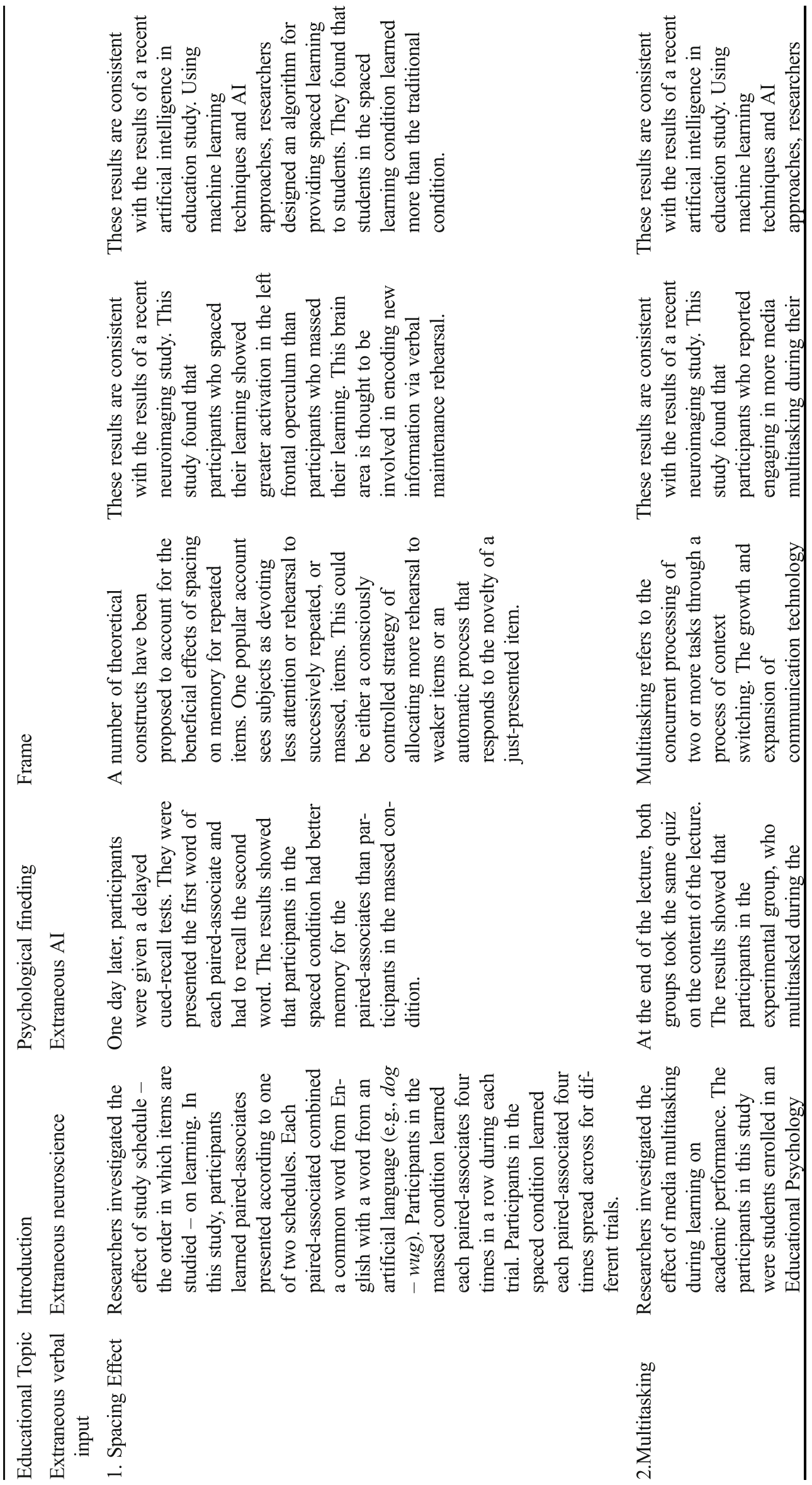
The team measured research credibility via a composite score of five Likert-scale items: whether it was well-written, helpful, scientific, empirical, and agreeable.
Core Findings: The "In-credible" AI Effect
The results were striking. Despite the information being identical in substance, the disciplinary frame changed everything.
1. The Credibility Gap
AI-framed research was rated significantly lower than both Neuroscience and Educational Psychology. Interestingly, the "Seductive Allure of Neuroscience" was not strongly observed here; instead, it was replaced by a "Negative AI Bias."
2. Perspectives on the Disciplines
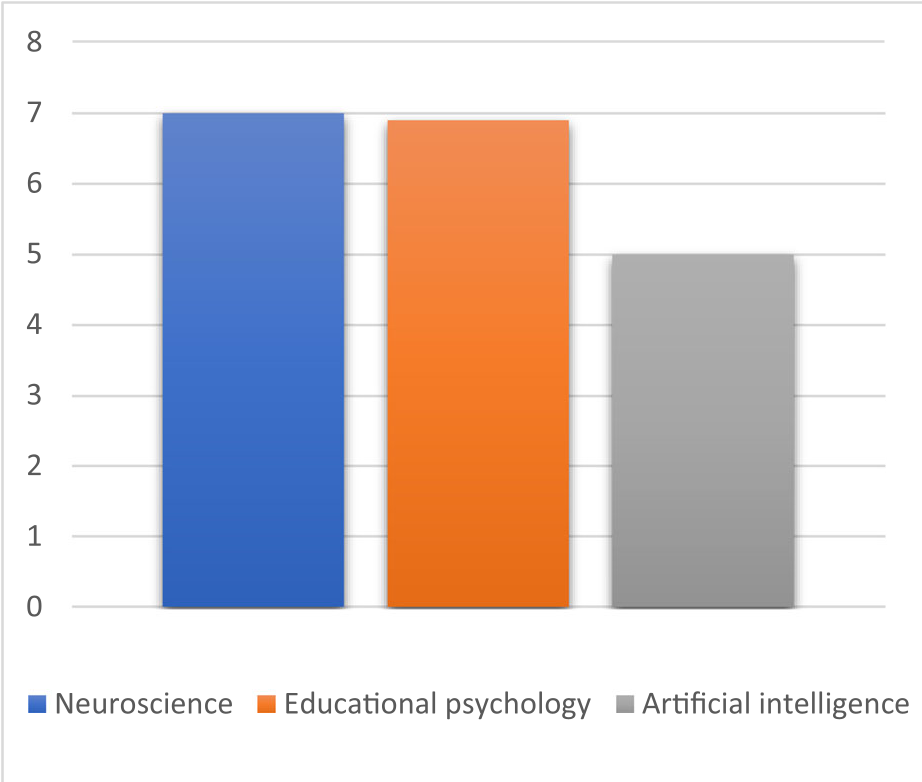
The public has a clear hierarchy. Neuroscience is seen as highly prestigious and strictly scientific. AI, meanwhile, is viewed as:
- Less helpful for understanding how children learn.
- Less adherent to scientific methods.
- Less prestigious than Neuroscience.
3. The Educator's Perspective
Perhaps most concerningly, the effect was just as strong among educators. For a field (AIED) that relies on teacher buy-in, the fact that teachers find AI-framed evidence less credible than standard psychology is a major hurdle for adoption.
Critical Insight: Why the Aversion?
Why does AI lose out in the credibility war? The authors suggest several "Heuristic Rules" at play:
- Scientific Jargon: Unlike "brain activation," the jargon of "algorithms" may feel like "engineering" rather than "science."
- Media Image: Dystopian scenarios and job-loss fears likely color the perception of AI as a cold, "unscientific" intruder in the humanistic field of education.
- Unfamiliarity: While people "get" psychology and have been sold on neuroscience, AI's role as a source of truth about learning is still alien to many.
Conclusion & Future Outlook
The study concludes that the AIED community has an "image problem." To overcome the "In-credible AI effect," researchers must:
- Engage with Stakeholders: Don't just publish in technical journals; talk to teachers.
- Demystify the "Black Box": Explain why an algorithm suggests a specific learning path, rather than just presenting the output.
- Scientific Transparency: Emphasize the scientific methodologies (hypothesis testing) used in AIED to elevate its status from "mere engineering" to "robust science."
As AI technologies increasingly enter classrooms, bridging this "credibility gap" is no longer optional—it is a prerequisite for progress.