
AI in Disaster Management: Transforming Social Media Chaos into Situational Awareness
The Role of Artificial Intelligence in Social Media Big data Analytics for Disaster Management -Initial Results of a Systematic Literature Review
This paper presents a systematic literature review (SLR) analyzing the integration of Artificial Intelligence (AI) and Machine Learning (ML) for social media big data analytics in disaster management. By evaluating 68 initial publications and deep-diving into 17 core studies, it identifies Convolutional Neural Networks (CNNs) as the dominant SOTA architecture for both text and image classification in the crisis informatics domain.
TL;DR
In the wake of a catastrophe, social media is both a lifeline and a data deluge. This paper provides a systematic evaluation of how Artificial Intelligence (AI) filters this "Big Data" chaos. The authors find that Convolutional Neural Networks (CNNs) have become the gold standard for classifying crisis-related text and images, though a critical research gap remains in processing audio and video streams during emergencies.
The "Data Deluge" Problem
When a disaster strikes—be it the 2011 Japan Earthquake or Hurricane Sandy—the volume of social media posts (e.g., 177 million tweets in one day) creates a paradox for Emergency Responders (ERs). Information is abundant, but its velocity and veracity make it nearly impossible to digest manually. ERs need "Situational Awareness"—a dynamic understanding of what is happening on the ground—but they are often blinded by a sea of redundant and irrelevant data.
Research Methodology: A Systematic Filter
The authors conducted a rigorous Systematic Literature Review (SLR) to identify how AI manages this burden. By filtering thousands of potential sources down to 17 high-impact papers published between 2010 and 2018, they mapped the evolutionary trajectory of AI in this field.
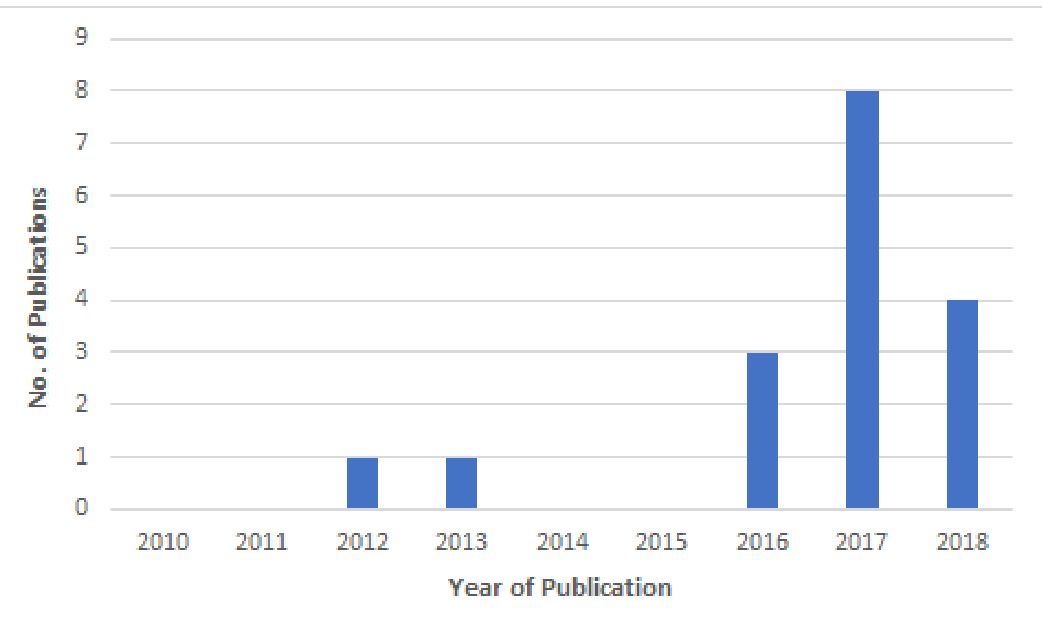 Figure 1: The exponential growth of AI-disaster research reflects the global shift toward deep learning solutions since 2016.
Methodology Breakdown: Text vs. Image
The research categorizes AI applications into two primary domains:
1. Text Classification (The Dominant Domain)
Text remains the primary medium for disaster reporting due to its low barrier to entry under stress.
- Key Algorithms: SVM, Random Forests, Naive Bayes, and notably, RNNs and CNNs.
- Insight: While traditional ML (SVM, NB) was the early baseline, Deep Learning—specifically CNNs for text—has taken over due to its ability to capture local semantic patterns in short, noisy microblogging data.
2. Image Classification
Images provide high-fidelity "ground truth" for damage assessment but are harder to process.
- Key Algorithms: Primarily CNNs (e.g., VGG, ResNet variants) and Linear SVMs.
- SOTA Performance: CNNs are favored here for their prowess in feature extraction, allowing responders to automatically filter "useful" disaster images from 2D scenery or memes.
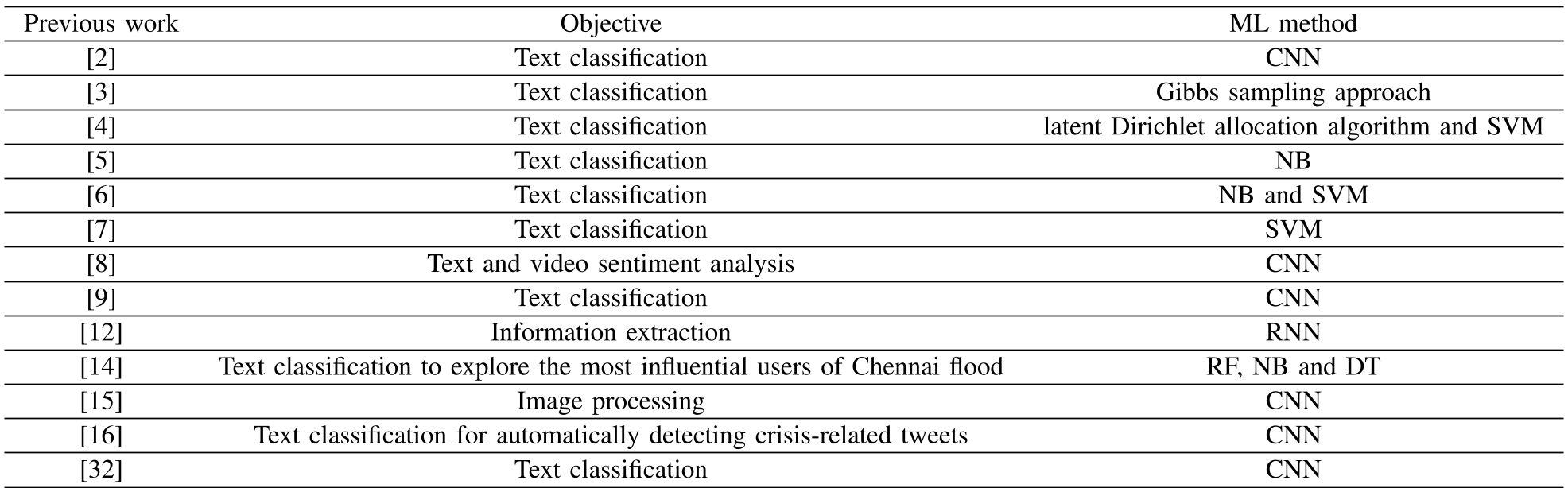 Table 1: Comparison of ML methods across various disaster management objectives.
Why CNNs? The Architectural Edge
The review highlights a clear trend: CNNs are the most widely used architecture. Why? In the context of disaster management, data is often fragmented. CNNs excel at capturing "nuggets" of information—whether they are specific keywords in a tweet or visual markers of structural damage in a photo—without requiring the heavy manual feature engineering that limits older ML models like SVMs.
Critical Gaps and Future Outlook
Despite the progress, the authors point out a glaring "blind spot" in AI disaster research:
- Speech & Video Neglect: There is a distinct lack of research on speech recognition and video classification, despite modern social media moving rapidly toward short-form video content (TikTok, Reels).
- Imbalance: 76% of research focuses on text, while imagery is still under-explored relative to its potential for damage assessment.
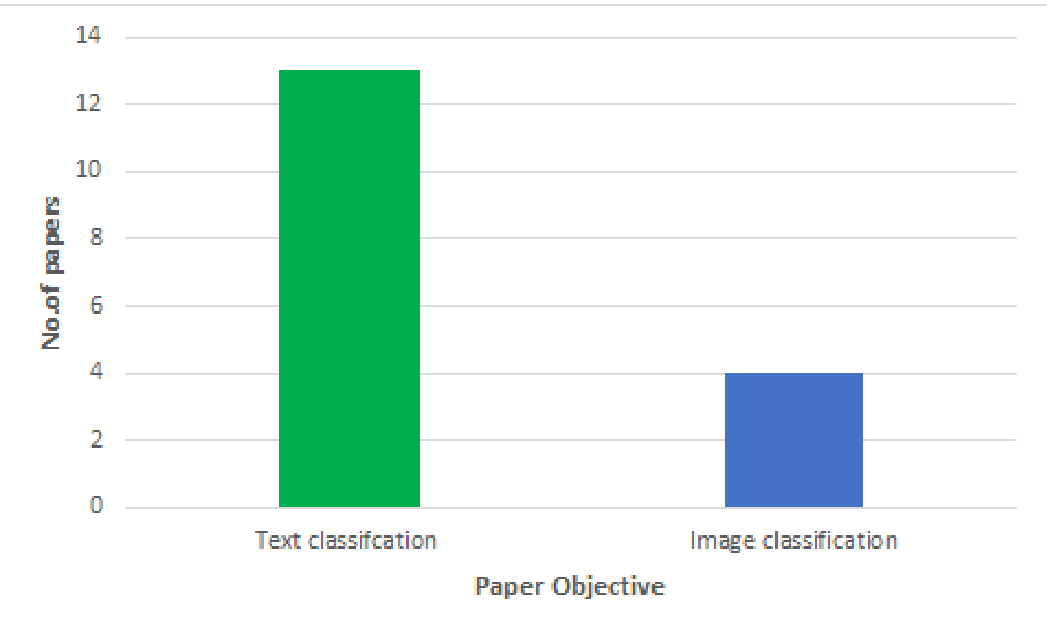 Figure 2: The research gap between text-centric and image-centric AI models.
Conclusion: Toward Multi-Modal Crisis AI
This SLR concludes that while AI (and CNNs specifically) has significantly improved our ability to handle social media big data, we are only scratching the surface. Future SOTA systems must integrate multi-modal data—combining text, image, and video—to provide a comprehensive, real-time operating picture for those on the front lines of disaster response.