
ANN-BN Hybrid: Engineering Precision into Bank Liquidity Risk Assessment
An Artificial Neural Network and Bayesian Network model for liquidity risk assessment in banking
This paper introduces a hybrid intelligent framework combining Artificial Neural Networks (ANN) and Bayesian Networks (BN) to measure and assess liquidity risk in banking. By leveraging US bank data, the model achieves a highly precise risk prediction (MSE < 1e-9) and identifies critical risk drivers through probabilistic inference.
Executive Summary
In the high-stakes world of banking, liquidity risk is "the inability to meet obligations as they come due." While critical, it is notoriously hard to model due to its high dimensionality and the "vagueness" of financial indicators. This paper presents a sophisticated dual-phase system using Artificial Neural Networks (ANN) and Bayesian Networks (BN). By utilizing raw balance sheet data from a real-world U.S. case study (2004-2011), the researchers have moved beyond simple ratio-watching to a predictive and causal framework that offers a "self-confirming" mechanism for risk detection.
The "Liquidity Gap": Why Traditional Models Fail
Standard measures like the Liquidity Coverage Ratio (LCR) are often "black boxes" for researchers because they require internal bank data that isn't public. Meanwhile, simple linear regressions fail to capture the complex, non-linear cascades that happen during a liquidity crunch. The authors identify two core problems:
- Function Approximation: Finding the exact "shape" of risk based on current assets and liabilities.
- Causal Transparency: Understanding which lever—deposits, loans, or bond holdings—is actually pulling the trigger on a liquidity crisis.
Methodology: The Two-Phase Intelligent Schema
The paper’s brilliance lies in its architecture, which separates Prediction from Inference.
Phase 1: The Predictive Engine (ANN)
Using a multi-layer perceptron, the authors utilized the Levenberg-Marquardt Algorithm (LMA). LMA acts as a bridge between the Gradient Descent method and the Gauss-Newton algorithm, providing incredible speed and accuracy in fitting non-linear data.
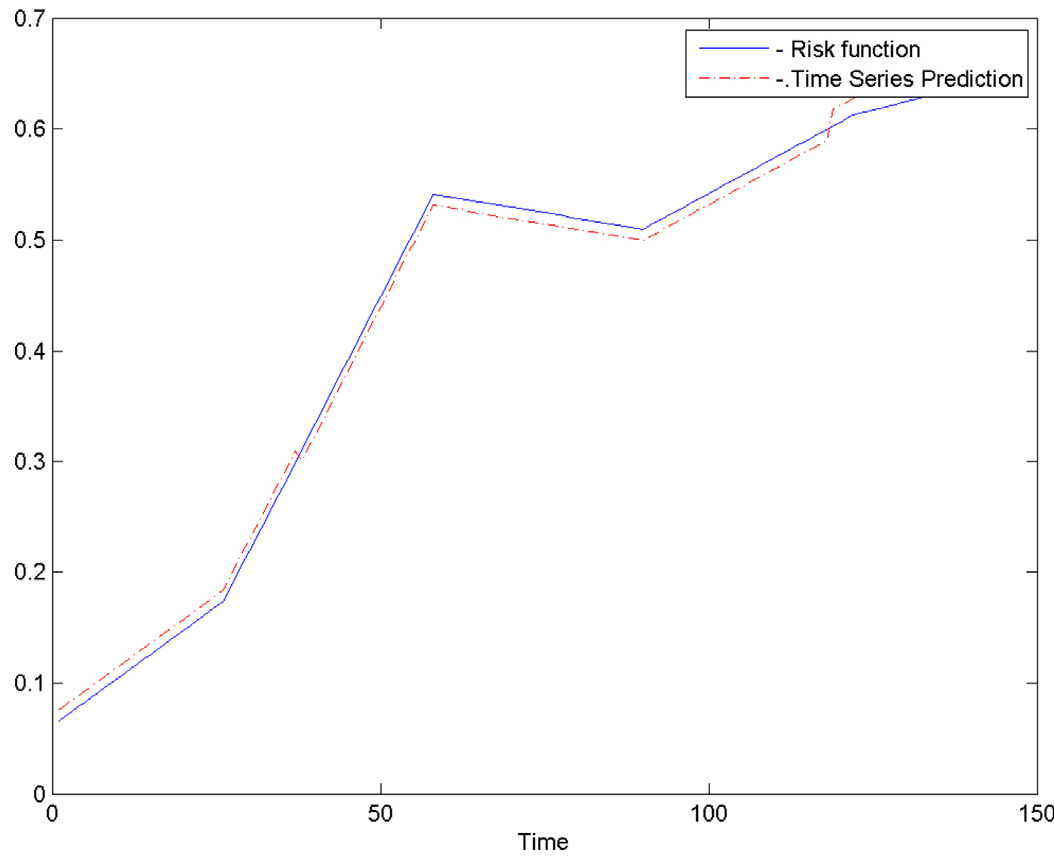 Figure 1: The ANN’s ability to predict liquidity risk closely tracks real-world target values.
Phase 2: The Causal Map (Bayesian Network)
While the ANN tells you what will happen, the BN tells you why. Using structure learning algorithms like "Tabu Search," the model generates a Directed Acyclic Graph (DAG) that maps out dependencies.
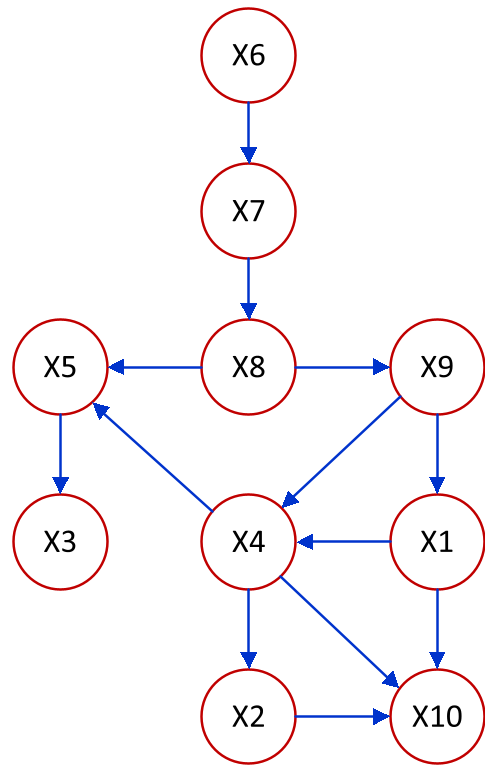 Figure 2: The learned causal structure identifying interdependencies between assets and deposit volatility.
Experimental Breakthroughs
The results from the 2005-2011 dataset were stark:
- Optimization Efficiency: The LMA training algorithm was 29 times faster than the Genetic Algorithm (6s vs 175s) and reached a significantly lower error-rate plateau (MSE of 10^-9 vs 10^-3).
- Determinant Identification: The Bayesian inference identified that Index 1 (Liquidity Ratio) and Index 5 (Loan/Total Deposit) are the twin pillars of stability. If these values drift outside "normal" intervals, the probability of liquidity risk spikes to nearly 35% even if other indicators appear healthy.
- Self-Confirmation: One of the most unique aspects of this research is the cross-validation between phases. Both the ANN sensitivity analysis and the BN marginal probabilities arrived at the same "most influential factors," validating the model's robustness.
Critical Insight: Inductive Bias in Risk Modeling
The choice of a hybrid model reflects a deep understanding of Inductive Bias. The ANN provides the flexible "surface" needed to match volatile markets, while the BN enforces a logical, causal prior that prevents the model from being led astray by noise—a common issue in "pure" Deep Learning financial models.
Conclusion & Future Outlook
This research provides a "simple yet practical" blueprint for bank management. By focusing on endogenous factors (data the bank already owns), it removes the dependency on opaque external ratings.
Limitations: The model is currently optimized for "loan-based" banks (standard retail/commercial models). Future iterations must incorporate Market-specific factors (like interbank interest rate shocks) and perhaps transition into Dynamic Bayesian Networks (DBN) to better account for temporal shifts in systemic risk.
Takeaway: In the search for financial stability, the combination of ANN speed and BN transparency creates a "Glass Box" model—accurate enough to predict the future, but clear enough for human intervention.