
ANN-BN Hybrid: Bridging Prediction and Causality in Banking Liquidity Risk
An Artificial Neural Network and Bayesian Network model for liquidity risk assessment in banking
This paper introduces a hybrid intelligent model combining Artificial Neural Networks (ANN) and Bayesian Networks (BN) for banking liquidity risk assessment. The ANN-BN approach benchmarks against official bank balance sheet ratios to approximate risk patterns and identify key influential factors, validated on a significant U.S. banking dataset (2004–2011).
TL;DR
Predicting bank liquidity risk is often a choice between technical precision and practical interpretability. This paper introduces a dual-system approach: Artificial Neural Networks (ANN) to handle the non-linear prediction of risk trends and Bayesian Networks (BN) to map the causal relationships between balance sheet indicators. By leveraging standard financial ratios, the model provides an implementable "warning system" that outperforms traditional linear regressions.
Problem & Motivation: The Ambiguity of Liquidity
In the banking sector, liquidity risk is the "silent killer." Too much liquidity leads to resource inefficiency; too little leads to sudden bankruptcy. The authors argue that traditional metrics—like the Basel III Liquidity Coverage Ratio (LCR)—are too manual and reliant on subjective weights.
The core challenge is two-fold:
- Functional Complexity: The mathematical form of liquidity risk is unknown and non-linear.
- Data Gaps: Real-world bank data is often noisy, and the interconnections between risk factors (like loan-to-deposit ratios vs. volatile deposits) are rarely explicit.
Methodology: The Two-Phase Intelligent Schema
The authors break the problem into two distinct but complementary phases.
Phase 1: Trend Approximation via ANN
Using a Multi-Layer Perceptron (MLP) architecture, the authors employ the Levenberg–Marquardt Algorithm (LMA) for training. Unlike standard Gradient Descent, LMA is uniquely suited for curve-fitting in financial time series. The ANN maps nine input indices (derived from balance sheets) to a target "Current Ratio" which defines the liquidity state.
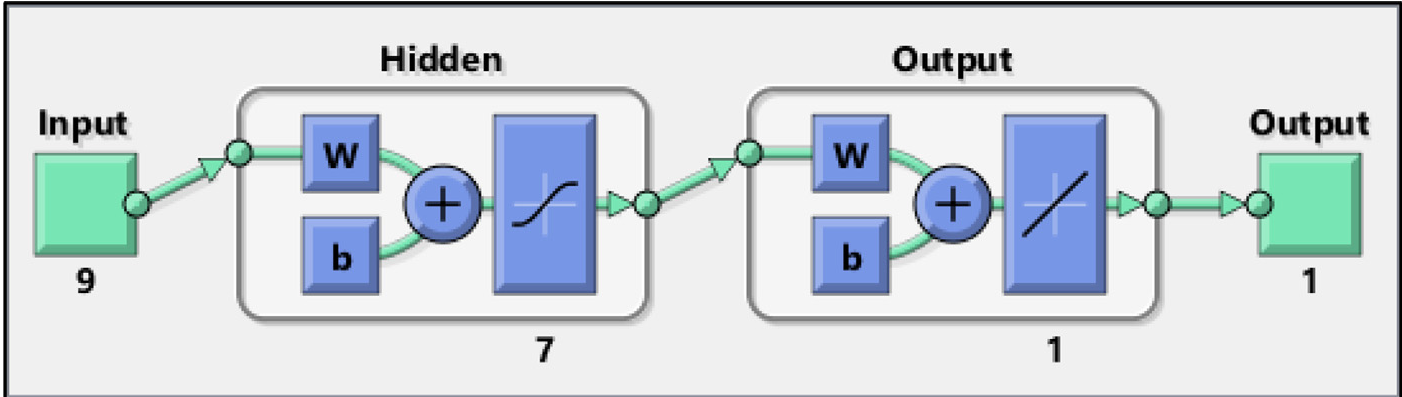 Figure 1: The MLP structure used to approximate the liquidity risk function.
Phase 2: Causal Inference via Bayesian Networks
While ANNs are great at prediction, they are "black boxes." To explain why risk happens, the authors use Bayesian Networks. This allows the model to:
- Handle Missing Data: BNs can infer the probability of risk even if some indicators (like bond ratios) are unavailable.
- Identify Key Drivers: Using an exhaustive search across Directed Acyclic Graphs (DAGs), specifically the "Tabu" search algorithm, the model identifies which balance sheet items have the strongest causal link to risk.
Experimental Results & Critical Insights
The model was tested on a large U.S. banking dataset covering the volatile period of 2005–2011.
Precision in Prediction
The ANN Phase demonstrated exceptional performance. In the 9-7-1 configuration (9 inputs, 7 hidden neurons, 1 output), the correlation between target and output reached 1.0, with a Mean Squared Error (MSE) near zero.
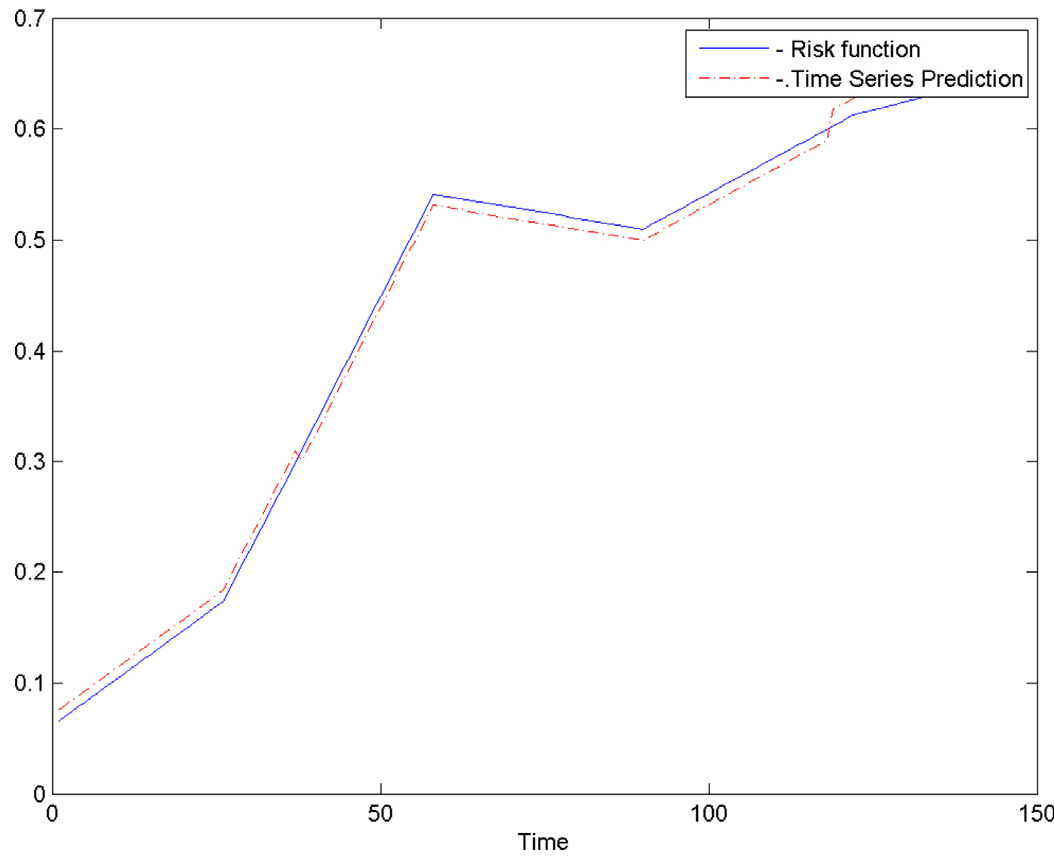 Figure 2: The high precision of ANN prediction across training and validation sets.
The Causal Map
The BN Phase revealed that Index 1 (Liquidity Ratio) and Index 5 (Loan/Total Deposits) were the most influential factors. Interestingly, the Bayesian Network was able to calculate that even with incomplete measure of items, the probability of liquidity risk could be determined with 35% accuracy—a vital feature for stressed environments where data reporting may lag.
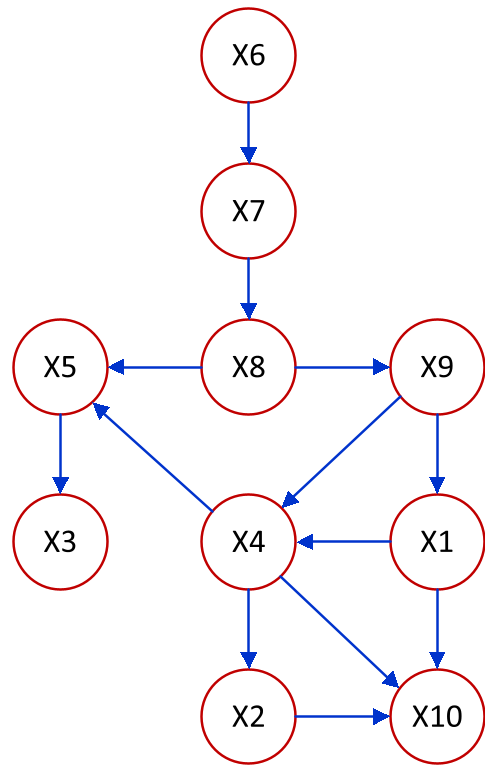 Figure 3: The learned Bayesian Network showing dependencies between various financial indices.
Critical Analysis & Conclusion
Takeaway
The hybrid nature of this approach solves the "Explainability vs. Accuracy" trade-off. While the ANN provides the raw predictive power needed for early warning systems, the BN offers a "diagnostic" tool that tells bank managers which specific lever to pull (e.g., reducing volatile deposits) to mitigate risk.
Limitations
The model assumes a "Solvency-based" definition of liquidity, focusing primarily on endogenous (bank-specific) factors. In a real systemic crisis, exogenous factors like market-wide interest rate shocks or interbank contagion might require additional nodes in the Bayesian Network.
Future Outlook
The next step for this research involves Dynamic Bayesian Networks (DBNs). By adding a temporal dimension to the causal graph, institutions could not only see what is causing risk today but how those causal weights shift as the economy moves from inflation to recession.