
LSTM-Based ASD Classification: Turning Raw Video into Diagnostic Insights
Classifying ASD children with LSTM based on raw videos
This paper introduces a novel deep learning framework for classifying Autism Spectrum Disorder (ASD) in children using raw video data. By combining Tracking-Learning-Detection (TLD) for eye movement capture with a three-layer Long Short-Term Memory (LSTM) network, the system achieves a state-of-the-art accuracy of 92.6%.
TL;DR
Diagnosis of Autism Spectrum Disorder (ASD) has long been a clinical bottleneck due to its subjective nature and the need for expensive equipment. This paper presents a breakthrough: a non-intrusive system that identifies ASD in children by analyzing eye-movement trajectories from simple raw videos. By using a specialized Tracking-Learning-Detection (TLD) method and a 3-layer LSTM network, the researchers achieved an impressive 92.6% accuracy, significantly outperforming traditional machine learning baselines.
Problem & Motivation: The Need for Non-Intrusive Biomarkers
Current gold-standard ASD diagnoses rely on behavioral observations by experts, which are prone to bias and high costs. While biomarkers like fMRI (brain imaging) or EEG (brain waves) offer high accuracy, they are often frightening or uncomfortable for children.
The authors' core insight is that eye-gaze patterns are a "window to the brain." Children with ASD often exhibit atypical visual saliency and different gaze fixations compared to typically developing (TD) children. If these patterns can be captured using standard cameras in natural settings, the barrier to early screening could be drastically lowered.
Methodology: From Raw Pixels to Temporal Histograms
The framework follows a four-stage pipeline:
- Long-term Tracking (TLD): Using the TLD algorithm to handle the abrupt movements and occasional "out-of-view" scenarios common when recording children.
- Feature Decomposition: Trajectories are broken down into Angle (direction of movement) and Length (magnitude/speed).
- Accumulative Histograms: Instead of simple feature vectors, the authors use histograms to count the distribution of movements into 8 angular zones and 7 length levels. The accumulative nature ensures that the temporal "memory" of movement is preserved.
- Deep Temporal Modeling (LSTM): A 3-layer LSTM processes these histogram sequences to learn the deeply-implied behavioral differences between ASD and TD groups.
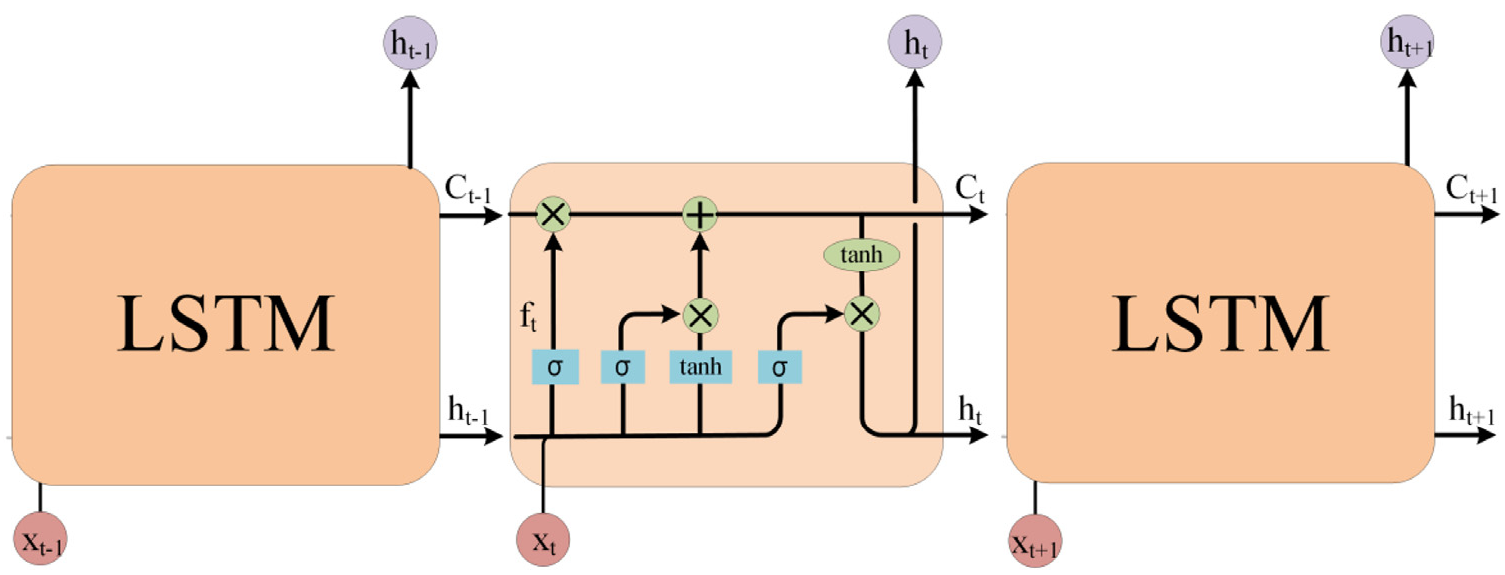 Figure 1: The 3-layer LSTM architecture used for sequence classification.
Why the Length Feature Matters
A key contribution of this work is the "Length Feature." The authors observed that TD children have very stable gaze patterns when focused (high counts in "mild movement" categories), whereas ASD children exhibit more erratic, high-velocity eye movements, which the Length Histogram captures with high discriminative power.
Experimental Performance: SOTA Results
The researchers tested their approach on an Ext-Dataset of 272 videos. The results show a clear victory for Deep Learning over traditional methods like SVM paired with Kernel Principal Component Analysis (KPCA).
| Method | Histogram Type | Accuracy (Ext-Dataset) |
|---|---|---|
| KPCA+SVM | Angle+Length (Accumulative) | 86.4% |
| LSTM (Proposed) | Angle+Length (Accumulative) | 92.6% |
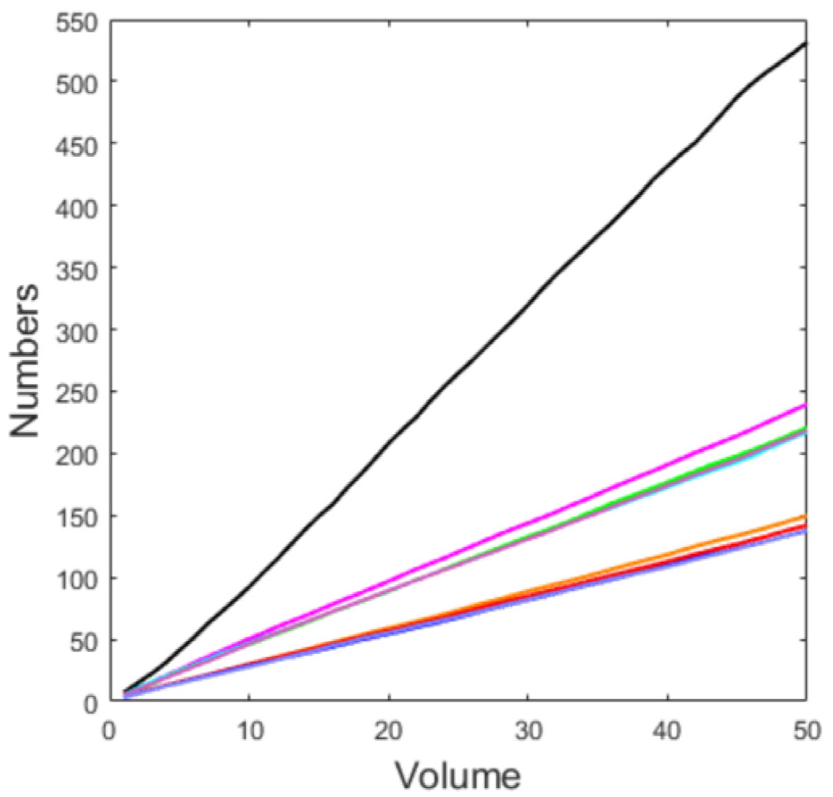 Figure 2: Comparison of averaged angle histograms. Note Zone 1 (detected failure/out of view), which is significantly higher in ASD children due to erratic behavior.
Critical Analysis & Conclusion
Takeaway
The study proves that temporal dynamics are essential for behavioral classification. While an SVM treats a histogram as a static snapshot, the LSTM understands the evolution of gaze patterns over time.
Limitations & Future Work
Despite the success, "False Positives" occurred when children left the camera's view entirely, inflating the "Zone 1" counts. Future iterations could integrate multimodal data—combining eye movement with body gestures and facial expressions—to create a more holistic diagnostic profile.
This work marks a significant step toward making ASD screening as simple as recording a 10-minute video, potentially enabling millions of children to receive the early intervention they need.