
Aspirational Design and Messy Democracy: How Taipei Prototyped its Future through the Flora Expo
Aspirational Design and Messy Democracy: Partisanship, Policy, and Hope in an Asian City
This paper explores the entanglement of social policy, partisan politics, and urban design through an empirical study of the 2010 Taipei International Flora Expo (TIFE). It introduces the concept of "aspirational design" as a mechanism for public futuring, demonstrating how a large-scale sociotechnical event can transition from a contested political project to a shared national vision.
TL;DR
In 2010, Taipei didn't just host a flower show; it launched a massive sociotechnical experiment. Through the Taipei International Flora Expo (TIFE), designers and policymakers attempted to use "Aspirational Design" to bridge the gap between "cold" IT manufacturing and a "warm" national identity. This study reveals how urban informatics must navigate the "messy" waters of partisan politics to successfully implement large-scale public systems.
The "Western-Centric" Blind Spot
Most urban computing research treats the "City" as a generic geographical container, usually in London, Melbourne, or San Francisco. This paper argues that we cannot understand urban technology without looking at Global Assemblages—the unique mix of local history, specific economic policies, and fierce political rivalries. In Taipei, this meant designing for a city in search of a global identity, caught between "Blue" and "Green" political coalitions.
Methodology: From Policy to Pavilions
The researchers analyzed the project through two lenses:
- TIFE as a Design Process: A multi-year collaboration between engineers (ITRI), artists, and the city government.
- TIFE as a Public Event: A 92-hectare site that hosted 9 million visitors, serving as a live simulation of a "Creative Taiwan."
The authors dissected over 4,000 pages of internal documents and interviewed the architects who had to balance high-level "Creative Taiwan" policies with the practical demands of politicians who wanted "as many touchscreens as possible" to show off technological prowess.
Methodology: The Core Architecture
The centerpiece of the expo was the Pavilion of Dreams (PoD). It was a masterclass in translating abstract policy (shifting from manufacturing to a knowledge economy) into visceral experience.
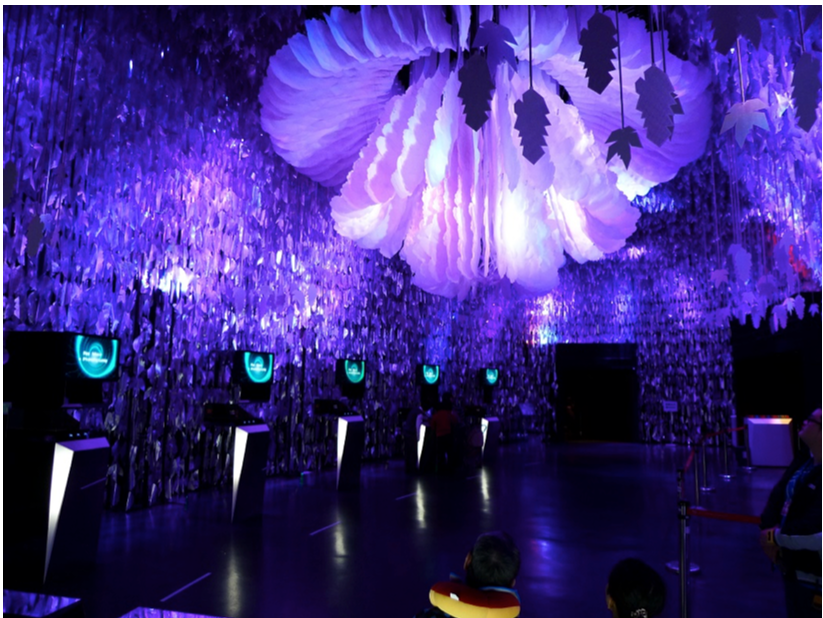
- Aesthetics as Interaction: Instead of static displays, PoD featured "flowers of science," using paper-thin leaf speakers and 3D displays to create an immersive journey.
- The Smart Wristband: Visitors wore RFID bands that tracked their interactions, culminating in a "personalized digital flower" that symbolized national unity.
The Evolution of Public Perception
One of the most striking findings is the Sentiment Delta. Before the expo opened, the media was dominated by accusations of corruption and "wasting money" on morning glory flowers. It was a victim of "pan-politicization."
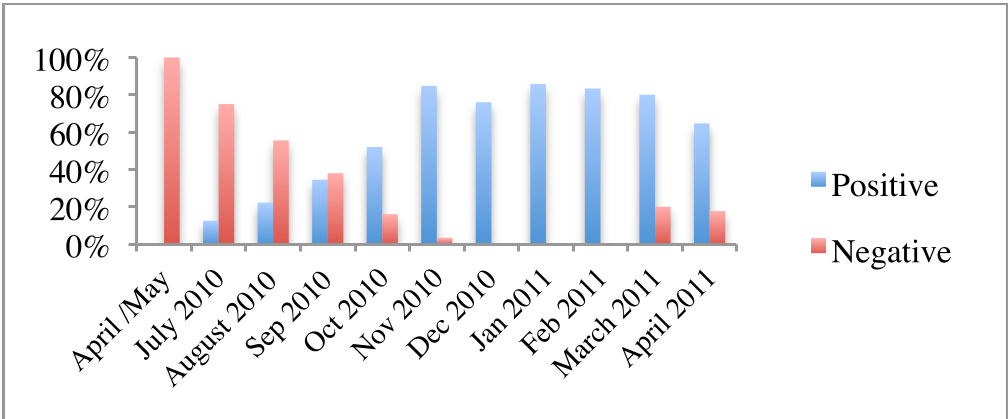
However, once the doors opened, the narrative shifted. When citizens experienced the technology first-hand—seeing medical-grade sensors repurposed to "detect heartbeats to wake up digital butterflies"—the discourse moved from "Blue vs. Green" to a shared pride in "Made in Taiwan."
Deep Insight: Design as a Political Buffer
The paper posits that Aspirational Design acts as a prototype for the future. By creating a physical space where "Creative Taiwan" wasn't just a slogan but a tangible experience, the designers allowed the public to "buy into" a national vision that bypassed partisan bickering.
However, the authors warn that this is a "Messy Democracy." TIFE wasn't a grassroots project; it was top-down. The "democratization" happened in the contestation—the public debates, the media attacks, and the eventual sense-making by the citizens themselves.
Conclusion & Future Outlook
The Taipei Flora Expo proves that urban informatics is never just about "the app" or "the sensor." It is about:
- Public Futuring: Using design to help a society envision where it wants to go.
- De-centering the West: Understanding that a city's "look" and "feel" are tied to local political stakes.
- The Power of Beauty: Recognizing that aesthetics can be a rigorous mechanism for social policy.
For the CSCW community, the takeaway is clear: Stop ignoring policy. The most successful urban systems are those that acknowledge their political entanglements and use design to navigate them.